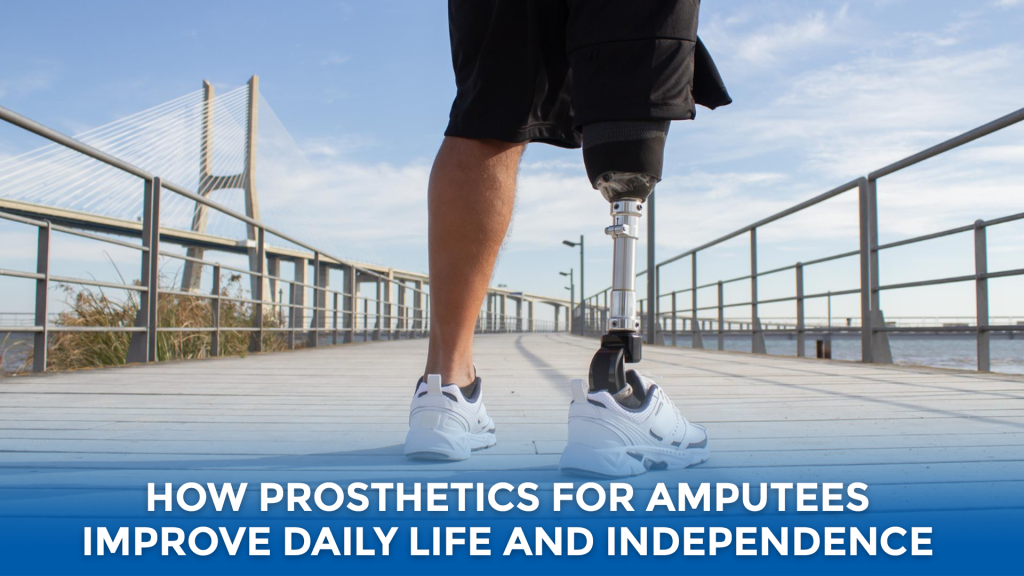
Does your prosthesis or brace feel fine in the clinic but then start hurting at home? In real world use where users have to deal with sweat, long standing hours, stairs, and uneven roads, the fit changes, the skin reacts, and confidence drops.
This prosthetic maintenance guide ensures your equipment remains in top condition through a safe and steady cleaning routine.
Why Home Care Is Essential After Clinical Fitting?
In the clinic, your prosthetist aligns the device in a controlled space. At home, you face long hours, heat, and movement patterns that differ each day. Small problems show up fast and they grow if you ignore them.
Skin safety matters the most, since skin takes the load before the device does. Many clinical references link socket fit and skin health with long-term device use. When you notice redness or rubbing, you must act the same day. Rehabilitation after prosthetic fitting depends heavily on how well you look after your limb at home.
Home care becomes a daily skill, not a small add-on. Understanding the importance of home care helps you stay active without facing constant pain.
Daily Prosthetic and Orthotic Home Care Routine
A strong routine keeps you consistent, even on busy days. These prosthetic and orthotic home care tips work best when you repeat them daily.
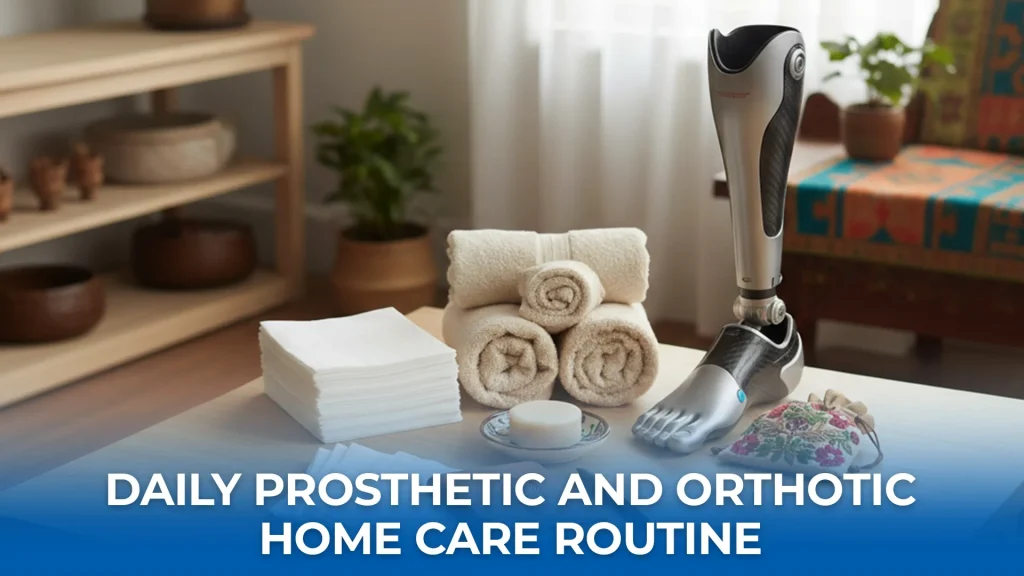
- Keep a small kit ready: mild soap, soft towel, clean cloth, spare socks or liners, and a small mirror.
- Set two fixed times: morning checks and night cleaning.
- Track discomfort in a notebook, since patterns can help reveal the real cause.
Treat your daily routine as a personal prosthetic maintenance guide you can follow without guessing. When you follow a guide, you gain control.
Small daily habits prevent large equipment repairs and skin issues in the future.
Morning Inspection Checklist
Morning checks save your whole day. Start by checking your skin in bright light. Use a mirror for the back of the limb. Look for redness, blisters, cuts, shiny patches, or swelling. Press the red area with one finger. If the colour stays for a long time, you stop wearing it and you contact your clinician.
Check the device thoroughly:
- Check screws, joints, straps, buckles, and locks for looseness.
- Check liners for tears, sticky patches, edge rolling, or hard spots.
- Check sockets or braces for rough edges or cracks.
- Check foot shells or orthotic soles for uneven wear.
After that, do a short fit test. Wear the device, stand near support, and shift weight slowly. If you feel a sharp hotspot, you remove the device and re-check the liner and socket contact.
Spending five minutes every morning ensures you do not face sudden discomfort during your work day.
Cleaning & Hygiene Best Practices
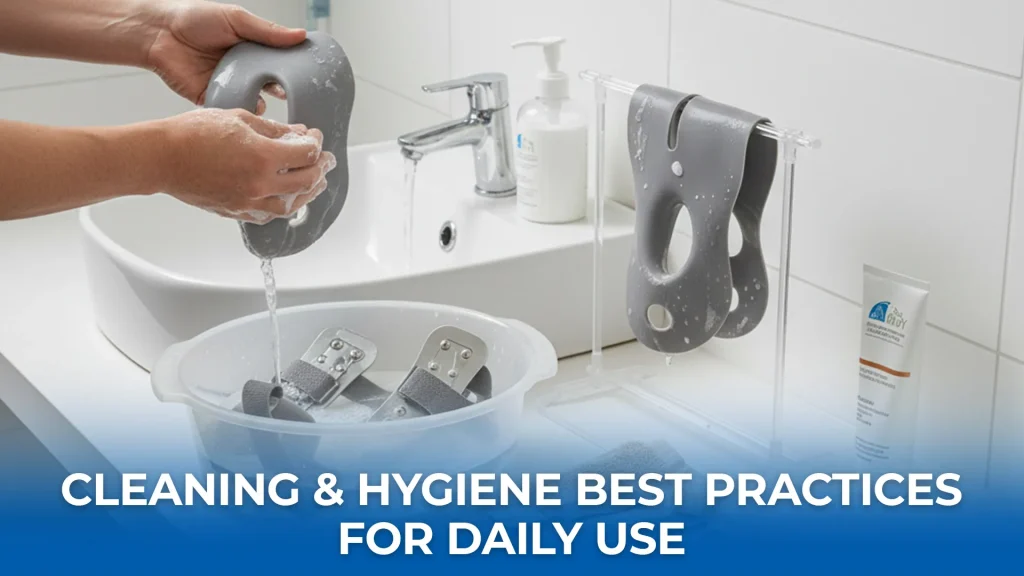
Cleaning protects skin and it also protects materials. Sweat, dust, and skin oils sit inside liners and braces, so you must remove them daily. This step supports orthotic care for patients who wear braces for long hours and it also supports prosthesis users who rely on liners.
| Item | What To Use | What To Do | What To Avoid |
| Prosthetic Liner | Mild soap, water | Wash, rinse, air-dry in shade | Hot water, strong detergents |
| Socket Interior | Damp cloth, mild soap | Wipe, then dry fully | Soaking the socket |
| Orthotic Brace Pads | Mild soap wipe | Clean skin-contact areas | Perfumed sprays on foam |
| Straps and Velcro | Dry brush | Remove lint, restore grip | Wet storage |
| Skin Contact Zone | Gentle cleanser | Wash and dry well | Heavy greasy creams |
If you tend to sweat more, keeping a spare liner or sock to rotate through the week is a very helpful habit. Maintaining your equipment in excellent condition ensures it remains reliable for your daily movement.
Keeping your device clean is the simplest way to avoid skin rashes and odours.
Proper Wearing & Removal Techniques
Many discomfort issues arise during the process of putting on the device rather than while walking, making proper habits essential for orthotic care for patients.
Ensure your skin and the liner are both perfectly dry before you start. Roll the liner onto the limb smoothly, taking care not to trap any air pockets against the skin. Seat the limb into the socket with steady, even pressure and secure the suspension system exactly as you were taught. If your device uses straps, tighten them in gradual steps instead of one single pull.
When it is time for removal, avoid using any force. Start by releasing the suction, locks, or straps. Remove the device slowly, since fast removal pulls skin and irritates scars. Always wipe away sweat from your skin and the liner edge, because that area often causes friction. If your walking feels tilted, check the alignment, but do not adjust screws at home unless your clinician trained you for it.
Correct donning and doffing techniques protect your skin from unnecessary friction and pull.
Daily Rehabilitation & Mobility Exercises
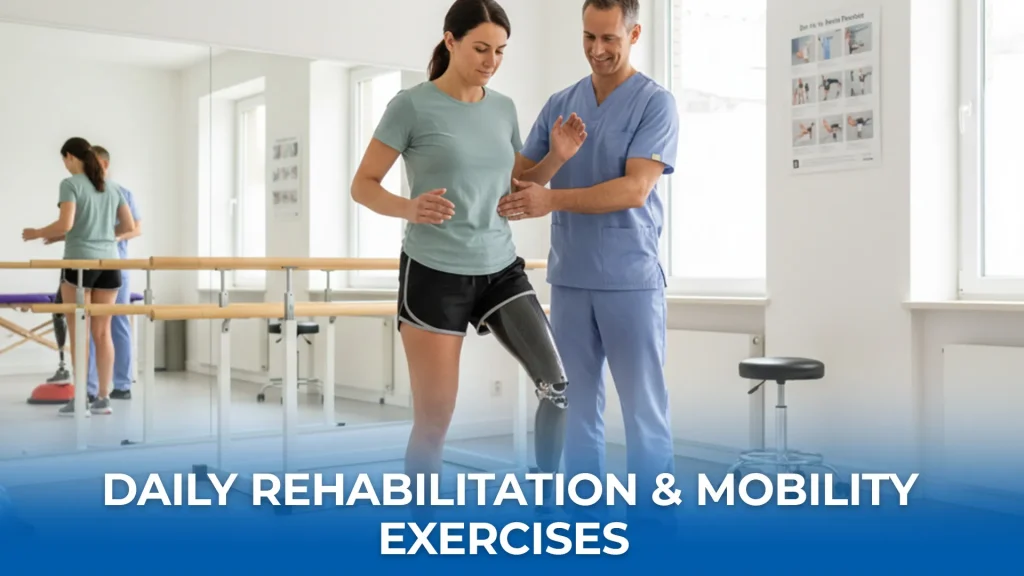
Dedicated rehab helps the body trust the device, which eventually makes the equipment feel lighter as your muscles learn to share the load. This rehabilitation after prosthetic fitting and physiotherapy for prosthetic users is essential for staying safe and improving mobility with prosthetics and orthotics.
Start with short exercise sessions and build your strength slowly. Practice weight shifts while standing near a sturdy chair for balance. Work on sit-to-stand movements, ensuring you distribute your weight equally on both sides. Follow this with controlled stepping drills before moving on to walking short indoor laps while focusing on your posture.
Only about 1 in 10 people globally who need these assistive products actually have access to them. This gap makes your daily home routine even more important, because you must protect what you already use.
Consistent daily practice transforms the device from a tool into a natural extension of your body.
Light Home Exercises for Prosthetic Users
Use a chair or counter for support. Follow this order:
- Weight shifts side-to-side for steady control.
- Mini squats with support for strength and symmetry.
- Step taps on a low step for hip control.
- Standing balance practice with hands near support.
- Slow turns with wide steps to reduce falls.
These movements are a core part of physiotherapy for prosthetic users and help you feel more stable. Practise transfers, since daily life needs them. Stand, sit, and turn with control. Keep a small log of pain spots and wear time to help your clinician fine-tune your fit later.
Simple movements performed correctly every day build the strength needed for longer walks.

Rehabilitation Tips for Orthotic Users
Orthoses change alignment, so muscles must adapt. Start by stretching calves and hamstrings to reduce pull. Build hip strength, since hips guide knee and ankle tracking. Practise short walks with a slow pace and correct foot placement. This is a practical way of improving mobility with prosthetics and orthotics in your own home.
If you use AFOs or knee braces, avoid rushing stairs. Instead, practise step patterns with support and add speed later. This plan reduces strain and it improves confidence over time.
Focusing on your walking pattern helps your muscles adapt to the support of the brace.
How KARE Prosthetics & Orthotics Supports Long-Term Home Care
Many users in India want advanced devices with practical, local support. At KARE, we focus on advanced prosthetics and orthotics in India, with custom prosthetic legs, orthotic support, and flat foot solutions.
We stand out through these strengths:
- Customised solutions: We have an expert clinical team that tailors devices to your body and goals.
- Advanced technology: We have international partnerships with brands like Ossur and Orthomerica for using cutting edge products
- Integrated support: We help from assessment to aftercare, providing education for prosthetic and orthotic home care tips.
- Patient-centric communication: We use follow-ups to keep you informed and we provide a detailed prosthetic maintenance guide.
- Holistic rehabilitation: We connect fitting, training, and daily safety.
We are committed to making sure your device fits your life and your environment perfectly.

Final Thoughts
Daily care protects comfort, safety, and device life. You must treat these prosthetic and orthotic home care tips like brushing your teeth. Start with morning checks, keep cleaning consistent, and add training in small blocks. Record what you feel, because patterns reveal fit issues early. When you follow this approach, you reduce skin breakdown, improve balance, and build steady walking confidence.
Taking control of your daily routine is the best way to ensure long-term mobility and comfort.
For fitting support, follow-up care, and guided routines, connect with KARE and keep your progress on track with prosthetic and orthotic home care tips.
FAQs
What helps rehabilitation after prosthetic fitting stay on track at home?
Keep doing daily weight shifts, sit-to-stand practice, and mirror gait checks. It is also wise to follow prosthetic and orthotic home care tips like logging hotspots and wear time. Book follow-ups when redness repeats or balance drops.
What should a prosthetic maintenance guide include for daily users?
A good prosthetic maintenance guide should include morning device checks, liner washing, socket wiping, and dry storage. Track your sock changes and any unusual sounds like clicking or slipping.
What does orthotic care for patients look like in hot weather?
It is important to follow prosthetic and orthotic home care tips by cleaning pads daily and wearing thin socks. Check skin for a rash and avoid storing braces when they are damp.
Which physiotherapy for prosthetic users works well without equipment?
You can use supported mini squats, step taps, and balance holds. This physiotherapy for prosthetic users works best when you also focus on posture and rest if you feel skin heat.
How can improving mobility with prosthetics and orthotics feel safer outdoors?
To keep improving mobility with prosthetics and orthotics, choose stable shoes and avoid broken paths early on. Practise prosthetic and orthotic home care tips by checking your device after being outdoors and scheduling fit reviews if your walking style shifts.