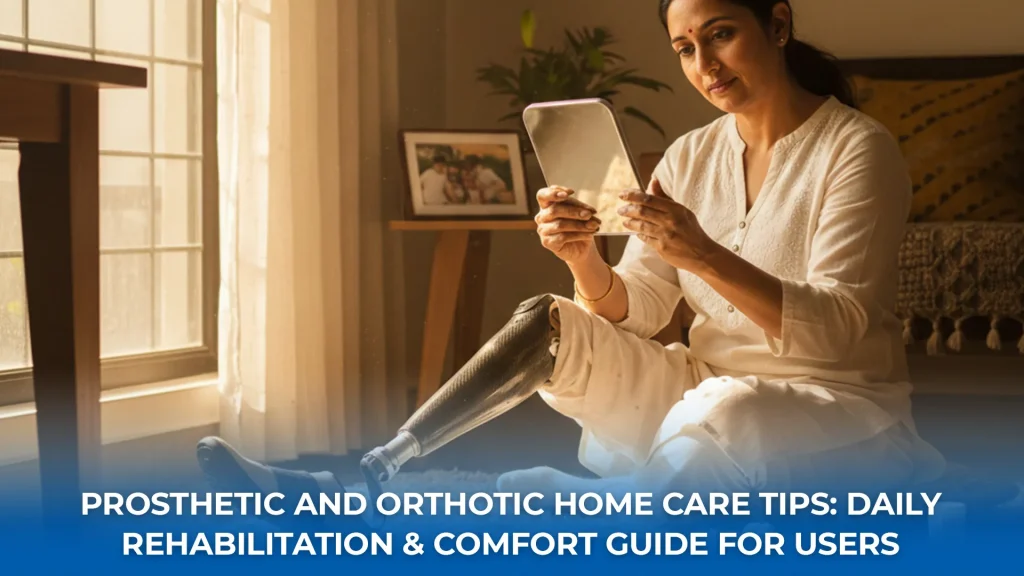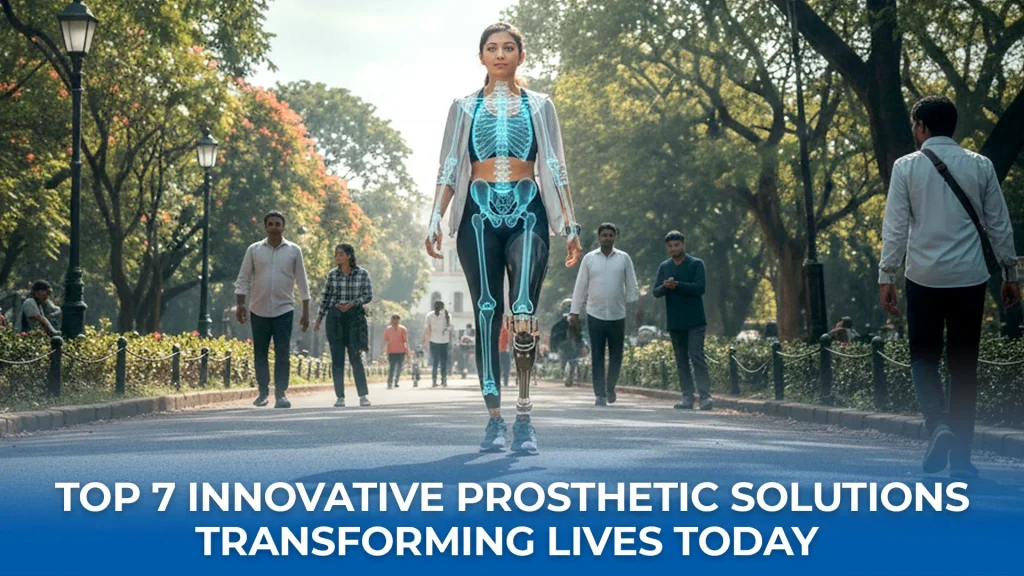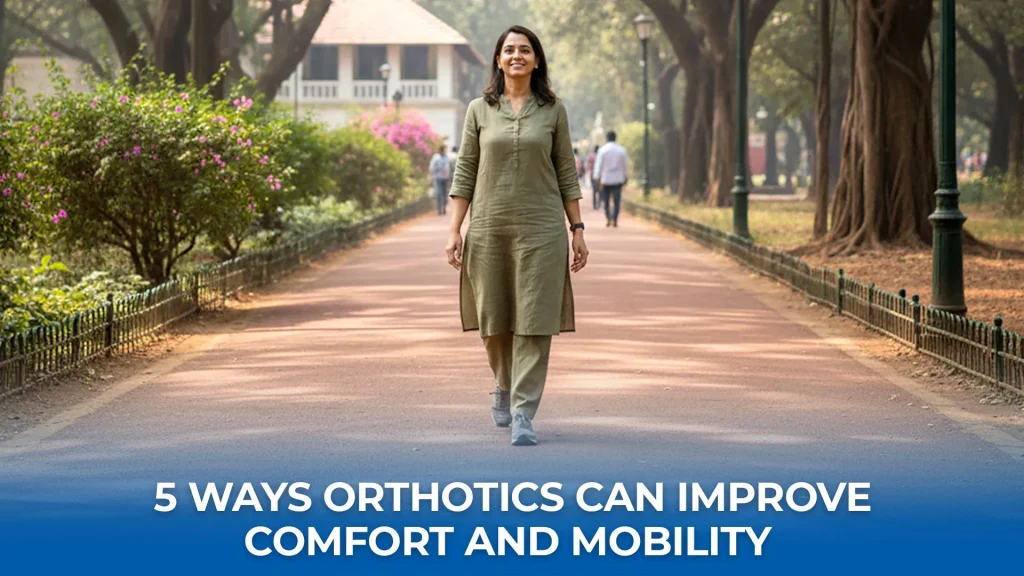
After limb loss, the hard part is not only the surgery or the stitches. It is the small moments. Getting up from the bed without wobbling. Standing at the sink. Crossing a wet floor in the bathroom. Getting into an auto. You start calculating steps in your head like it is a maths problem. That mental load is exhausting.
This is where prosthetics for amputees can change the day in a very practical way. Not instantly, not magically. But step by step, with the right fit and training, you get safer movement, better balance, and more freedom in your routine. This is what daily life with prosthetics looks like when things go well.
To understand what a prosthesis can do, we first need to be clear about the real target, because “fitting” is only the start.
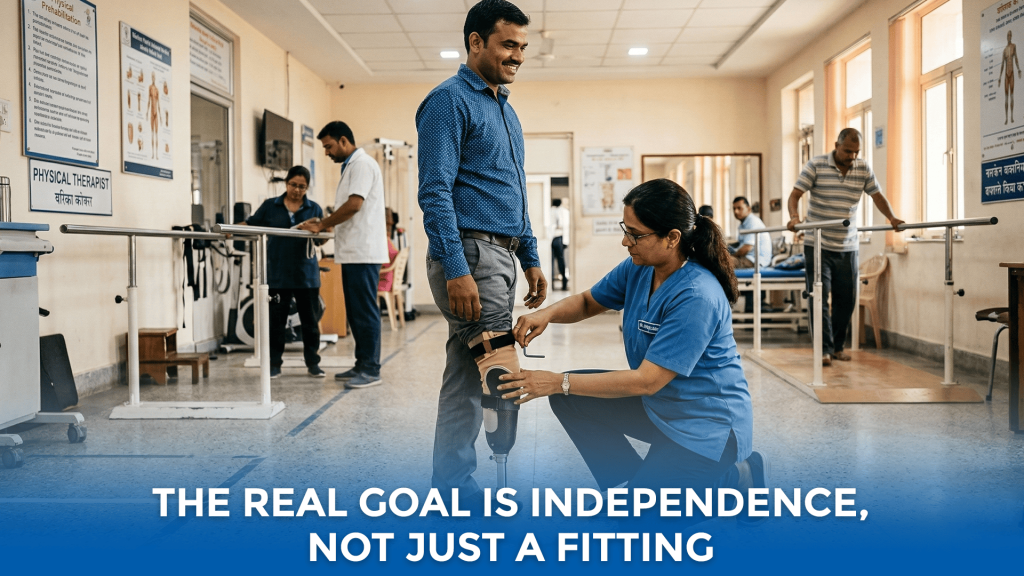
The Real Goal Is Independence, Not Just a Fitting
A prosthesis is not a product you buy and finish. It is a system you build around your body and your routine. Two people can have the same level of amputation and still need very different setups.
A good plan focuses on function first:
- How you stand and balance
- How you walk indoors vs outdoors
- What your work requires
- What your home layout is like
- How your skin reacts to heat and sweat
- How much sitting, walking, and travel you do
This is the difference between “a prosthesis that fits” and functional prosthetics that actually support your day.
Once the goal is clear, let’s look at how function improves in real stages, not all at once.
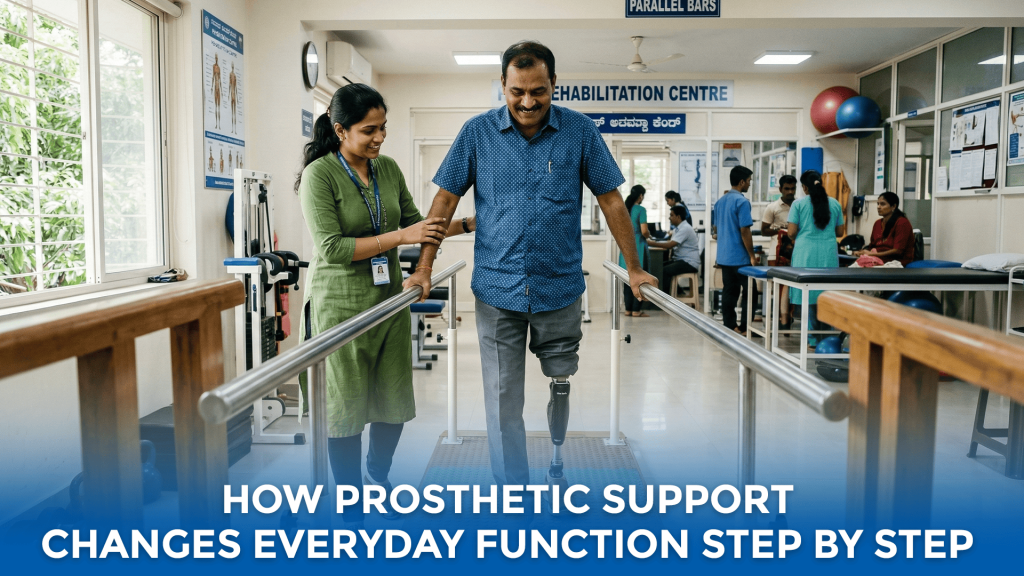
How Prosthetic Support Changes Everyday Function Step by Step
Progress usually follows a pattern. People often feel disappointed because they expect a big jump in week one. The change is more gradual and more solid when done right.
1st Stage: Standing and basic indoor movement
This is where confidence starts. You learn weight shift, safe standing, and short walking inside the home. Most people notice:
- Less fear while standing at the counter
- Better balance while turning in tight spaces
- Fewer “grab the wall” moments
2nd Stage: Controlled walking and basic obstacles
Once the gait is steadier, the focus shifts to uneven tiles, small ramps, and door thresholds. This is crucial in India, because flat surfaces are not guaranteed.
3rd Stage: Outdoor surfaces and longer routes
Outdoor walking is a different skill. Roads are uneven. People bump into you. You may need to carry a bag. This is where endurance and stability become real.
4th Stage: Stairs, slopes, and faster routines
For some users, stairs and slopes become manageable with training and the right components. Above-knee users often need more time here, and that is normal. This staged approach is the base of prosthetic mobility solutions that actually work long-term.
Now that we have the progression, let’s go deeper into how prosthetics improve movement quality and reduce fatigue.
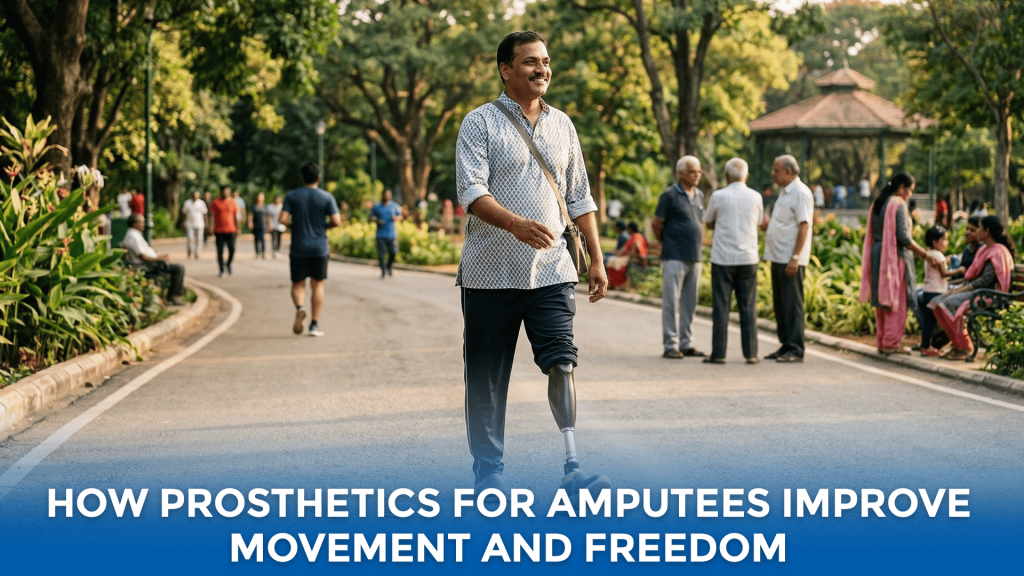
How Prosthetics for Amputees Improve Movement and Freedom
Movement quality decides how independent you feel. A well-aligned prosthesis reduces the “compensation habits” that drain energy, like hip hiking, trunk leaning, and short steps.
What people commonly notice when alignment and training improve:
- Walking feels less heavy
- Less strain in the lower back
- More stable stepping on uneven patches
- More confidence when someone brushes past in a crowd
Without a prosthesis, or with a poorly aligned one, the body works harder to stay stable. You use extra muscles for balance. That increases fatigue. With a good prosthetic setup, walking becomes more efficient.
In daily life with prosthetics, early wins are usually small tasks:
- Walking inside the house without needing support every step
- Standing longer during cooking or office tasks
- Entering public places without constant fear of slipping
- Managing a short outdoor route without panic
These are not minor achievements. These are quality-of-life changes.
Movement improves only when the limb is comfortable enough to wear daily, so now we need to talk about comfort, sockets, and skin care.
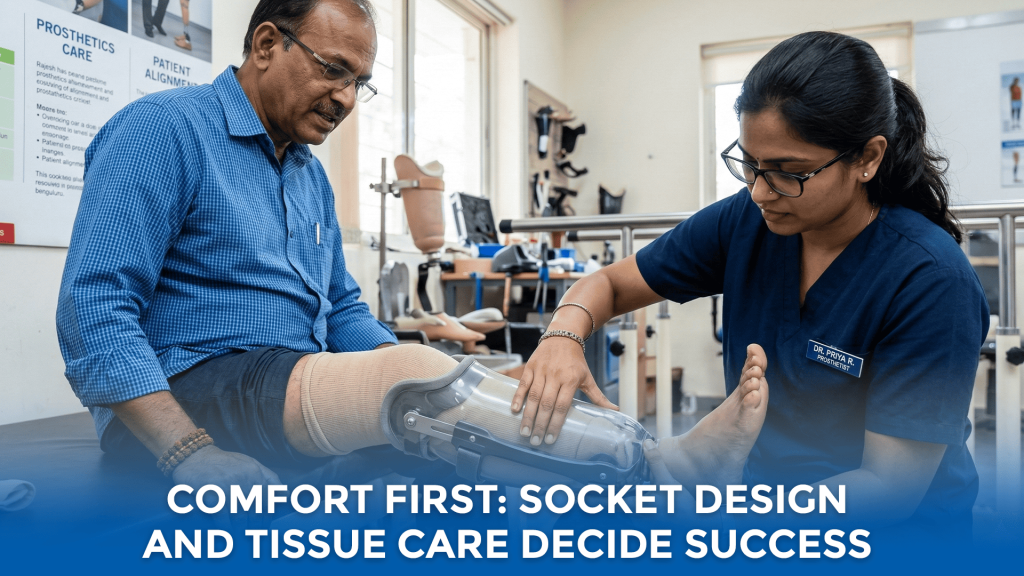
Comfort First: Socket Design and Tissue Care Decide Success
People stop using prostheses for one main reason. Pain. If wearing the limb hurts, it will stay in the corner. Progress slows down immediately.
Socket fit is the make-or-break factor because the socket is the interface between your body and the prosthesis.
What clinicians look at during socket planning
- Residual limb shape, skin condition, scars, and sensitivity
- Where bone is prominent and needs relief
- Where soft tissue can take load safely
- Limb length and muscle control
- Sweating pattern in Indian weather
Why skin care is not optional
- Heat, sweat, and friction are real problems in India. A liner that works in a cool clinic may behave differently in summer travel.Practical skin care and fit steps include:
- Checking for redness that does not fade quickly
- Managing volume changes using socks or fit adjustments
- Reviewing suspension method so it stays secure without skin damage
- Planned follow-ups for small corrections, not waiting for a big problem
Comfort improves consistency. Consistency improves gait. Gait improves confidence. That chain is the foundation of functional prosthetics.
Once comfort becomes stable, confidence starts showing up in work and social life, not only in walking practice.
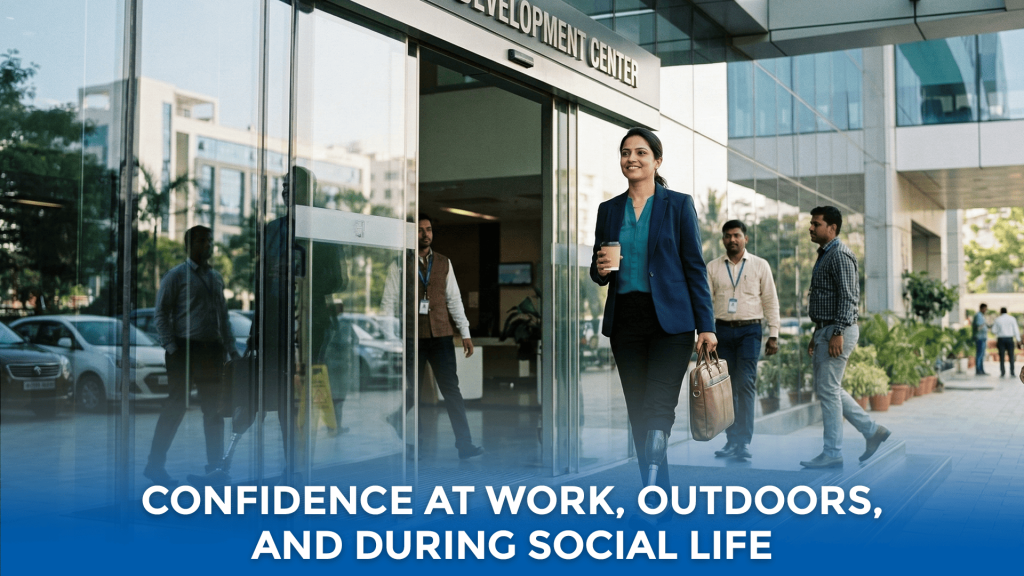
Confidence at Work, Outdoors, and During Social Life
Mobility is tied to dignity. When you trust your steps, you stop planning everything around “what if I fall” or “what if people stare”.
People often regain confidence in phases:
- Indoor confidence first
- Then short outdoor confidence
- Then public places and work routines
This is also why you see real amputee success stories across age groups:
- Students returning to classes and college
- Professionals going back to office roles
- Parents managing school runs and errands again
- Older users attending functions without needing constant support
The device supports movement, but confidence builds through repetition and training. No shortcuts here.
Confidence is great, but independence is measured in tasks, so let’s talk about daily activities and how prosthetics improve control and endurance.
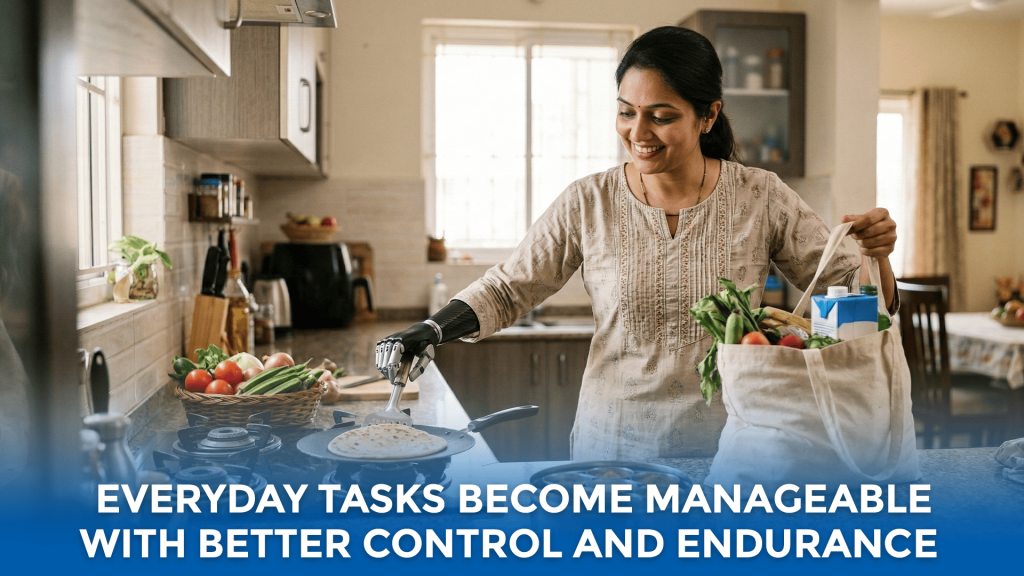
Everyday Tasks Become Manageable With Better Control and Endurance
Independence is not only about walking far. It is about handling routine tasks with less dependence.
Common daily targets during training
- Safe movement in bathroom and kitchen
- Carrying light bags while maintaining balance
- Getting into autos, cabs, and buses safely
- Desk-to-stand transitions at work
- Turning in narrow spaces at home
For lower-limb users, the key is stance stability and hip control. For upper-limb users, training is different. It focuses on:
- Grip control and release timing
- Shoulder mechanics and avoiding overuse
- Using the prosthesis for stabilising objects, not only lifting
These are practical prosthetic limb advantages. Not dramatic, but very real in daily living.
Independence also needs long-term body safety, because poor mechanics can create new pain in the back, hips, and the sound limb.

Long-Term Body Balance, Joint Protection, and Energy Use
If alignment is not right, the body compensates. Over time, that causes overuse problems. Many amputees develop pain not because of limb loss, but because of repeated compensation patterns.
Long-term checkpoints clinicians track
- Pelvic level while standing and walking
- Step length symmetry
- Trunk lean or “throwing the body” to move the limb
- Overloading the sound limb
- Fatigue levels after longer walking
This is where good prosthetic mobility solutions protect your future health. You are not only walking today. You are protecting your back and joints for years.
You do not need perfect gait. You need a safe, repeatable gait. In studies using validated tools such as the Amputee Mobility Predictor, prosthesis users consistently score better on walking and daily activity performance tests than no-prosthesis benchmarks, and these scores correlate with real-world independence.
Now comes a practical part that decides daily satisfaction, matching the prosthetic design to your lifestyle and terrain.
Matching Prosthetic Design to Lifestyle, Terrain, and Daily Demands
Your final setup must match your real life, not catalogue language. Indian terrain and routine should be part of planning from day one.
| Lifestyle need | Useful clinical choice | Daily benefit |
| Office and indoor mobility | Lightweight socket, stable foot setup | Better all-day wear tolerance |
| Mixed indoor-outdoor use | Adaptive foot response, tuned alignment | Safer walking on varied surfaces |
| High activity routine | Dynamic foot class, stronger suspension | Better control during faster movement |
| Above-knee mobility focus | Advanced knee unit with programmed resistance | Improved step confidence and smoother gait |
| Heat and sweat management | Breathable liner strategy and fit follow-up | Better skin comfort in Indian climate |
This table highlights practical prosthetic limb advantages. Your final setup must match your real life, not catalogue language.
This is where prosthetic limb advantages become practical. The right choice reduces fear and reduces daily effort. A good design still needs a good team behind it, so let’s talk about what recovery support should look like.
Why KARE Prosthetics & Orthotics Is a Strong Partner for Recovery
KARE Prosthetics & Orthotics works with a full rehabilitation mindset. We focus on outcomes, comfort, and continuity.
We support Prosthetics for amputees through customised lower-limb and upper-limb options,orthotic care, diabetic foot care, and follow-up rehab pathways. Our clinical team includes trained prosthetists and orthotists with biomechanics expertise, fitting precision, and practical gait correction experience.
What you get with our approach:
- Custom limb planning based on anatomy, activity, and goals
- Advanced component pathways including microprocessor and energy-response systems
- End-to-end workflow: assessment, casting, fitting, gait training, and follow-up
- Patient education for residual limb care, phantom sensation handling, and wear schedule discipline
- Multiple options for varied budgets and life stages, including paediatric and active users
So, you get a long-term partner, not a one-time device handover.
How to Select the Right Prosthetic Plan for Long-Term Comfort
Choosing well at the start saves time and discomfort later. Use this simple decision path.
Check Clinical Depth Before You Check Pricing
Ask about the gait lab process, alignment protocol, follow-up schedule, and skin management system. A strong process beats marketing claims.
Demand a Written Adaptation Plan
You need milestones for week one, month one, and month three. You also need training goals for indoor and outdoor confidence.
Confirm Service Access After Delivery
Repairs, socket revisions, liner replacements, and emergency support must stay clear from day one.
Ask for Real Rehabilitation Integration
True recovery includes physio coordination, endurance progression, and movement confidence work. That is how amputee success stories become real outcomes.
Final Thoughts
A well-planned prosthetic journey changes movement, confidence, and participation in a very real way. You gain control over routine tasks, work goals, and social life. You reduce physical strain and improve long-term balance. Most importantly, you stop living every day around limitations.
If you want practical progress with clinical clarity, choose prosthetics for amputees with full rehab support, custom fitting, and consistent review. Connect with KARE for a personalised mobility pathway.
FAQs
How can prosthetic limbs improve daily mobility for amputees?
With proper alignment and training, users get better balance, step control, and endurance. They walk safer, stand longer, and move through home, work, and public spaces with less fear. These are core prosthetic limb advantages.
What activities become easier with a custom prosthetic limb?
Walking, stairs practice, commuting, cooking, office movement, and social visits often become easier. Better fit supports longer wear and smoother routines, which improves daily life with prosthetics.
How long does it take to adapt to a prosthetic limb?
It varies by limb level, fitness, skin tolerance, and training quality. Many users see early progress within weeks, and stronger independence over months, especially with structured prosthetic mobility solutions.
Can prosthetics help amputees regain independence at home or work?
Yes. With structured fitting and gait training, users regain task confidence. They manage household routines, commuting, and job demands with less daily dependence. This is the heart of functional prosthetics.
What success stories highlight the impact of prosthetics on everyday life?
Common amputee success stories include returning to work, resuming studies, travelling locally, and handling family responsibilities again. Consistent rehab and regular reviews usually decide how strong these outcomes become.