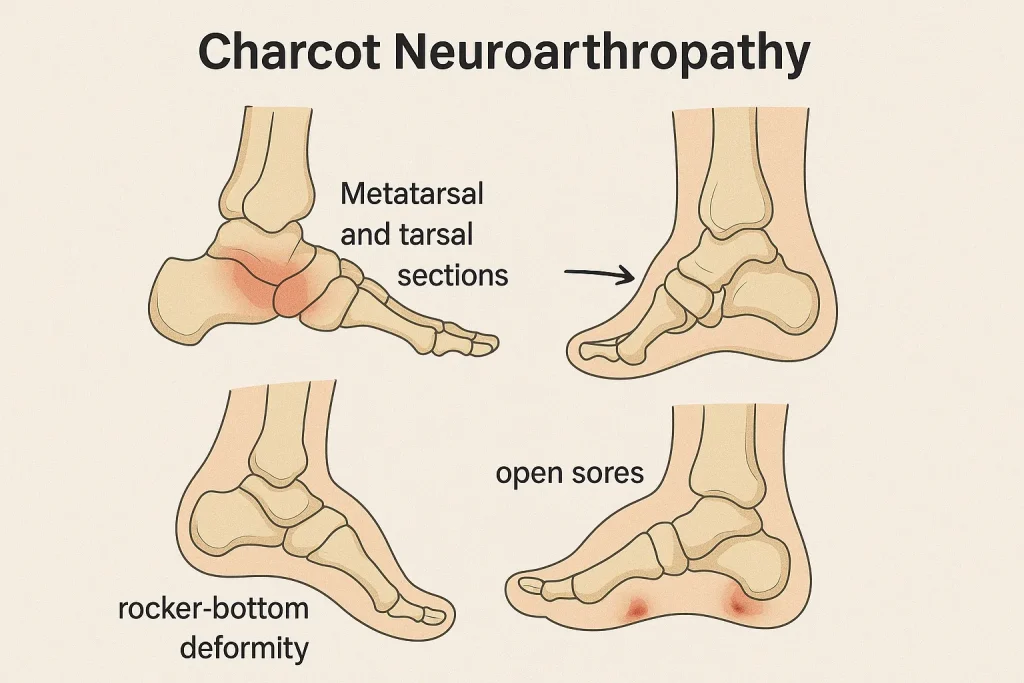
Noticing one foot turn hot and swollen while the pain stays strangely low can feel unsettling. Many people brush it off, especially if neuropathy has already dulled sensation. But that “it does not hurt much” signal is exactly what makes Charcot foot so dangerous. You can keep walking like normal while tiny fractures form, the arch starts to collapse, and joints quietly shift out of place.
This is why early offloading and strict immobilisation matter so much. The right protection can stop further damage and give the bones a chance to heal in a safer position. For many patients, a crow walker for charcot foot becomes a key part of recovery because it stabilises the foot, reduces stress with every step, and helps you stay protected during daily movement.
We will break down what is happening inside the foot during Charcot changes, how to spot early warning signs, and why a protective walker can support healing.
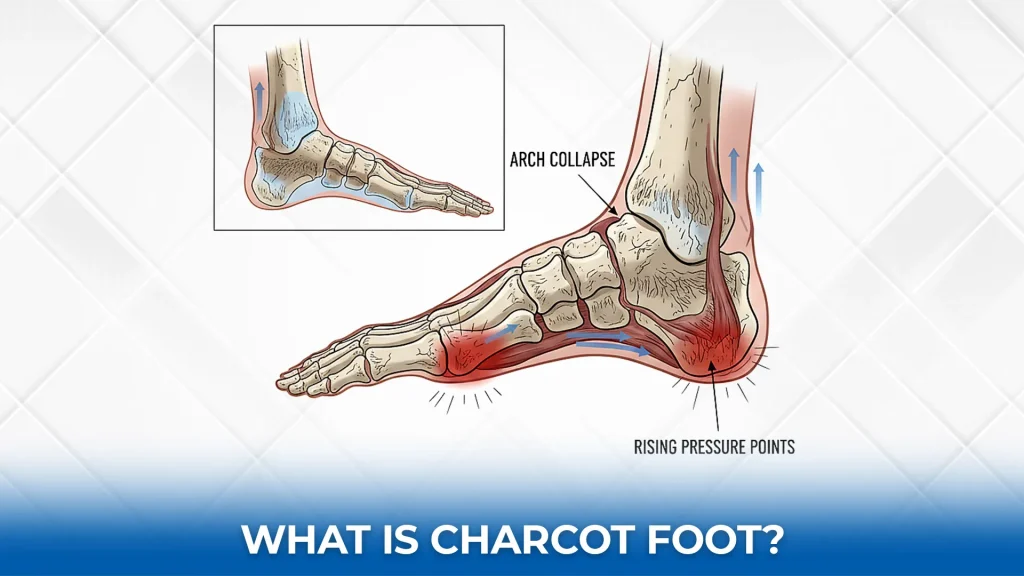
What is Charcot Foot?
Charcot foot is a breakdown of bones and joints. Nerve damage reduces normal pain signals. So you may keep loading a foot that needs rest. Small fractures can progress into collapse. Then arches flatten, and pressure points rise. That pressure can lead to skin injury.
Many people miss the early phase. They assume sprain, gout, or infection. Doctors also need careful checks. They compare skin warmth, swelling, and foot shape. They also look at imaging signs. They track stability over time. This condition needs strict control of movement. Otherwise, the foot can deform fast.
Early Signs and Symptoms of Charcot Foot You Should Not Ignore
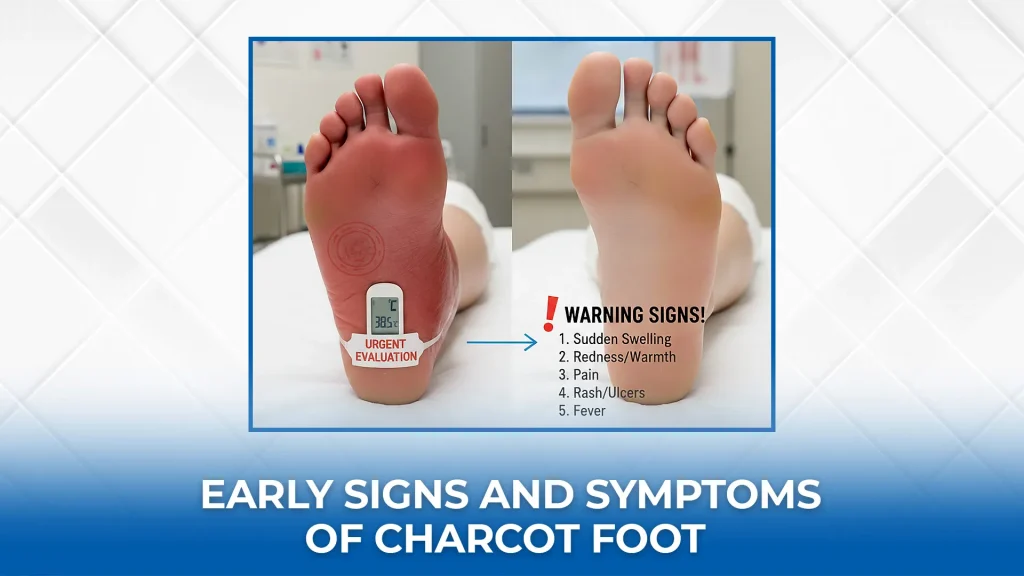
Charcot foot often starts with changes you can see. Pain may stay mild. Still, the risk stays high. Watch for these signs, then act fast:
- Warmth in one foot versus the other
- Visible swelling around midfoot or ankle
- Redness that looks like infection
- A “spongy” feeling under the arch
- Shoe fit changing over days
- New pressure marks, blisters, or callus build-up
Also, check your daily routine. Long standing at work can worsen strain. So can walking on uneven roads. Meanwhile, neuropathy can hide the damage. Therefore, treat swelling and warmth as urgent signs. Seek a foot and ankle evaluation early.
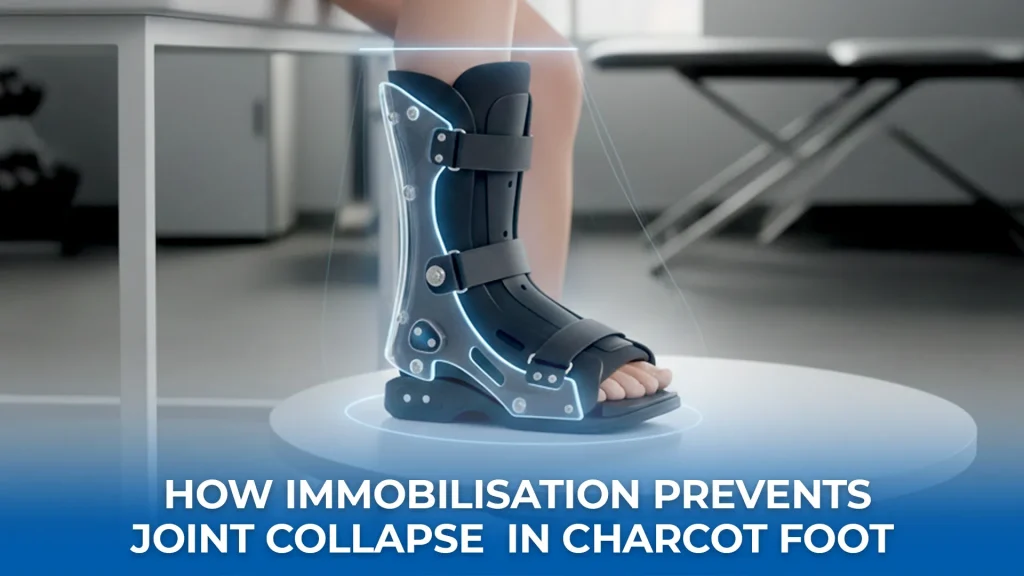
How Immobilisation Prevents Joint Collapse and Micro Trauma in Charcot Foot
Immobilisation stops further bone injury. It reduces shear forces in joints. It also lowers inflammation triggers. In Charcot foot treatment, doctors aim to protect the foot while bones heal. They often start with strict offloading and stabilisation.
Here is the key point. You need to stop micro-trauma. Each step can add stress to weak bones. That stress can cause joint collapse. As a result, even a “short walk” can harm healing.
Medical sources note that Charcot neuropathic osteoarthropathy (Charcot foot) affects about 0.1 % to 0.9 % of people with diabetes.So, immobilisation supports both bone stability and skin safety. Total contact casting can help early on. Yet many patients need a longer plan. That is where a structured walker can help.
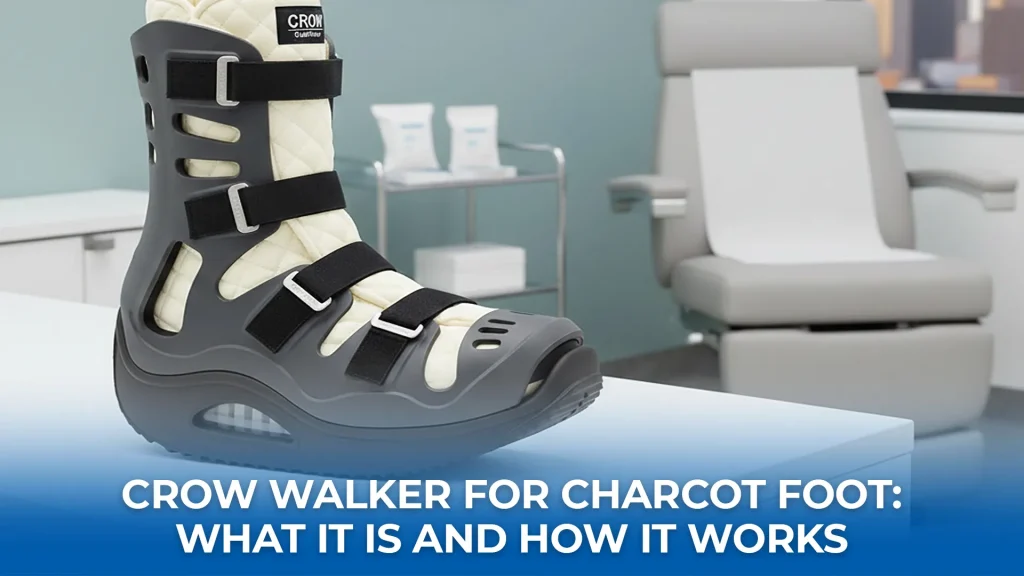
Crow Walker for Charcot Foot: What It Is and How It Works
A CROW device works like a protective shell. The name expands to Charcot Restraint Orthotic Walker. Clinicians design it to limit motion in the foot and ankle. It also spreads pressure across a wider surface.
A well-made CROW walker uses a rigid outer structure. It holds the foot in a stable position. It also uses a rocker-style sole for smoother steps. That rocker reduces forefoot stress during walking. In addition, padding supports comfort and reduces friction.
It functions like a removable cast. Yet it allows better skin checks. You can remove it for hygiene and inspection. However, you must follow wear guidance. Otherwise, the foot gets exposed again.
Medical sources note that among those with Charcot foot, ~63 % will go on to develop a foot ulcer, which increases infection and amputation risk. A Crow walker for Charcot foot fits best when a trained clinician handles moulding. That is why custom fitting matters. It controls the contact points. It also reduces rubbing and hot spots.

Crow Walker For Charcot Foot: How It Protects Charcot Foot Recovery
You need a stable environment for healing. Bone and joint structures need time. They need reduced load and reduced twisting forces. A CROW walker supports this goal in a practical way.
In Charcot foot recovery, the CROW walker helps you in several ways:
- It limits motion that drives joint collapse
- It redistributes pressure away from fragile zones
- It supports safer walking with guided mechanics
- It lowers ulcer risk by controlling shear
- It helps you stay consistent with offloading
Consistency matters. Many patients struggle with strict rest. Work, home duties, and travel make rest hard. So a protective walker gives structure. It helps you keep a routine. It also supports follow-up adjustments.
You also gain visibility into skin health. You can inspect for redness or blisters. Then you can report changes early. That early action prevents wounds from growing.
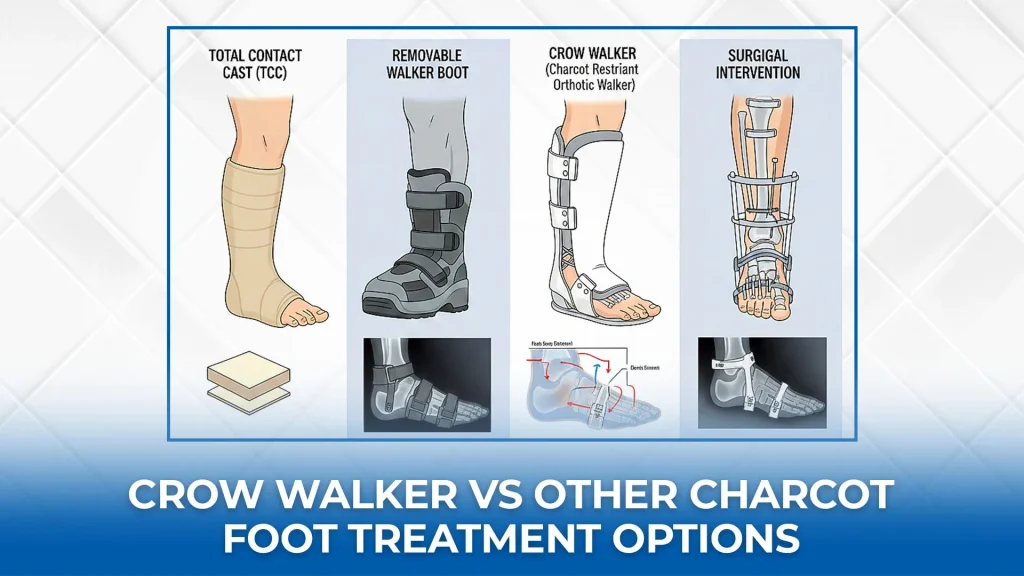
Crow Walker for Charcot Foot Vs Other Treatment Options
Doctors choose the option that matches your stage and risk. Some patients need casting first. Others shift into a walker when swelling settles. Some need surgery when deformity turns severe. Still, many cases improve with non-surgical care when started early.
Below is a simple comparison for decision support:
Option | Main purpose | Key limitation | Best fit in practice |
Total contact cast | Strict immobilisation and offloading | Needs frequent cast changes and close monitoring | Early unstable phase with high swelling |
Removable walking boot | Basic support and offloading | Easy to remove, so compliance drops | Mild cases with strong adherence |
Charcot restraint orthotic walker | Long-term stability with removable access | Needs accurate custom fit and follow-up | Long recovery plan and ulcer prevention |
Surgery | Correct deformity or unstable joints | Higher risk, longer downtime, wound risk | Severe collapse or recurrent ulcers |
This table does not replace clinical advice. Yet it shows a practical flow. First, stabilize. Next, protect and offload. Then, maintain long-term foot shape and skin safety.
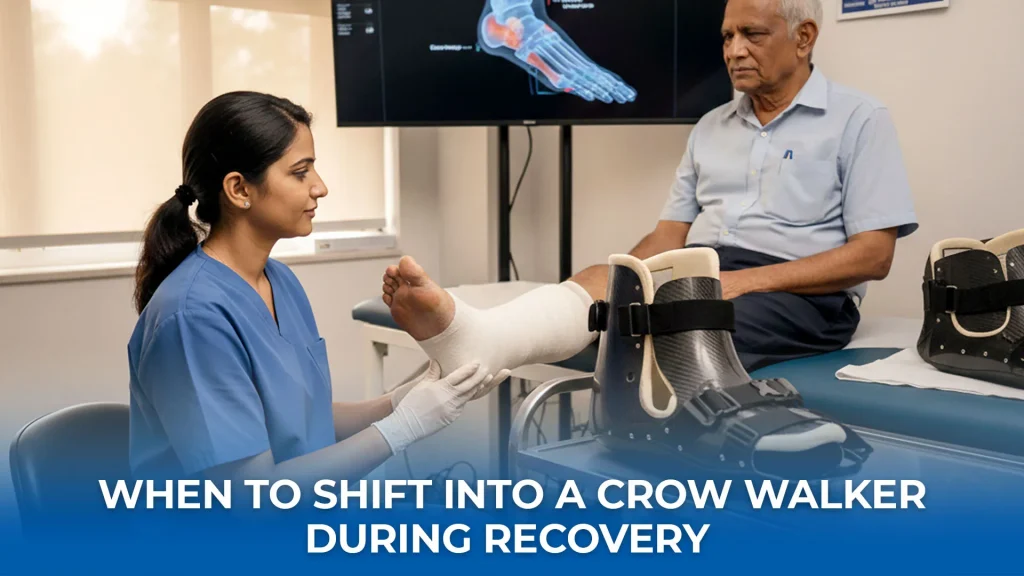
When to Shift Into a CROW Walker During Recovery
Your doctor guides timing based on clinical signs. They check swelling reduction. They check the warmth difference. They also review imaging and stability. When the foot calms down, the plan often moves from cast to walker.
Your doctor decides timing based on swelling, warmth difference, imaging, and joint stability. Once the acute phase settles, the plan often shifts from cast to walker for safer daily movement and easier skin checks.
- Choose a custom Crow Walker that matches foot shape and arch.
- Protect bony areas and avoid edge pressure near the ankle.
- Ask for fit reviews and gait checks during follow-ups.
- Balance leg height with a shoe raise on the other side.
- Wear the device during weight-bearing only.
- Inspect skin daily and report redness that stays.
This routine supports Charcot foot recovery with fewer setbacks.

How KARE Prosthetics & Orthotics Supports Charcot Foot Patients
KARE supports patients through clinical assessment and custom care. The team works on orthotic planning for mobility needs. It also supports people with disabilities through international-quality prosthetics and orthotics.
In Charcot care, KARE focuses on safe offloading and stable walking. We guide fitting, usage, and follow-up adjustments. We also support integrated foot-care planning with related orthotic solutions.
KARE support highlights:
- International-standard technology and materials for orthotic fabrication
- Clinicians trained in biomechanical and clinical assessment
- Patient-centric planning focused on long-term mobility
- Diabetic foot-care range that supports pressure relief needs
- Custom Crow Walker fitting based on foot shape and deformity pattern
- Education for wear routine, skin checks, and device care

Final Thoughts
Charcot foot can change fast when you miss early signals. Yet you can reduce risk with early action. You need strict offloading, planned follow-up, and a stable walking strategy. A well-fitted walker supports alignment and pressure control. It also supports safer movement during healing.
If you need a clinical fitting plan for a Crow walker for Charcot foot, reach out to KARE today, and we will guide you.
FAQs
What is charcot foot and Why does it require specialized Treatment?
Charcot foot breaks bones due to neuropathy. You need offloading, immobilisation, and close monitoring to prevent collapse, ulcers, and long-term deformity.
How does a crow walker support recovery in charcot foot patients?
It restricts joint motion, spreads plantar pressure, and supports safer walking. It also allows skin inspection, which reduces blister and ulcer risk.
Is a Crow walker more effective than a traditional cast for charcot foot?
A cast immobilizes strongly. A CROW supports long-term use with removability. Doctors choose based on stage, swelling, skin risk, and adherence.
How Long Should a Patient Wear a Crow Walker for Charcot Foot Recovery?
Your clinician sets duration based on warmth, swelling, and imaging. Wear it during weight-bearing until stability returns and skin stays safe.
Can Patients walk safely and perform daily activities While using a Crow Walker?
Yes, with clinician guidance. Follow offloading rules, inspect skin daily, and use gait support if needed. Avoid long walks and uneven ground.