



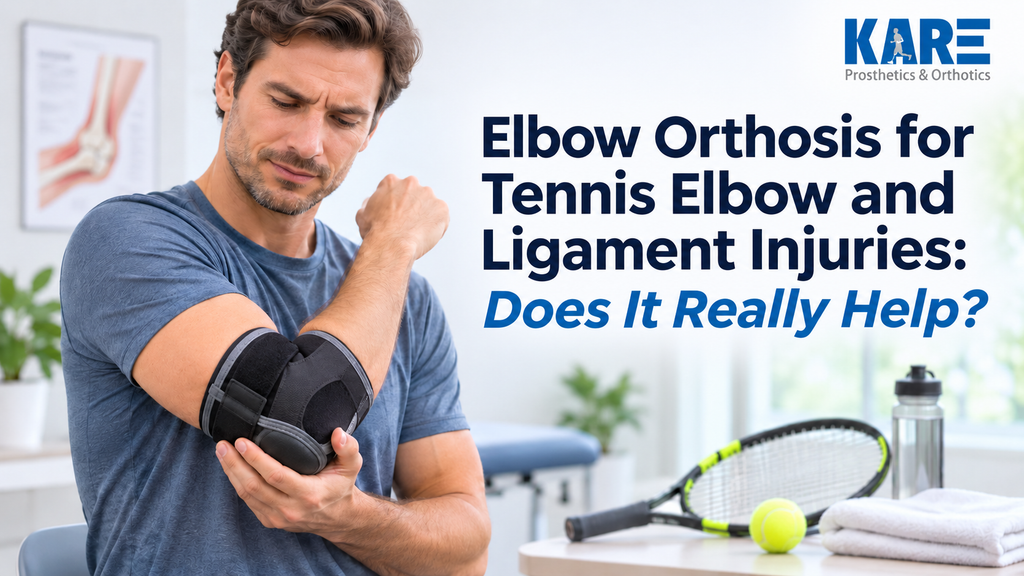
Does elbow pain return when you grip a pan, lift a bag, use tools, or swing a racket? An elbow orthosis for tennis elbow can reduce strain during selected tasks, but the result depends on diagnosis, brace type, fit, and the movement causing pain. For ligament injuries, the goal changes. A brace may need to limit joint motion while healing tissue settles.
How an Elbow Orthosis for Tennis Elbow Changes Load Around the Joint
Elbow pain can start in different tissues. Tennis elbow usually affects the common wrist extensor tendon near the outer elbow. Ligament injuries affect stabilising tissue around the joint. So, one strap cannot solve every elbow problem.
Bracing changes how force reaches painful tissue. A counterforce strap presses the upper forearm, while a hinged brace can block risky angles or protect healing tissue.
KARE’s guide to prosthetics and orthotics explains how an orthosis supports an existing body part rather than replacing it.
How Bracing Can Reduce Strain During Gripping and Arm Work
Gripping activates wrist extensor muscles, even when pain appears near the elbow. That explains why typing, cooking, lifting bottles, or tool work can irritate tennis elbow.
A tennis elbow support brace usually applies pressure below the painful area. It should not press over the sore bony point. With correct fitting, an elbow orthosis for tennis elbow may lower tendon load during repeated gripping. However, it should not encourage you to keep overloading an irritated tendon.
A work-focused study found 88.2% (15/17) of dynamic-orthosis users still wore the device at work after 3 months. That finding speaks to wearability, although the small cohort cannot answer every treatment question.
Can Bracing Ease Tennis Elbow Pain During Daily Tasks?
A brace may make a painful task easier by changing force transmission. Yet pain relief during use does not prove that the tendon has healed.
If turning a key hurts, a brace may reduce strain during that task. Then exercise can build wrist extensor capacity. The elbow orthosis for tennis elbow supports activity while rehabilitation restores loading tolerance.
People often call this elbow orthotic recovery, but the brace should serve the treatment plan. For broader guidance, KARE explains what an orthotic is and how clinicians choose one.
How a Brace Protects Healing Elbow Ligaments
A ligament injury needs a different approach. First, the clinician identifies which movement creates stress and which side needs protection.
A hinged elbow brace for ligament injury may control flexion, extension, or side-to-side stress. The clinician can change the allowed range as healing progresses. That staged approach protects tissue while avoiding unnecessary stiffness.
A sports elbow injury brace may support return to training when a clinician wants controlled motion. However, instability or repeated giving-way needs assessment before sport resumes.
Counterforce Strap or Hinged Orthosis: Which One Fits the Problem?
These braces look different because they perform different jobs.
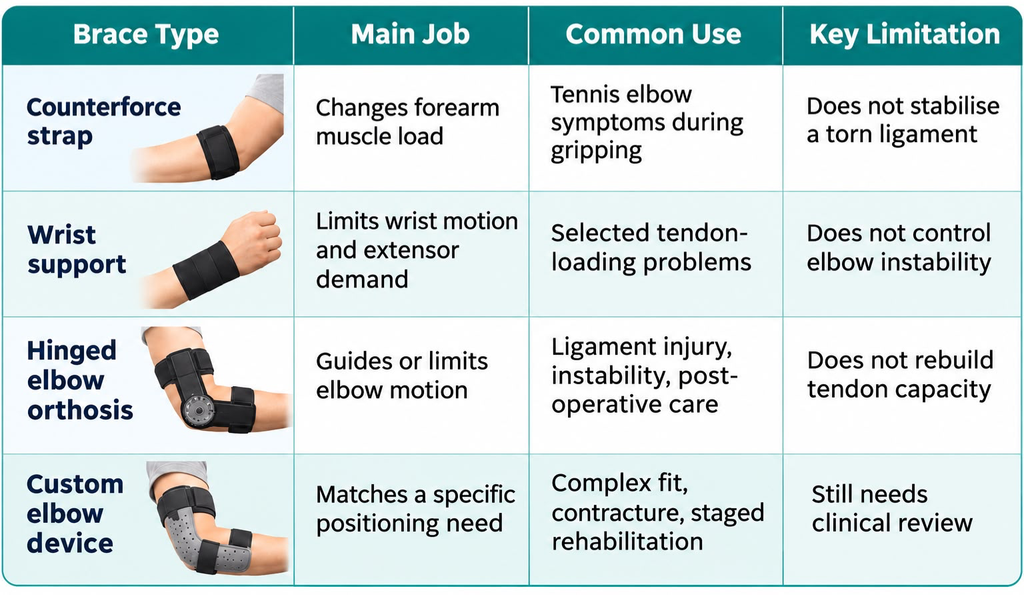
The key question is what movement needs support. A custom elbow orthosis helps when standard sizing cannot control the required angle or joint position.
When to Wear the Brace and When to Reduce Use
Wear time should follow the treatment goal. With tennis elbow, some people use a brace during painful tasks. Ligament care may require longer protection.
The same study reported 100% (18/18) workplace use of the counterforce brace in the conventional-treatment group after 3 months. This supports its practicality during work, but it does not prove that one brace suits everyone.
As symptoms settle, the elbow orthosis for tennis elbow should support gradual loading. KARE’s article on wrist brace orthosis use explains why upper-limb support depends on the tissue and activity involved.
Signs Your Brace Needs a Fit or Support Review
Tighter does not mean better. Numbness, tingling, swelling, slipping, or pressure over the sore point can signal a fit problem.
A tennis elbow support brace may sit too high or too low. A hinged brace may need angle changes. During elbow orthotic recovery, review helps when swelling falls or the brace starts shifting.
Do not keep tightening a poor fit. Ask the clinician to review position, tension, and treatment goals.
KARE India Orthotic Choices for Elbow and Upper-Limb Support
At KARE, our work in advanced prosthetics and orthotics in India starts with one-to-one clinical assessment, then matches the device to your movement, skin, pain pattern, work, and treatment plan. Our team includes qualified prosthetists and orthotists, with access to American Board-certified clinical expertise.
We provide custom-made and prefabricated options, and clinicians can modify braces when required. Our orthotic service includes evaluation, fitting, education, rehabilitation, adjustments, and follow-up. We also use lightweight components, CAD/CAM, and advanced fabrication methods when suitable.
- International technology partners include Össur, Orthomerica, ST&G, and Becker Orthopedics
- Clinical access covers Bengaluru, Chennai, Hyderabad, Kolkata, Thiruvalla, Durgapur, Calicut, and other Indian locations
- A custom elbow orthosis can address fit or motion-control needs that standard braces may not match
KARE’s guide on how orthotics support comfort and mobility connects orthotic choice with movement and daily use.
Innovator X Post Operative Elbow for Controlled Motion After Injury
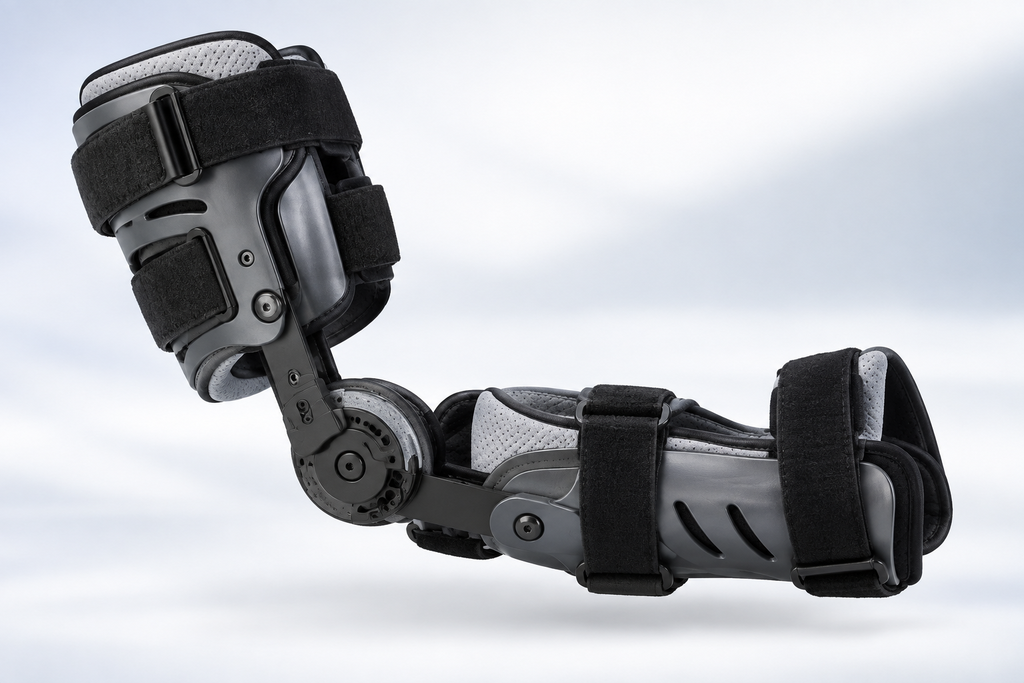
This post-operative brace may suit cases that need defined motion control. Clinicians may consider it after selected ligament injuries, surgery, or instability.
An elbow brace for ligament injury can protect healing structures while allowing planned motion. The orthotist should set and review that range.
Formfit Wrist Support for Tendon and Soft-Tissue Loading
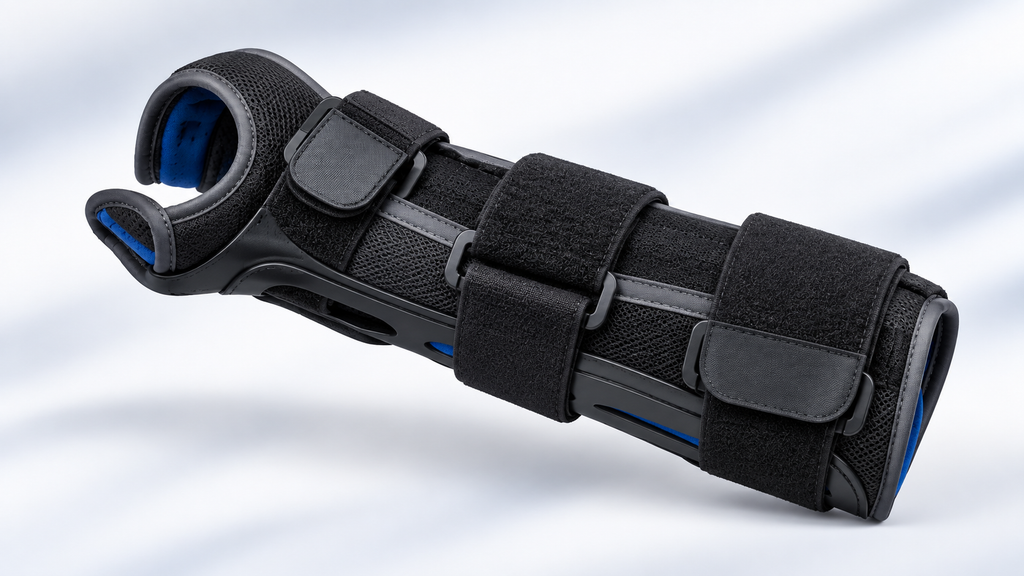
Tennis elbow begins at the elbow, but wrist position changes extensor muscle work. A wrist support may help when reduced wrist motion unloads irritated tissue.
This device does not stabilise the elbow. Instead, it may complement a sports elbow injury brace when the clinician wants less wrist extension. Össur lists Formfit Wrist Support for selected wrist injuries.
Elbow Orthosis With Turnbuckle for Joint Positioning
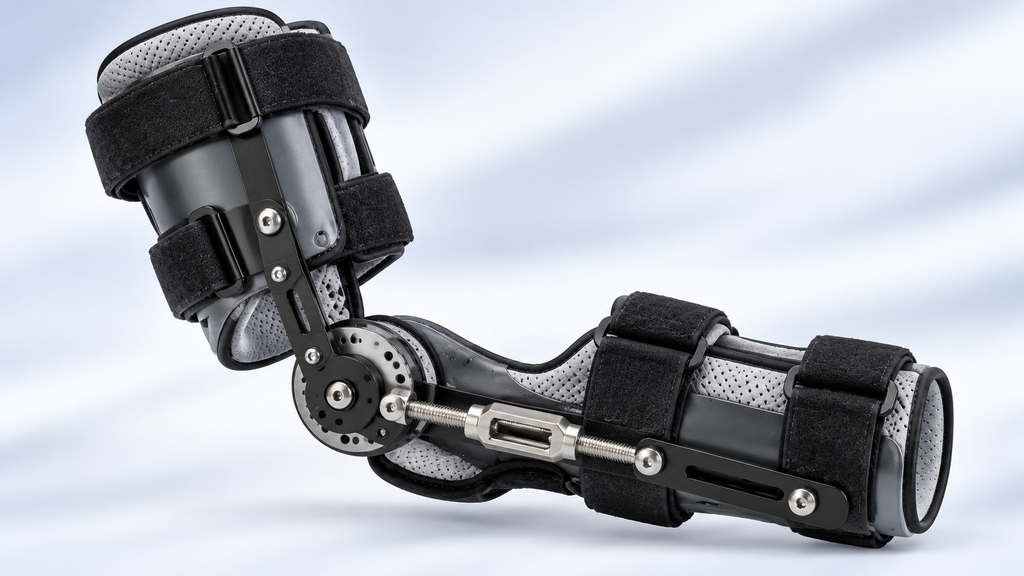
A turnbuckle elbow orthosis serves another purpose. KARE describes it mainly for elbow contracture and tightness, where clinicians need controlled positioning.
It is not a routine tennis elbow strap. Instead, clinicians use it when joint range needs structured management.
When to Ask an Orthotist About Elbow Pain or Instability
Seek assessment when pain keeps returning, grip strength drops, the joint feels unstable, or symptoms follow a fall or sports injury. Numbness also needs review.
A clinician can separate tendon pain from ligament injury, stiffness, or nerve irritation. Then brace choice becomes more precise. Ligament problems may need a hinge, while tendon pain often needs load management and exercise.
Also request review when a brace causes skin pressure, tingling, swelling, or increasing pain. The device should not create another problem.
Conclusion: Can Bracing Help Tennis Elbow and Ligament Injuries?
Bracing can help selected patients when the device matches the tissue and task. Tennis elbow needs tendon-load control, while ligament injuries may need movement protection.
At KARE, we assess your movement first, then select, fit, and review the support around your clinical plan. If you need an elbow orthosis for tennis elbow, speak with our orthotic team for a fitting plan built around your work, sport, pain pattern, and recovery goals.
Frequently Asked Questions
What is an elbow orthosis and how does it help tennis elbow?
An elbow orthosis reduces tendon load during selected activity, while rehabilitation rebuilds strength, grip tolerance, and movement capacity around the painful outer elbow area daily.
Can bracing alone heal a ligament injury?
No. A brace can protect healing tissue, but ligament recovery also needs diagnosis, activity control, guided exercise, and medical review when instability or pain persists.
How long should an elbow brace be worn during recovery?
Wear time depends on the diagnosis, tissue stage, symptoms, work demands, and brace type. Follow your clinician’s schedule and arrange review regularly as movement improves.
Is a custom orthosis better than an off-the-shelf brace?
A custom device suits complex alignment, motion control, or difficult fit needs. A prefabricated brace may work well when standard sizing supports the required movement.
When should someone see a specialist for elbow pain?
Seek specialist care for persistent pain, weakness, instability, numbness, swelling, traumatic injury, or symptoms that return despite rest, load changes, and guided exercise during activity.

