



The progress in limb replacements has been fast. Newer designs are lighter, more practical, and easier to use. These days, a truly innovative prosthetic solution does more than help someone move around. It helps them feel connected to the world again in a real, physical way.
It’s pretty incredible how robotics and AI are starting to “talk” directly to the nervous system, which lets people move naturally and even feel textures again.
And when you see what these breakthroughs do in real life, the impact becomes very clear. They help people regain independence and move through the day without feeling defined by physical limits.
To understand why this shift matters so much, it helps to look at what modern rehabilitation actually needs, and where the gaps still are.
Why Innovative Prosthetic Solutions Are Essential in Modern Rehabilitation?
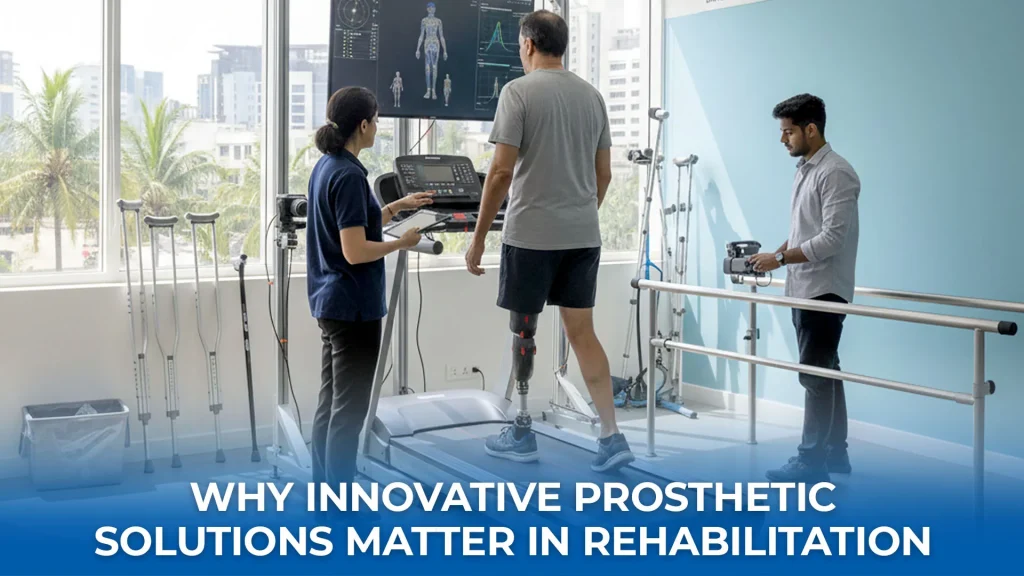
Modern rehabilitation focuses on function, safety, and daily independence. Yet the care gap remains wide. Around 10 million people worldwide need prosthetic care, while conventional services still reach only a small share of that need. This mismatch pushes clinics to rethink delivery, follow-up, and fit quality. An innovative prosthetic solution supports consistent limb rehabilitation through better sockets, smarter joints, and clearer training plans.
It also improves how mobility aids integrate into work, travel, and home routines. When design, fitting, and rehab align, users gain steadier gait, fewer skin issues, and faster confidence during everyday movement.
So what does this look like inside clinics today? The next section breaks down seven solutions that are already being used in modern rehabilitation settings.
7 Clinic-Ready Solutions Used in Modern Rehabilitation
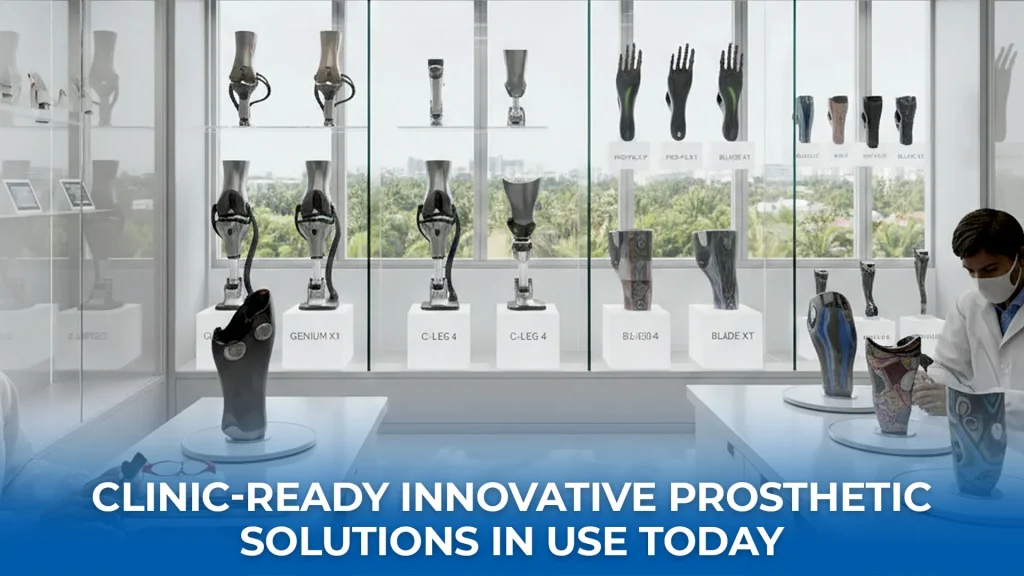
Many centres now offer advanced prosthetics built for Indian routines. Some improve balance. Others reduce socket movement. A few support faster gait practice. Therefore, the right match depends on your limb level, skin health, work routine, and budget. In addition, the prosthetist’s fitting skill often decides comfort more than any single part.
Each option below solves a different pain point. Let’s start with one of the biggest upgrades for above-knee users.
1. Innovative Prosthetic Solution for Smarter Knees: Microprocessor Control
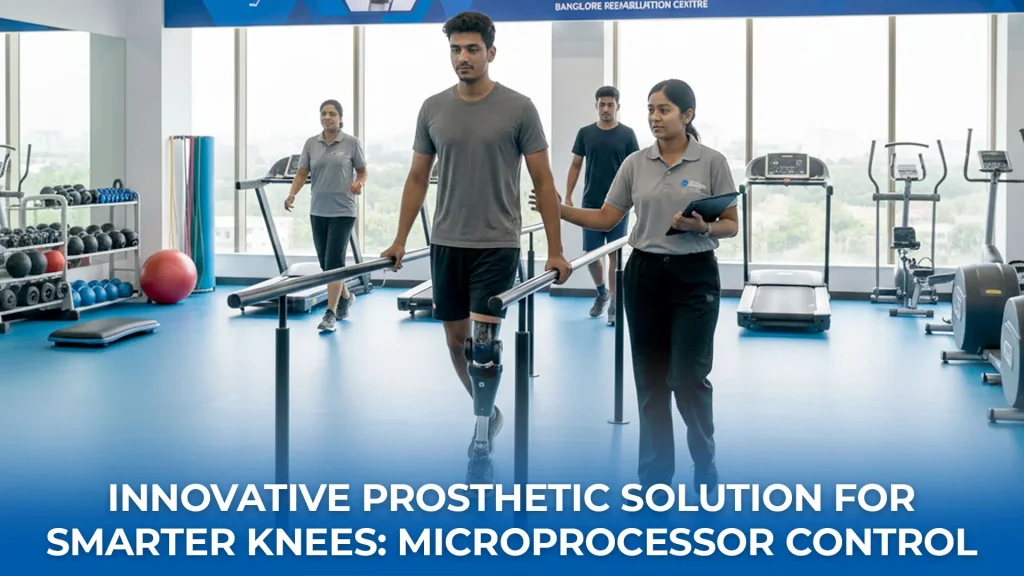
Microprocessor knees read movement many times per second. Then they adjust resistance for slopes and stairs. So you get smoother steps and fewer stumbles. They suit many above-knee users who walk outdoors often. They help on wet tiles, bus steps, and crowded footpaths. Yet you must train your hip control and core strength. You also need routine charging and service checks.
-
- Sensors adapt to speed changes
-
- Stance support improves stability on uneven roads
-
- Clinicians tune settings during gait training
Once the knee feels safer and more stable, many users also start thinking about upper-limb function and daily task independence. That is where myoelectric systems often come in.
2. Myoelectric Upper-Limb Systems for Natural Hand Control
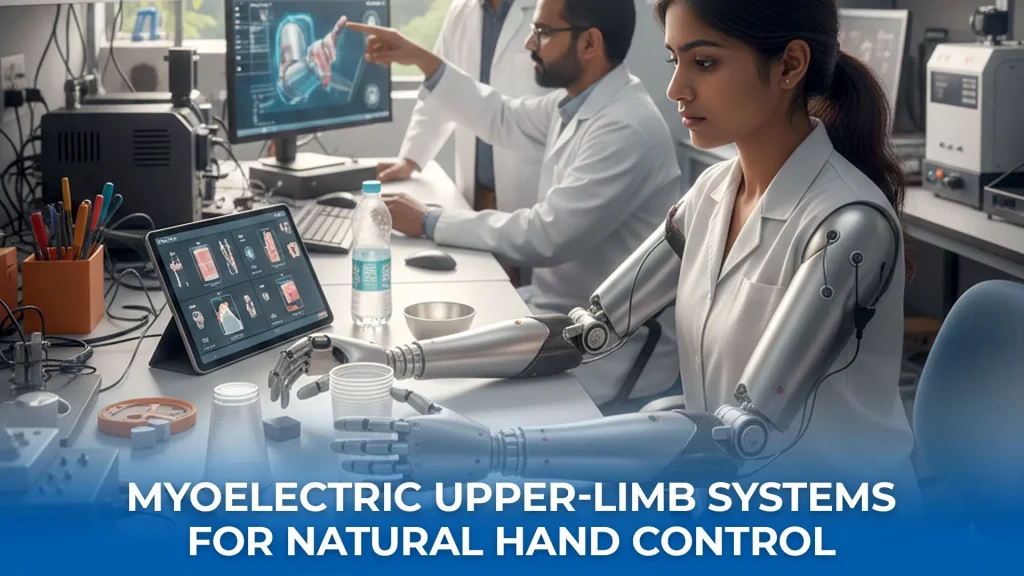
Myoelectric arms use muscle signals from your residual limb. So you open, close, and rotate with a more natural rhythm. You can switch grips for keys, bottles, and tools. Good electrode placement keeps control steady during long office days. Yet you must practise daily, since signal quality changes with sweat and socket fit. In many cases, a therapist sets small goals first.
-
- Multiple grip patterns support daily tasks
-
- Better cosmetics improve social comfort
-
- Training improves fine control over weeks
Upper-limb control is one part of comfort. For many lower-limb users, the bigger day-to-day struggle is socket movement and skin stress. That is why suspension systems matter so much.
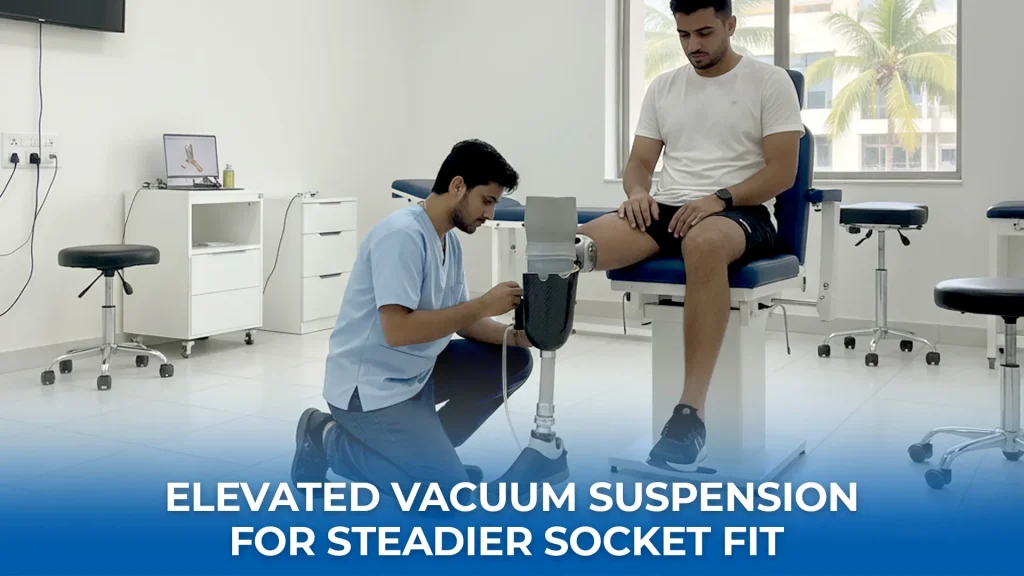
3. Elevated Vacuum Suspension for Steadier Socket Fit
Vacuum suspension pulls the liner and socket together with a sealed system. So the limb stays stable through long hours. Many users report less pistoning and fewer pressure spikes. Vacuum can help control limb volume changes during the day. It suits users who face volume swings during heat and travel. However, you must keep seals clean and check tubing often.
-
- Better fit reduces shear on skin
-
- Socket feels more “locked in”
-
- Clinicians monitor skin, then adjust alignment
When socket fit improves, many users notice they can walk longer. At that stage, the next upgrade often focuses on reducing fatigue and making each step feel easier.
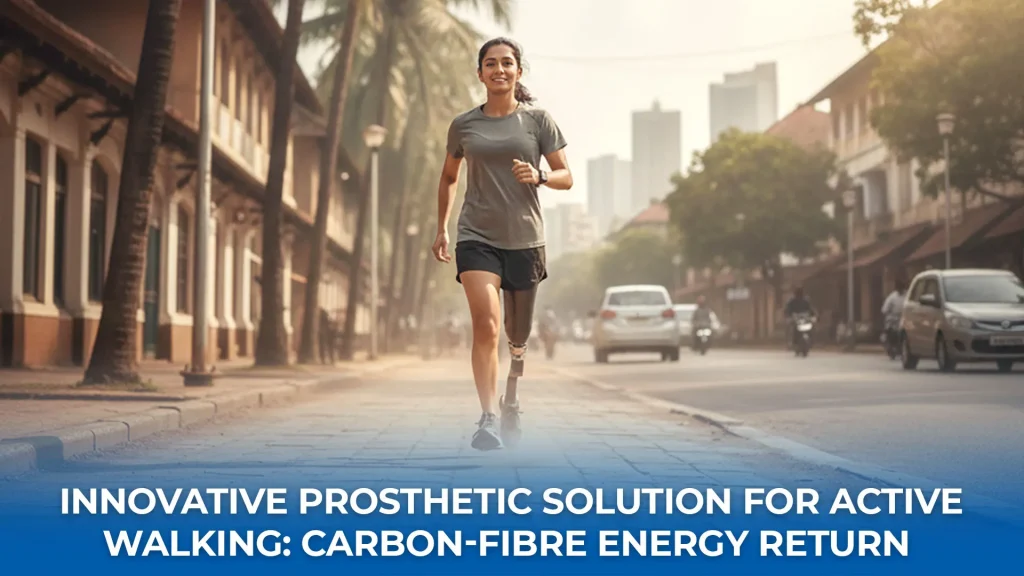
4. Innovative Prosthetic Solution for Active Walking: Carbon-Fibre Energy Return
Carbon-fibre feet store energy during stance. Then they release it during toe-off. So you walk with a spring-like push and lower fatigue. They suit users who walk longer distances or stand for work. Yet you still need proper alignment, or you can feel back or knee strain. In India, you should also match the foot to heat, dust, and daily wear.
-
- Higher energy return supports longer walks
-
- Lighter weight reduces effort
-
- Foot stiffness options match your activity level
Comfort also depends on how well the socket matches the limb’s shape. That is where scanning and repeatable builds are becoming useful, especially when users need adjustments faster.
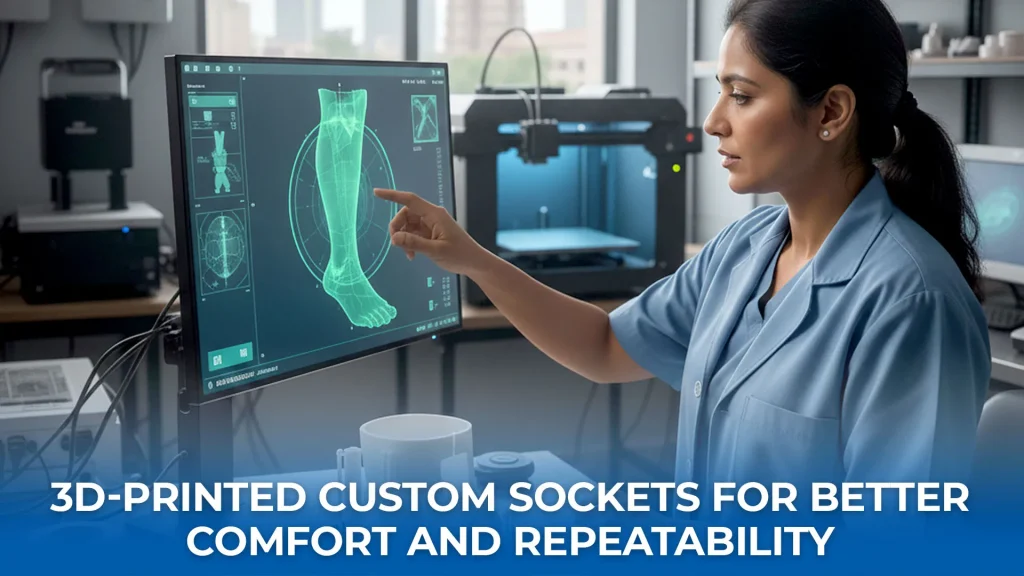
5. 3D-Printed Custom Sockets for Better Comfort and Repeatability
3D printing starts with a scan of your limb. Then software shapes a socket model. After that, the clinic prints a test socket for trial. This route can speed up iterations, since digital files store your shape history. It supports cleaner repeat builds later. Still, a skilled prosthetist must refine trim lines and pressure relief, since printers cannot “feel” tissue tolerance.
-
- Faster trials reduce waiting time
-
- Digital records support future refits
-
- Better symmetry improves comfort
Once the physical fit improves, clinics also focus on tracking how the person is actually walking at home. That is where smart components and app tuning add value.
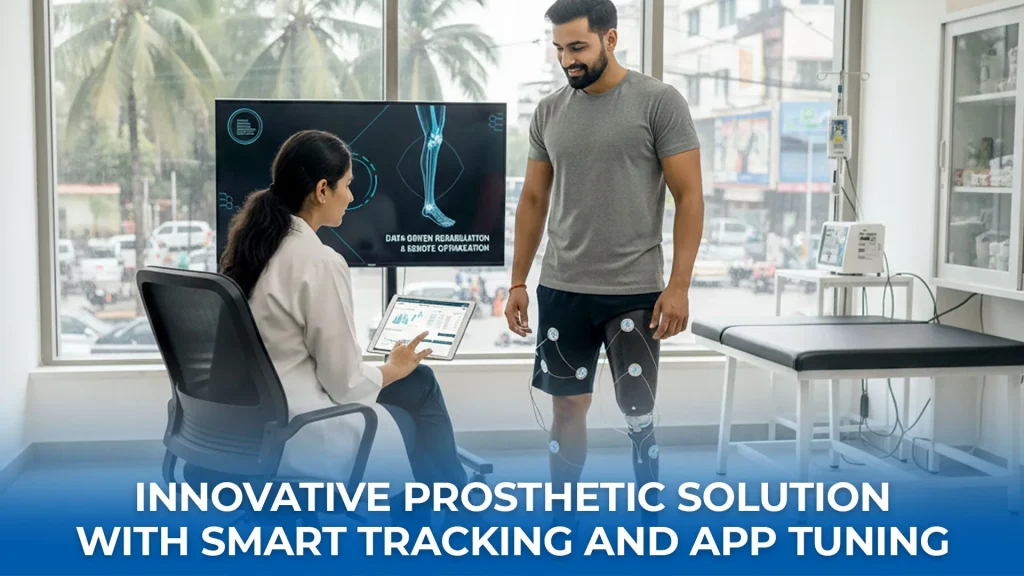
6. Innovative Prosthetic Solution with Smart Tracking and App Tuning
Smart components track steps, stance time, and loading patterns. Then apps show trends that guide rehab goals. Clinics can set targets for step count and symmetry during therapy. Some systems let clinics tune settings without repeated in-person visits. That helps when you travel for work, or when you live far from the centre. Still, you must protect data access, and you must keep sensors calibrated.
-
- Data supports goal-based gait coaching
-
- Remote reviews reduce repeated travel
-
- Alerts can flag alignment issues soon
Adults usually optimize for work and independence. For children, the challenge is different. Their bodies change quickly, so the prosthetic plan must keep up without slowing them down.

7. Paediatric Solutions that Grow with Children
Children outgrow sockets fast. So paediatric designs focus on adjustability and quick refits. Clinics often plan review cycles, then adapt components as gait changes. Teams focus on play, balance, and confidence, not just walking speed. A lighter setup keeps school stairs and playtime manageable. Clinics guide parents on stump hygiene and liner care. Parents need clear care routines, since skin changes fast in kids.
-
- Adjustable parts support growth changes
-
- Lighter builds support school routines
-
- Child-focused rehab keeps motivation high
These solutions show what is possible. But outcomes still depend on how well the clinic delivers fitting, training, and follow-up. That is where the next section fits in.
How KARE Prosthetics & Orthotics Deliver International – Quality Care
We focus on custom limbs, orthotic supports, and flat foot solutions for Indian users. We match advanced prosthetics with strong training plans and steady aftercare. We start with gait and posture checks. Then we map pressure zones and socket comfort.
Next we run trial fittings, and we fine-tune alignment during reviews. We also keep the term Innovative Prosthetic Solution as a care approach, not a tie to other brands.
-
- We design custom prosthetic legs and orthotic support for upper and lower limbs
-
- We work with global technology partners, including Össur, Orthomerica, ST&G, and Becker Orthopedics
-
- We offer options such as microprocessor joints, elevated vacuum systems, and Hi-Fi socket interfaces
-
- We guide fitting, training, and review to support long-term comfort
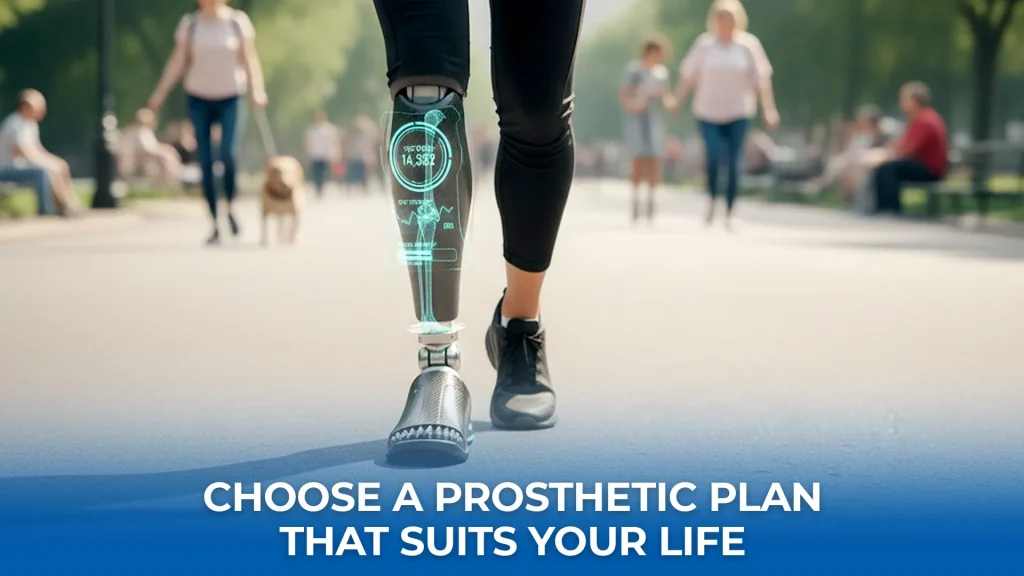
Choosing a Prosthetic Plan that Suits your Life
Start with goals, then move to components. Treat the limb as an assistive device that must fit your routine. For example, office walking needs different tuning than site work. Next, check your skin history, since sensitive skin changes socket choices.
Also, ask about service timelines and spare parts. Then plan rehab sessions with your clinician, since technique shapes outcomes. At the end, balance features with routine.
-
- Ask how the clinic plans limb rehabilitation milestones
-
- Check how the team supports you with mobility aids at home
-
- Confirm whether each component acts as an assistive device for your daily tasks
-
- Review maintenance, charging, and travel handling
Use the below table as a quick screen. Then discuss your case with a prosthetist, since fit and alignment decide comfort.
| Solution type | Best for | Key trade-off |
| Microprocessor knee | Slope and stair safety | Needs charging and service |
| Myoelectric arm | Multi-grip daily tasks | Needs training and clean signals |
| Vacuum suspension | Socket stability all day | Needs seal care and checks |
| Carbon-fibre foot | Longer walking and standing | Needs correct stiffness match |
| 3D-printed socket | Faster iterations | Needs expert finishing work |
| Smart components | Tracking and remote tuning | Needs data care and calibration |
| Paediatric systems | Growth and active play | Needs frequent reviews |
Even today, access stays limited. WHO-linked estimates suggest just 5–15% of amputees worldwide can access prosthetics at all, which makes early evaluation and the right clinic support even more important.

Final Thoughts
Technology has moved fast, but the best outcomes still come from the basics done well. Fit, alignment, and training matter as much as the components you choose. A prosthesis should feel stable, protect your skin, and support your routine. That is why regular reviews, early reporting of discomfort, and steady gait practice make such a big difference.
It also helps to choose features based on real life. Office walking, long commutes, outdoor work, and travel all place different demands on a prosthesis. When you select an innovative prosthetic solution that matches your goals and commit to proper rehabilitation, daily movement becomes safer, smoother, and more confident.
If you are considering a new prosthesis or an upgrade, book an evaluation with KARE Prosthetics & Orthotics. Our team will assess your needs, explain suitable options, and guide you through fitting and training for long-term comfort.