
Does your foot drag during the day, yet your ankle also tightens overnight? You may wonder whether one brace can handle both problems. The answer depends on how your foot moves while walking and what happens while resting.
A night splint vs day brace comparison starts with purpose. A night device usually holds the ankle in a set resting position. A daytime AFO focuses on toe clearance, ankle control, shoe fit, and safer walking. Some people need one device. Others need separate support for different parts of the day.
Foot drop is a sign rather than one single condition. Nerve injury, stroke, muscle weakness, spinal problems, or neurological conditions can reduce ankle dorsiflexion. Because the cause changes the plan, brace choice should follow a clinical assessment.
Why Night Support and Walking Support Do Different Jobs
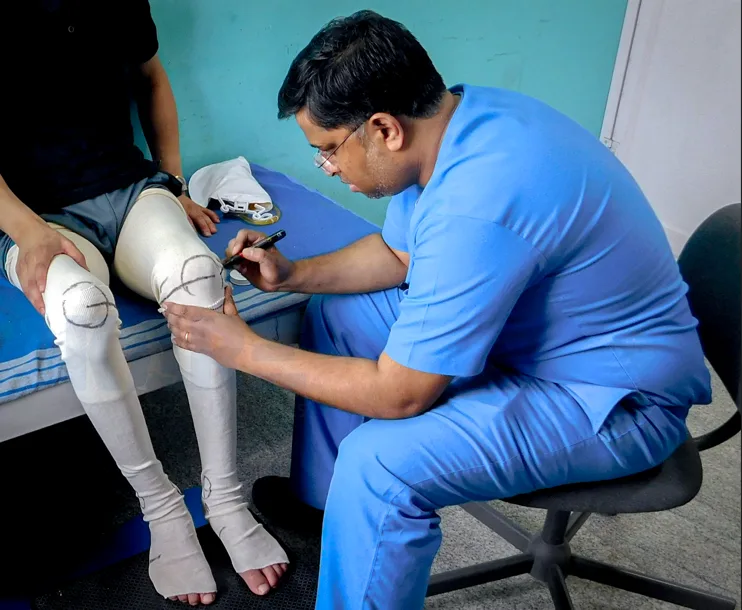
A brace should solve a specific movement problem. First, an orthotist checks ankle movement, calf length, knee control, skin, footwear, and gait. Then, the clinician decides how much correction your ankle can tolerate.
During the swing phase, weak dorsiflexors may leave the toes too low. During stance, the ankle may also move quickly into plantar flexion. Therefore, a foot drop orthosis may need toe-clearance assistance plus controlled ankle movement after heel contact.
Night use has a different target. You do not need swing-phase clearance in bed. Instead, a night device may hold a prescribed ankle position when tightness or lost range creates concern. So, an AFO for sleeping needs a different design from a walking AFO.
KARE’s guide to ankle-foot orthoses explains how materials, adjustment, foot position, and gait affect brace choice.
How a Night Splint Holds the Foot During Rest
Night splints use straps, a shell, or a dorsal frame to hold a selected ankle angle. The aim may include prolonged stretch or maintaining available range during rest.
However, foot drop does not automatically mean you need one. If your ankle reaches neutral without calf tightness, your clinician may choose another plan. If stiffness develops, night positioning may complement daytime care.
The night splint vs day brace choice changes because each device faces different loads. A night splint does not manage repeated heel strike, toe-off, road surfaces, or shoe pressure. Therefore, its resting position may feel unsuitable during walking.
We list a Plantar Fasciitis Night Splint with adjustable straps for controlled prolonged stretch. We do not describe it as a dedicated foot-drop brace. That distinction is important when comparing foot drop treatment options.
How a Day Brace Helps Toe Clearance
Day braces work during movement. A posterior leaf spring AFO, carbon-fibre AFO, dynamic dorsiflexion aid, or articulated AFO may suit different gait patterns. The clinician chooses stiffness and ankle control after watching your steps.
For example, weak dorsiflexion with good knee control may need lighter assistance. Another gait may need firmer control because ankle motion changes knee position. Therefore, an ankle brace for nerve damage should never come from diagnosis alone. Muscle grade, range, sensation, skin health, and gait compensation all affect selection.
A day brace may also provide plantar flexion support after heel contact. That control can reduce rapid foot slap in some gait patterns. Still, too much resistance can alter knee movement. Your orthotist must tune the device to your limb and footwear.
For a closer look at carbon-fibre designs, footwear space, and pressure areas, KARE explains these points in its lightweight ankle-foot orthosis guide.
When Overnight Positioning May Reduce Morning Tightness
Calf and ankle stiffness can make early steps harder. In selected cases, prolonged positioning may help preserve ankle range. Yet, the angle must remain tolerable.
Do not force the foot towards neutral because a strap can tighten further. Nerve sensitivity, rigid deformity, or fragile skin may need a gentler setup. Reduced sensation can also hide pressure damage. Therefore, inspect your skin after removal and report persistent redness, pain, tingling, or swelling.
An AIIMS New Delhi study of 100 AFO users reported that 22% used a night splint, 19% used both a plastic AFO and a night splint, and 58% used a plastic AFO. These figures do not mean every person with foot drop needs both devices. They show that orthotic use can differ between patients and clinical goals.
How Daytime Bracing Changes Daily Mobility
A day brace must work while you walk, turn, climb, commute, and stand. So, heel height, shoe depth, fastening, sole stiffness, and toe-box space can change AFO alignment.
The night splint vs day brace question also changes with routine. Short indoor walking may need different control from stairs, public transport, or long corridors.
A good foot drop orthosis should reduce toe drag without creating a new knee or skin problem. Meanwhile, physiotherapy may address strength, range, balance, transfers, and gait practice. Bracing supports movement, but it does not repair every cause of foot drop.
Can One Brace Work for Night and Day?
One orthosis can sometimes cover more than one goal, but clinicians should not assume that. A walking brace faces repeated loading and needs shoe compatibility. A night device focuses on the resting position.
An AFO for sleeping may use padding, straps, or an ankle angle that does not suit gait. In contrast, a daytime AFO may use carbon fibre or an articulated joint for walking.
So, ask whether one device can meet both goals safely. If not, separate devices may work better. KARE also covers cleaning, skin checks, wear, and review routines in its orthotic device care guide.
Signs You May Need Separate Support for Rest and Mobility
Your clinician may consider separate devices when resting posture and walking control need different angles or materials. For instance, calf tightness may need sustained positioning at night, while daytime toe drag may need dynamic dorsiflexion assistance.
Pressure also changes between lying down and walking. Likewise, shoes limit daytime brace bulk, while a night splint faces no shoe-space limit.
An ankle brace for nerve damage needs sensory checks because reduced feeling can hide rubbing. Therefore, a specialist should review pressure areas, strap tension, joint position, and wear time.
Choosing night splint vs day brace Support Without Guesswork
The best plan starts with movement. First, the clinician identifies why the foot drops. Next, the clinician checks ankle flexibility. Then, gait assessment reviews heel strike, stance, swing, and toe clearance.

This framework does not replace assessment. Your foot drop treatment options may include physiotherapy, gait training, functional electrical stimulation, treatment for the cause, or surgery in selected cases. Therefore, the brace should fit the wider plan.
Before choosing a device, KARE’s custom orthotic assessment guide explains why gait, joint motion, skin, footwear, and pressure areas need individual review.
How KARE Supports Foot Drop With Orthotic Options
At KARE Prosthetics & Orthotics, we start with one-to-one clinical assessment, then connect the device to your gait, limb shape, skin, footwear, and daily goals. We offer custom orthoses made from an individual cast or mould, alongside prefabricated options clinicians can fit and adjust. Our service covers adults and children, lower limbs, upper limbs, spine, and other bracing needs. We have operated as Ktwo Healthcare’s Prosthetics and Orthotics division since 2013.
Our care also includes:
- American Board Certified clinicians, advanced digitising systems, and CAD/CAM when clinically suitable
- Biomechanics-led evaluation, measurement, fitting, education, rehabilitation, gait review, and follow-up adjustment
- Access to technology from associations including Össur, Orthomerica, ST&G, and Becker Orthopedic
That structure lets our team review fit over time instead of treating an orthosis as a one-time handover. We also provide advanced prosthetics and orthotics in India, including orthotic support, custom prosthetic legs, and foot-care solutions.
Plantar Fasciitis Night Splint for Controlled Overnight Positioning

Our Plantar Fasciitis Night Splint uses adjustable straps for controlled prolonged stretch. It also includes a non-skid tread for limited movement. However, we list it for plantar fasciitis rather than as a dedicated drop-foot AFO.
It still explains the night side of this topic. If an orthotist identifies a resting-position need, the clinician can decide whether this support fits your case.
Foot-Up Orthosis for Daytime Foot Drop Assistance

We describe Foot-Up as a lightweight ankle-foot orthosis for drop foot and related conditions requiring dorsiflexion support. Therefore, it fits the daytime side more directly.
Its job centres on lifting assistance during walking, not sustained night positioning. It may suit some people who need toe-clearance help without a bulkier rigid design. The clinician still checks strength, footwear, and skin. Explore KARE’s
AFO Light Carbon Fiber for Lightweight Walking Support

We describe AFO Light as a carbon-fibre option for mild to moderate drop foot. The design uses energy-storing carbon fibre and limits unnecessary bulk. That makes it relevant when walking support needs a lighter structure.
However, lighter does not always mean suitable. If you need stronger plantar flexion support, knee control, or firmer correction, another design may fit better. Gait assessment should decide the choice.
Footwear, Fit, and Daily Routine Can Change the Result
Even a suitable AFO can fail when the shoe fights the brace. First, take the brace off when testing footwear. Next, check heel seating and fastening. Then, confirm that your toes have enough space and the brace does not lift your heel.
Socks also affect pressure. Choose a smooth layer that reduces friction and does not bunch under the shell. Meanwhile, inspect your skin after wear, especially during the break-in period. Here, the night splint vs day brace decision should account for different pressure points across sleep, shoes, and walking.
The AIIMS study found that 98% of the cohort had healthcare advice to use an AFO, yet only 59% were using one at assessment. That gap shows why prescription alone does not guarantee daily use. Fit, comfort, education, access, and follow-up can affect continued wear.
When to Speak With an Orthotist About Your Brace Setup
Speak with an orthotist when your toes still catch, the brace causes repeated skin marks, or your knee moves differently. Also seek review when swelling changes, footwear becomes difficult, straps wear out, or the device cracks.
Do not add random foam or tighten every strap to solve pressure. Those changes can shift load elsewhere. Instead, an orthotist can trim, pad, heat-modify, realign, or replace parts when the design allows it.
Reassessment also helps when muscle control changes. Stroke or nerve recovery may reduce support needs, while progressive conditions may require more control later. Therefore, brace selection should remain a clinical process.
Final Thoughts on night splint vs day brace Use for Foot Drop
Foot drop creates a walking problem, but your ankle can also develop resting-position needs. Therefore, one device may not suit every hour. A night splint can address selected positioning or stretching goals, while a daytime AFO can focus on toe clearance, ankle control, and walking.
At KARE, we assess how you move before recommending a device. We also check skin, shoes, joint range, and daily routine. If you are comparing a night splint vs. a day brace, book an orthotic consultation with our team. We can help you choose support that fits your gait and resting needs.
FAQ
What is the difference between a night splint and a day brace?
A night splint holds a prescribed resting position. A day brace supports toe clearance, ankle control, shoe use, and walking during your normal daily activity.
Can foot drop be treated with just one type of brace?
Yes, some people need one brace. Others need separate support because walking mechanics, ankle tightness, skin condition, joint range, and footwear requirements can differ greatly.
Why is a night splint worn while sleeping?
Clinicians may prescribe night positioning to maintain ankle range or provide prolonged stretch when tightness exists. The required angle depends on your clinical assessment findings.
Is it uncomfortable to wear both braces daily?
It should not cause ongoing pain. Proper fit, gradual wear, skin checks, suitable socks, footwear, and timely clinical adjustments can improve daily tolerance over time.
How is the right combination decided by a specialist?
An orthotist checks muscle strength, ankle range, gait phases, skin, sensation, knee control, footwear, and daily goals before selecting one or two suitable orthotic devices.