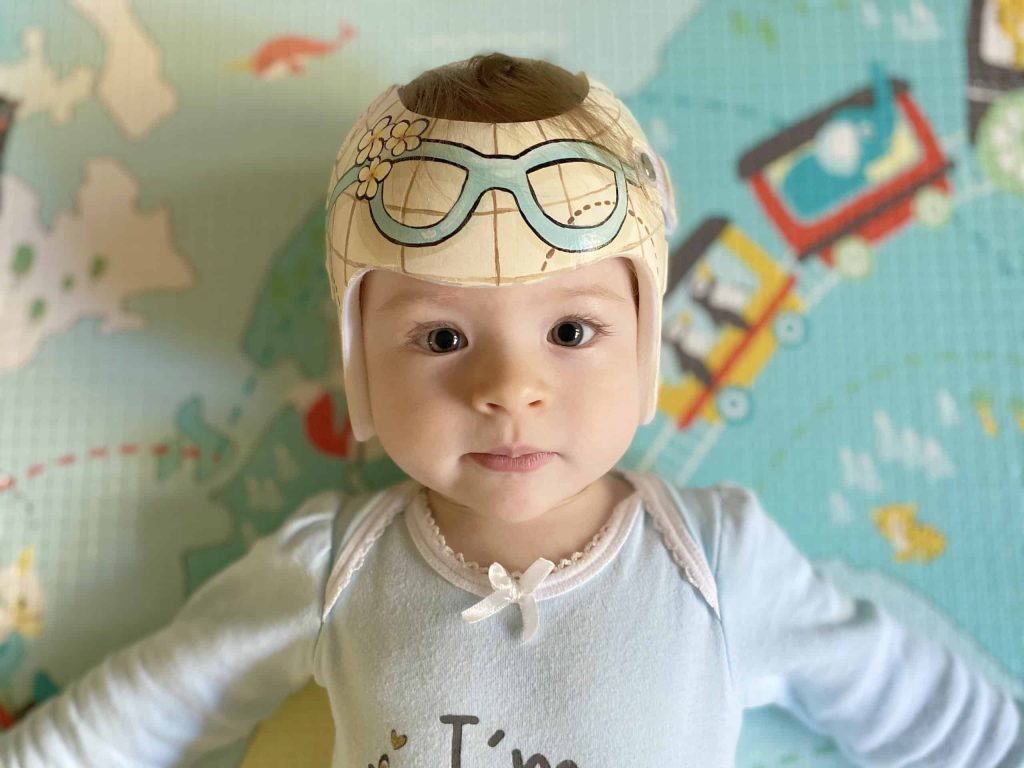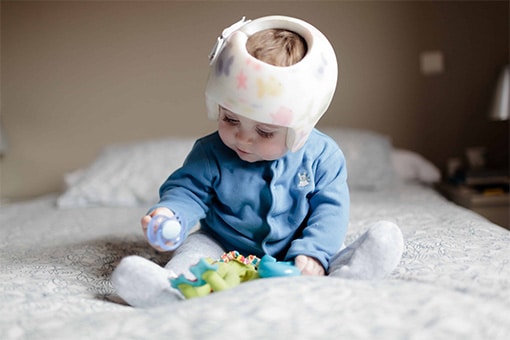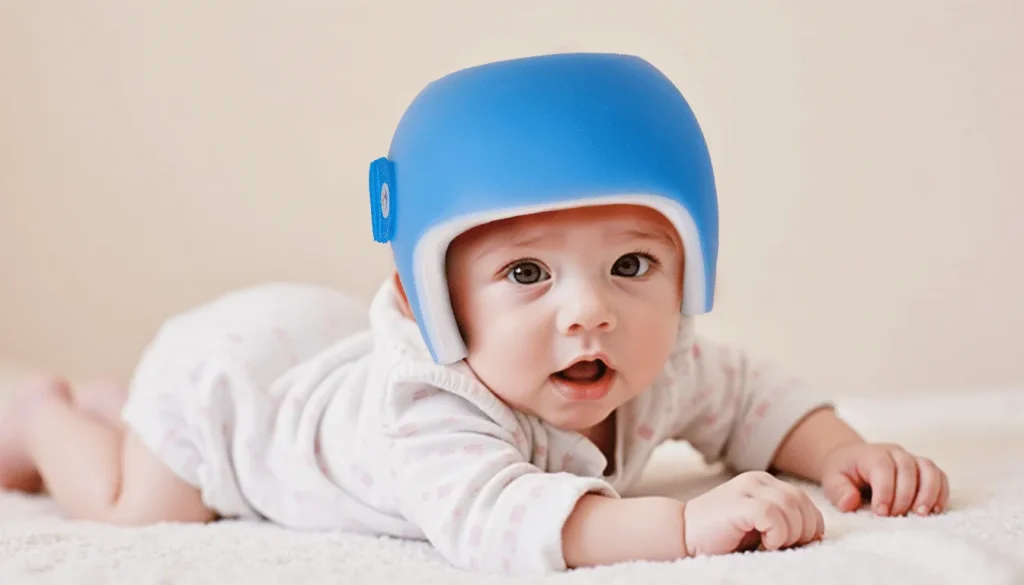
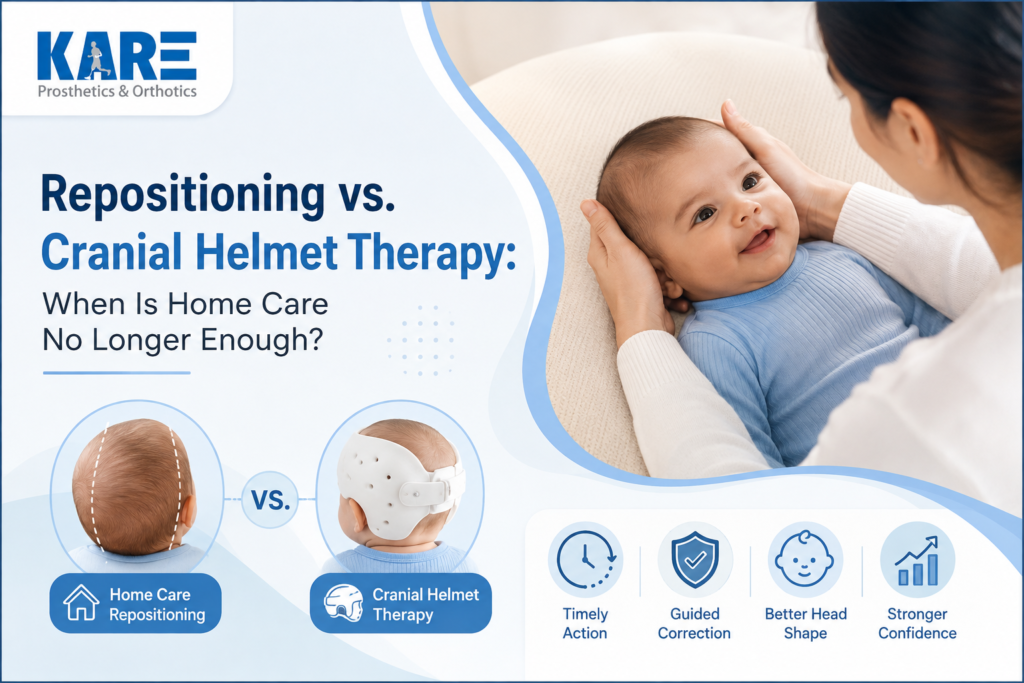
Do you keep turning your baby’s head during sleep, yet the flat spot still looks the same in photos? Many parents in India start with home steps first. That is fair. You try tummy time, change feeding sides, hold the baby more, and reduce pressure on one area. Still, some head shapes do not improve enough with time.
Repositioning vs. cranial helmet therapy becomes a serious question when the flat area stays visible, the forehead looks uneven, or one ear appears pushed forward. Parents need a simple way to know when home care can continue and when a trained orthotist should assess the baby’s head shape.
Flat head, also called positional plagiocephaly, can look mild at first. Then, after a few weeks, the asymmetry may become easier to notice. Early action helps because a baby’s skull grows fast in the first year. So, the decision should not depend on family guesses, online photos, or fear.
Repositioning Vs. Cranial Helmet Therapy: What Parents Should Check First
Parents should begin with the baby’s age, severity, and response to home care. These three points guide most decisions. A paediatrician or cranial orthotics specialist may also check neck tightness, preferred head turning, facial asymmetry, and back-of-head flattening before suggesting the next step.
Why Position Changes Usually Come Before Helmet Care
Doctors often suggest baby head repositioning first because it reduces pressure on the flat area. Parents can increase supervised tummy time, change the baby’s cot direction, switch feeding sides, and hold the baby upright during awake hours.
This route works better when flattening looks mild. It also works better when parents start early. However, parents must track progress, not just wait. Take photos from the top view every 2 weeks. Use the same light, same angle, and same head position. This small habit can show whether the shape improves or stays fixed.
Repositioning vs. cranial helmet therapy should not become a late question. If the head shape looks almost the same after regular home care, parents should book an assessment. A cranial helmet for a flat head may help selected babies when home pressure relief no longer changes the shape enough.
When Tummy Time And Sleep Changes Fall Short
Some babies keep turning to one side. Others have tight neck muscles. A few babies sleep deeply in one position, even after their parents move them. In such cases, baby head repositioning may reduce pressure, but it may not correct the full asymmetry.
Parents should watch for a forehead bulge, uneven ear position, one-sided back flattening, or a head shape that looks wider than usual. These signs often need more than casual home care. A clinical review can separate mild shape change from moderate plagiocephaly.
A 2025 study reported that helmet therapy reduced plagiocephaly to level 1 in 25% of treated infants, compared with 11% in the comparison group. This does not mean every baby needs a helmet. It shows that selected babies may get better measured correction with guided helmet care.
Families who continue to notice one-sided flattening can explore KARE’s guide to baby flat head helmet care and plagiocephaly treatment in India for a closer look at the available treatment approach.
How Age Changes The Correction Window
Age can change the result. Younger babies grow fast, so home care may still help. As the baby grows older, skull growth continues, but the correction window becomes narrower.
A cranial remolding helmet does not press the head into shape. It guides growth. The helmet gives contact in fuller areas and leaves space where growth needs to fill. That is why fitting, timing, and follow-up visits carry so much weight.
Review evidence says helmet therapy gives faster early correction, especially in moderate-to-severe deformity. Parents should read that line with care. It supports timely assessment, not panic. It also supports measured plagiocephaly treatment, where the clinician checks the baby before choosing the plan.
Parents who want to understand the treatment process in more detail can read how a baby flat head helmet helps guide head shape correction during the baby’s growth period.
Mild, Moderate, and Severe Flat Head Differences
Parents often ask where home care ends. The answer depends on head shape, not one single photo. Specialists may use visual grading, cranial measurements, scans, or clinical observation.
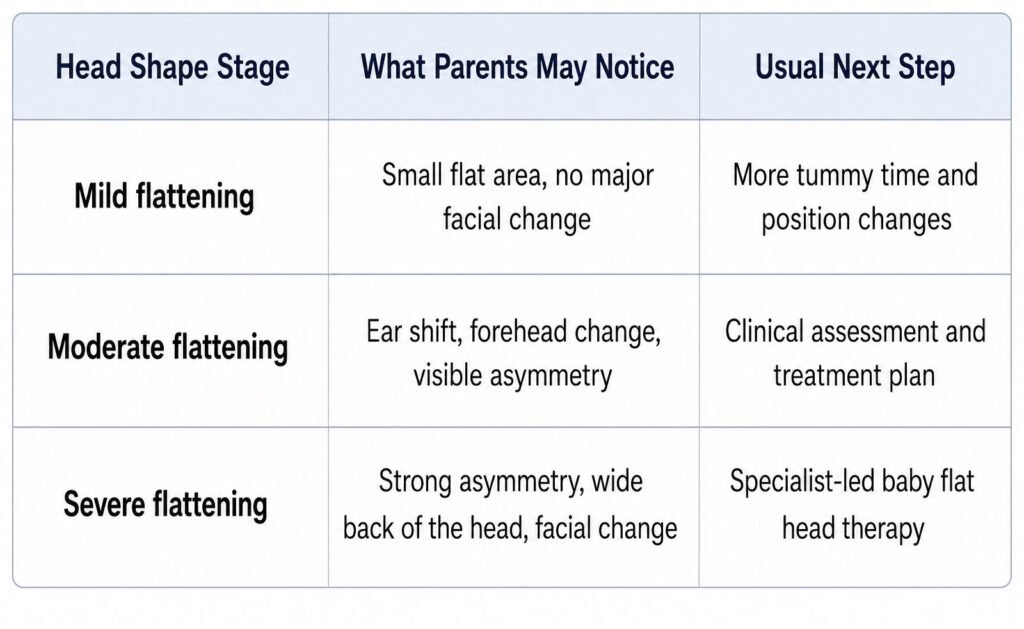
This table gives a simple view. It cannot replace a clinical check. Babies grow at different speeds. Also, neck movement can affect the result. Therefore, parents should not compare their child with another baby in the family.
Repositioning vs. cranial helmet therapy becomes more important when moderate signs appear. At that point, parents need numbers, head scans, and a follow-up plan, not more guesswork.
Not every unusual head shape looks the same, so parents can also understand the visible differences through KARE’s guide to brachycephaly and scaphocephaly in babies.
When Parents Should Book A Cranial Assessment
Parents should book an assessment when the flat spot stays visible after a few weeks of home care. They should also act when the baby always looks one way, struggles during tummy time, or shows an uneven forehead shape.
Early review saves time. It also helps parents avoid two common mistakes. First, some families wait too long because elders say the head will round out alone. Second, some families rush towards helmet care without checking the severity. Both can create stress.
A proper review may include head shape photos, neck movement checks, digital scanning, and growth-stage review. The goal is simple. Choose the least aggressive care that still gives the baby a fair chance of correction.
How KARE Guides Babies With Custom Cranial Care
At KARE, we support families with specialist cranial care, not generic helmet supply. We bring advanced prosthetics and orthotics to India through international-quality prosthesis and orthosis care. Our team works with babies who need assessment for plagiocephaly, brachycephaly, and scaphocephaly.
We offer FDA-cleared STAR® Cranial Remoulding Orthosis access in India, SmartCam™ digital head scanning, CAD/CAM-based custom design, and fabrication support from Orthomerica, USA. Our American Board-certified prosthetists and orthotists plan care around each baby’s head shape, comfort, and growth stage.
KARE’s care includes:
- Assessment, scanning, fitting, and regular review visits
- Personalised parent guidance for repositioning and helmet use
- Multi-city clinic access for easier follow-up
- Clinical expertise since 2013 under Ktwo Healthcare
We work as a clinical orthotics partner, not a basic device provider. Parents unsure how one flat-head pattern differs from another can refer to KARE’s comparison of plagiocephaly, brachycephaly, and cranial helmet choices.
STARband® Cranial Remoulding Orthosis
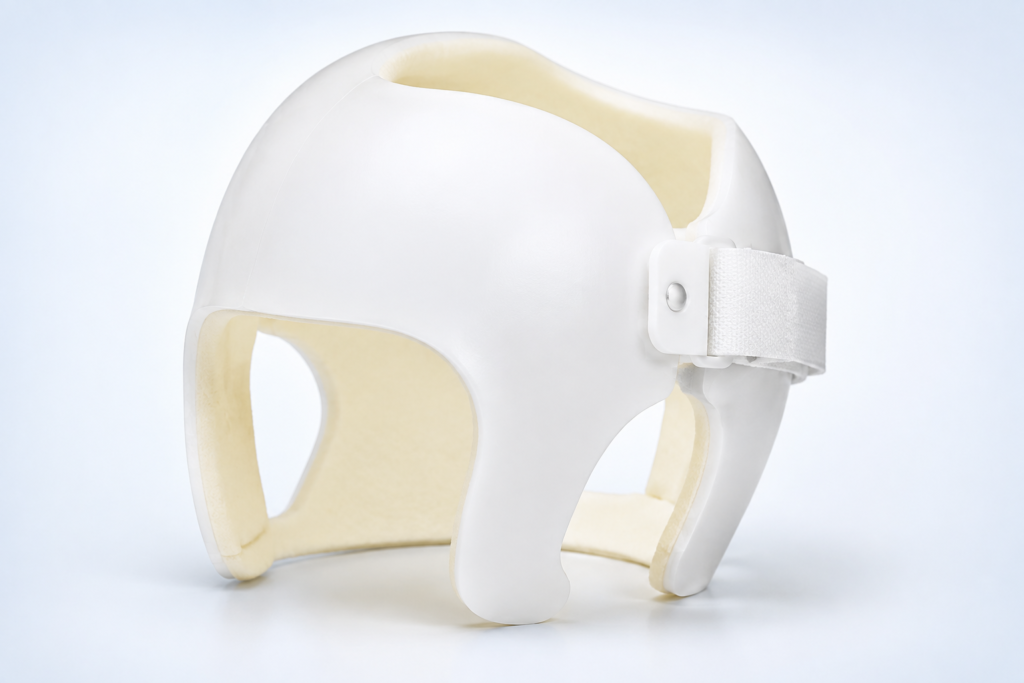
STARband® supports babies who need guided skull growth after clinical assessment. The design helps create space for flatter areas while managing contact over fuller areas. This device may suit babies with positional plagiocephaly when the specialist sees that home care alone may not give enough change.
Parents should not buy any helmet without a proper evaluation. A cranial helmet for a flat head must fit the baby’s measurements and growth needs. Even a small fitting error can cause rubbing, heat marks, or poor correction. That is why follow-up visits matter in care, though the word sounds simple.
STARlight® Cranial Remoulding Orthosis
STARlight® offers another custom cranial orthosis option for guided correction. The care plan may differ by age, head shape, and severity. Some babies need closer review because growth changes quickly over a few weeks.
A cranial remolding helmet needs parent effort as much as clinical skill. Parents must follow the wear instructions, keep skin checks regular, and attend review appointments. This is where professional support brings comfort for the family. The baby’s routine stays watched, adjusted, and safer.
KARE helps parents read small changes during the treatment journey. A tiny red mark, sleep discomfort, or fitting concern should not be ignored. Parents need a team that answers these concerns in simple language.
STARscanner™ Digital Head Shape Assessment
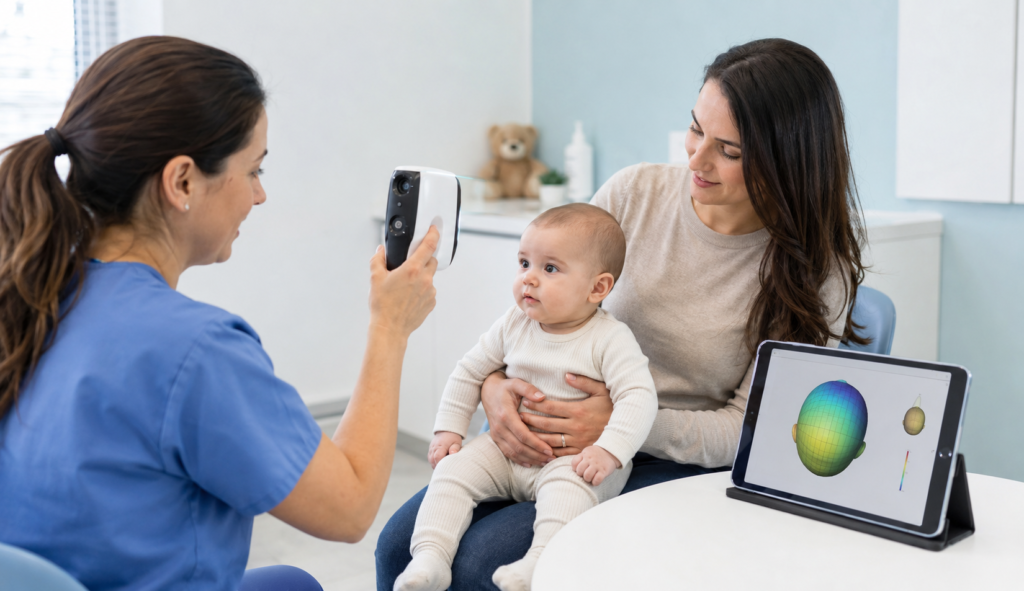
STARscanner™ helps capture the baby’s head shape with digital accuracy. This gives the care team a better base for planning baby flathead therapy. It also helps parents see the shape concern with more clarity than a casual photo.
Digital assessment does not replace clinical judgement. It supports it. The orthotist still checks the baby’s age, neck movement, medical history, and visible asymmetry. Then, the team can decide whether repositioning should continue or helmet care should begin.
For parents, this step reduces confusion. Instead of asking ten people for opinions, they get a structured reading and a treatment direction.
Custom Fitting And Follow-Up Care
A cranial orthosis needs repeated checks because babies grow. The helmet that fits well today may need adjustment later. That is normal. Follow-up visits protect skin, comfort, and correction progress.
KARE’s team guides parents on cleaning, wear schedule, red mark checks, and daily care. The team also reviews progress during visits. If the baby grows faster in one phase, the helmet may need timely changes.
Good plagiocephaly treatment never ends at the delivery of a device. It continues through review, adjustment, and parent education. That is where families often feel the difference between a fitted medical orthosis and a basic helmet-like product.
Parent Guidance Through The Treatment Journey
Parents need simple instructions because baby care already feels full. Feeding, sleep, vaccination, and work schedules leave little room for complex medical language.
KARE explains what parents should watch at home. That includes head-turning preference, skin marks, sleep comfort, helmet care, and appointment timing. The team also guides parents on when to continue repositioning techniques during awake hours.
Repositioning vs cranial helmet therapy does not need to feel like a fight between two options. Many care plans use home steps and helmet care together. The specialist decides what fits the baby’s stage. Parents then follow a plan that feels doable, safe, and trackable.
Conclusion: Choose The Next Step Before Flat Head Progresses
Flat head care works best when parents act at the right time. Home care can help mild cases, especially when started early. Yet, visible asymmetry, poor progress, age delay, or neck preference should push parents towards clinical assessment.
Repositioning vs cranial helmet therapy is not about choosing the strongest option. It is about choosing the right care for your baby’s shape, age, and growth. For custom cranial assessment, guided fitting, and follow-up care in India, speak to KARE, and we will help you choose the right next step.
FAQs
Can repositioning correct flat head syndrome in babies?
Yes, repositioning can help mild flat head when started early with tummy time, side changes, carrying, and paediatric follow-up.
When is repositioning no longer enough for plagiocephaly?
Repositioning may fall short when asymmetry stays visible, ear shift appears, forehead changes develop, or progress looks poor after regular home care.
How do I know if my baby may need a cranial helmet?
Your baby may need assessment if one side looks flat, head turning stays one-sided, or the baby’s flathead therapy shows little progress.
What is the difference between repositioning and cranial helmet therapy?
Repositioning reduces pressure through home techniques. Helmet therapy guides skull growth through a custom-fitted cranial orthosis and clinical review.
When should parents get their baby’s head shape assessed?
Parents should seek assessment early when flattening persists, neck movement looks limited, or head shape appears uneven in repeated top-view photos.