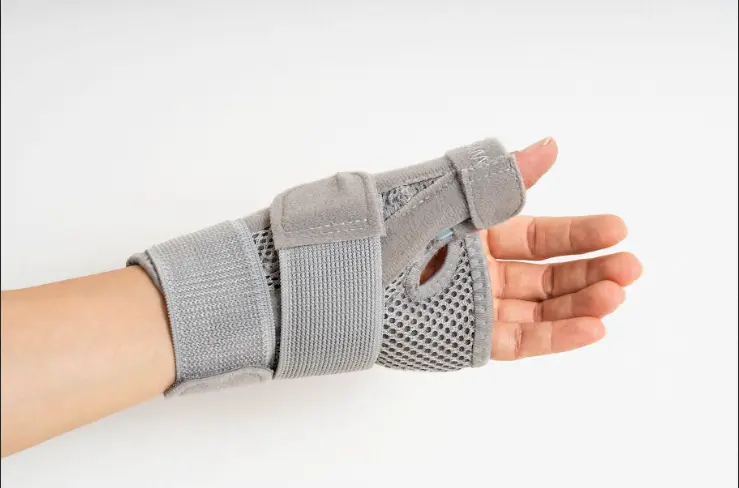

What happens when your fingers remain curled or your wrist keeps dropping after a stroke? You may struggle to open your hand, hold a cup, wash your palm or place your arm comfortably on a table. These problems can continue even while other parts of your recovery move forward.
A wrist-hand orthosis after stroke can support the wrist, fingers or thumb in a planned position. Some designs provide stable positioning. Others assist movement during therapy. The right choice depends on muscle tone, joint movement, skin condition and your rehabilitation goals.
However, wearing a brace does not automatically restore hand function. Your orthotist, physiotherapist, occupational therapist and doctor need to decide where bracing fits within your rehabilitation programme. The device should support therapy rather than replace active training.
What a Wrist-Hand Orthosis Does During Stroke Rehabilitation
After a stroke, the brain may struggle to control muscles on one side. Your wrist can fall forward, while the fingers may stay tightly flexed. Some people develop spasticity later. Others experience weakness with very little active movement.
An orthosis places the affected joints in a selected position. Depending on its design, it may support the wrist, thumb and fingers together. Clinicians can use static or dynamic designs for different treatment goals.
A hand splint for stroke patients may help maintain positioning when weak muscles cannot hold the hand well. Meanwhile, a hemiplegic hand brace may support an affected hand while the rehabilitation team works on movement and daily tasks.
Your treatment plan should still include active rehabilitation where appropriate. Splinting works as one part of that plan.
KARE has a separate guide explaining wrist brace designs, applications and selection. You can read its guide to wrist-hand orthosis and wrist braces for further background.
How a Wrist-Hand Orthosis May Support Daily Recovery After Stroke
The value of an orthosis depends on what problem your rehabilitation team wants to address. A person with a floppy wrist needs different support from someone whose fingers resist opening. Likewise, a person practising grasp and release may require another design.
That distinction is important. Clinicians should choose the device around the affected joints, available movement and treatment goal.
Keeps the Wrist and Hand in a Functional Position
A weak wrist often drops into flexion after stroke. Fingers may also close towards the palm. This position can interfere with dressing, hand cleaning and some therapy exercises.
A wrist-hand orthosis after stroke can hold selected joints closer to the position prescribed by your clinician. Proper positioning may also make it easier for a therapist to work on the fingers, thumb and wrist during rehabilitation.
Position does not mean forcing every joint straight. Your orthotist needs to consider available range, muscle tone and tissue resistance. Forcing a stiff hand into an unsuitable brace can create pressure and pain. The goal should match your hand, rather than an ideal-looking posture.
Helps Manage Spasticity and Unwanted Hand Positioning
Spasticity can make the wrist and fingers resist movement. The hand may close tightly, while the thumb can pull towards the palm. This pattern may interfere with cleaning, nail care and dressing.
A spasticity brace can provide controlled positioning where your clinical team considers splinting suitable. However, clinicians need to check how your muscles respond. A poorly selected angle can increase discomfort or pressure.
Recent Indian research gives useful context. A Banaras Hindu University randomised trial enrolled 76 acute stroke patients. Patients using splint-supported positioning for at least 210 minutes each day showed significantly lower wrist, finger, forearm and elbow spasticity at three and six months than the conventional physiotherapy group.
That finding supports structured positioning in selected patients. Still, your clinician must decide whether the same approach fits your condition.
Supports Wrist, Finger and Thumb Range of Motion
Stroke can reduce active movement before stiffness becomes obvious. Over time, keeping the hand in one posture can make movement harder. Rehabilitation teams therefore pay attention to available joint range.
A wrist-hand orthosis after stroke may hold the hand within a prescribed position between selected therapy periods. Dynamic designs can work differently. Some use elastic or mechanical assistance while allowing controlled movement.
Therapists may combine the orthosis with active-assisted movement, task training or stretching. They can also use techniques such as weight-bearing and repetitive task practice where suitable.
This is where occupational therapy splinting needs a specific goal. A therapist may focus on positioning, hygiene, movement practice or task participation. One splint cannot perform every job.
KARE also discusses the wider role of orthotic devices for paralysis and neurological rehabilitation in its guide to orthotics in paralysis treatment.
Helps Limit Progressive Wrist and Finger Tightness
A hand that remains closed for long periods can become difficult to open. Soft tissues may shorten, while joint movement can become restricted. Clinicians call a fixed loss of movement a contracture.
A hand splint for stroke patients may form part of a contracture-management programme. Yet the orthosis should never force the hand past its available range. Clinicians need to inspect the skin and review joint position as the hand changes.
The approach becomes more important when the palm stays closed. Moisture, fingernail pressure and skin contact can create additional problems. Better access to the palm may help caregivers with hygiene where hand opening remains limited.
Still, prevention requires more than bracing. Position changes, movement exercises and therapy remain important parts of care.
Supports Grasp-and-Release Training During Rehabilitation
Some stroke survivors can close their fingers but struggle to reopen them. That makes repeated grasp-and-release practice difficult.
Certain dynamic orthoses assist finger or wrist extension during stroke hand rehabilitation. The person can then practise reaching towards an object, grasping it and attempting release under professional guidance.
A 2025 randomised trial involving 51 stroke survivors tested wearable hand-orthosis training for four weeks. The orthosis group recorded a 4.37-point greater improvement in upper-limb motor scores than the group that trained without the orthosis.
That result does not mean every orthosis restores grip. Device type, impairment level and training programme can change the outcome. Active practice remains central.
Makes Selected Daily Hand Activities Easier to Practise
Recovery becomes more relevant when therapy connects with activities you actually perform. That might include stabilising an object, placing the hand on a table or practising controlled reach.
A therapist may use a hemiplegic hand brace during selected activities if the device supports the required movement. Other patients may wear an orthosis during rest instead. The design determines what you can safely do while wearing it.
For example, a rigid resting splint may support positioning but restrict functional movement. A dynamic device may permit selected movement while assisting the fingers.
This difference explains why buying a generic wrist support without assessment can fail. A sports wrist brace and a neurological hand orthosis serve different needs.
For another example of how wrist splint design changes with the condition being treated, KARE explains brace selection in its wrist splint guide for carpal tunnel syndrome.
Static vs Dynamic Wrist-Hand Orthosis After Stroke
A wrist-hand orthosis after stroke can use a static or dynamic design. Neither category automatically works better. Clinicians select between them according to the hand, treatment stage and intended activity.

Static devices often use thermoplastic materials shaped around the limb. Dynamic devices may use springs, elastic systems or mechanical components.
Therefore, device selection should follow assessment. A person with high tone may need a different design from someone with flaccid weakness. Your rehabilitation stage can change that choice again.
When Should a Stroke Patient Consider a Wrist-Hand Orthosis?
There is no single day when every stroke survivor should start bracing. Some people need early positioning. Others regain useful movement without an orthosis. A third group may develop spasticity or stiffness later.
Your rehabilitation team may consider a wrist-hand orthosis after stroke when poor positioning affects the hand, increasing tone limits movement, or weakness prevents useful wrist alignment. They may also consider one when contracture risk, hygiene or structured task training becomes a concern.
Clinicians should first examine passive range. They should also assess muscle tone, voluntary control, swelling and skin condition. Pain deserves attention too.
A spasticity brace requires extra care because tone can change during movement, fatigue or different positions. The team may therefore review the device after fitting rather than treating the first setting as permanent. Stroke recovery changes. Your orthosis may need to change with it.
How Long Should a Wrist-Hand Orthosis Be Worn After Stroke?
Wear time depends on the device and treatment goal. There is no universal daily schedule for every patient.
Your orthotist or therapist may introduce the orthosis in shorter periods first. This gives the team time to check pressure, redness and tolerance. They can then adjust the schedule according to the clinical plan.
Some orthoses support resting position. Others belong inside therapy sessions. Dynamic systems designed for movement practice may follow a different programme from night splints.
You should not copy another patient’s wear schedule. Two people can experience the same type of stroke yet show very different muscle tone, hand movement and skin tolerance.
During occupational therapy splinting, clinicians can review whether the brace still serves its original purpose. As active movement changes, they may adjust the angle, wearing period or the orthosis itself.
Why Proper Fit and Professional Assessment Come First
A brace touches the skin for extended periods, often over small areas around the wrist, thumb and hand. Poor pressure distribution can cause redness, rubbing or pain. Stroke may also affect sensation, so some people may not notice excessive pressure early.
For that reason, clinicians need to examine skin conditions before fitting. They also need to check swelling, passive joint range, muscle tone and the position of the thumb and fingers.
Then comes fitting. Straps should control the device without creating unnecessary pressure. The orthosis should follow the treatment position without forcing stiff joints.
Your follow-up appointments carry equal weight. Hand shape, swelling and muscle tone can change during recovery. The orthotist may need to alter padding, straps or joint angles.
People sometimes confuse prostheses and orthoses. A prosthesis replaces a missing body part, while an orthosis supports an existing limb or joint. KARE explains these differences further in its prosthetics and orthotics comparison guide.
How KarepoIndia Supports Wrist and Hand Rehabilitation After Stroke
At KARE Prosthetics & Orthotics, we begin orthotic care with individual clinical assessment. Our clinicians review the limb and treatment requirements before recommending an orthotic option. We state that custom orthoses can be manufactured from an individual cast or mould, rather than fitting every patient with the same standard brace.
Our orthotists evaluate, measure, design, fabricate, fit and adjust orthotic devices. We also provide training and routine follow-up. We use lightweight components and CAD/CAM technology where appropriate, while our clinical team includes American Board-certified clinicians.
Depending on your clinical requirement, KARE’s upper-limb range includes:
- Custom static and dynamic upper-limb orthoses for individual positioning needs.
- Dynamic WHFO options for assisted wrist and finger extension.
- Saebo rehabilitation devices for selected neurological conditions.
We focus on fitting, education and rehabilitation together. Follow-up allows our clinicians to review the device as your needs change.
SaeboFlex Dynamic Wrist-Hand-Finger Orthosis

The SaeboFlex Dynamic Wrist-Hand-Finger Orthosis is a custom-fabricated dynamic WHFO. KARE describes the device as finger- and thumb-driven in flexion, with cable-driven extension.
The design supports the wrist, hand, fingers and thumb in a functional position. Meanwhile, its dynamic system allows selected functional activities.
KARE lists grasp-and-release activity, range-of-motion work and contracture management among its applications. Therefore, clinicians may consider it for selected neurological impairments where the patient’s movement pattern and rehabilitation goals suit the device.
Assessment still comes first. SaeboFlex should form part of planned rehabilitation rather than serve as a standalone recovery tool.
Dynamic WHFO for Assisted Wrist and Finger Extension

KARE’s Dynamic WHFO for wrist and finger extension is another upper-limb option. KARE states that Dynamic WHFO designs can assist active extension of the wrist joint, MCP joints and fingers.
That function can become relevant when finger opening presents a barrier during therapy. A clinician can assess whether assisted extension fits the person’s remaining active movement and treatment plan.
KARE uses low-temperature or high-temperature thermoplastics for these orthoses, depending on the design. The same product range includes static options, allowing clinicians to choose according to individual requirements.
SaeboStretch Dynamic Hand Splint for Neurological Conditions

The SaeboStretch Dynamic Hand Splint is designed for people with neurological conditions, including stroke. KARE describes it as a dynamic splint intended to maintain or improve motion while reducing joint damage and pain.
The device includes interchangeable dynamic hand components for different levels of spasticity. This feature allows the clinician to account for differences in muscle resistance.
However, suitability still depends on assessment. Your therapist and orthotist need to consider tone, joint range, skin condition and the wider rehabilitation plan before recommending any neurological hand splint.
Can a Wrist-Hand Orthosis Alone Restore Hand Function After Stroke?
No brace can perform the brain’s recovery work by itself. Stroke rehabilitation depends on neurological recovery, remaining movement, repeated training and the nature of the original brain injury.
An orthosis may support one part of that process. For example, it may hold the wrist in a useful position between therapy sessions. Another design may assist finger extension while the person practises grasp and release.
Active stroke hand rehabilitation can include repetitive task practice, active-assisted movement, stretching, positioning and functional activity. Therapists may use constraint-induced movement therapy for selected people with enough active movement. Other patients may need different techniques.
The key question is therefore not whether a brace “works” in isolation. Ask what job the orthosis needs to perform in your programme.
If the aim involves positioning, the clinician should track position and tolerance. If the aim involves movement training, the team should review movement over time. If contracture management drives the prescription, passive range and skin condition require regular checks. That approach keeps treatment tied to a defined rehabilitation goal.
Conclusion
A hand that stays weak, flexed or difficult to open after a stroke needs careful assessment, not a random brace from a shelf. Orthoses can support positioning, selected movements, contracture management and structured hand training when clinicians prescribe them for a defined purpose.
At KARE, we assess your hand, wrist, muscle tone and rehabilitation goals before recommending an orthotic option. Our approach includes custom fitting, clinician guidance, rehabilitation support and follow-up adjustments as your needs change.
If you or a family member needs a wrist-hand orthosis after a stroke, speak with our KARE Prosthetics & Orthotics team. We can assess your requirements and help you find an orthotic option that fits your rehabilitation plan.
FAQs
What Is a Wrist-Hand Orthosis Used for After Stroke?
It supports wrist and hand positioning, manages selected movement problems, and may assist rehabilitation exercises when a clinician recommends it for you.
How Does Bracing Help With Spasticity?
A brace can hold selected joints in a prescribed position, while therapists monitor muscle tone, skin pressure, joint range and your response.
How Soon After a Stroke Should a Splint Be Used?
Timing varies between patients. A rehabilitation professional should assess weakness, muscle tone, skin condition, joint movement and treatment goals before prescribing one.
Can a Hand Orthosis Improve Grip Recovery?
Some dynamic orthoses can assist grasp-and-release training, but recovery depends on neurological function, active practice, impairment severity and the wider rehabilitation programme.
How Long Is the Orthosis Typically Worn Each Day?
Wear time varies by orthosis, treatment goal and tolerance. Your clinician should prescribe the schedule and review skin, pressure and positioning regularly.