
Do your feet ache even after you put supportive insoles inside regular shoes? You may start comparing orthotic shoes vs shoe inserts when another soft insole does little to change the problem. Yet the difference goes further than the amount of padding under your feet.
An insole works within the space and shape of a shoe you already own. Orthotic footwear can change that entire space, including width, depth, heel position and sole construction. Your foot shape and walking pattern therefore need more attention than the label on the box.
Start With the Foot, Then Look at the Footwear
Heel pain, flat feet, bunions, diabetes and foot deformities do not create identical footwear needs. Even two people with flat feet can need different support because their joints, walking patterns and pressure areas differ.
An orthotist may examine foot posture, joint movement, footwear and areas of high loading. Daily activity adds another piece. Someone who spends a working day on their feet places different demands on shoes than a person who walks mainly around the house.
For some feet, custom orthotic footwear provides the required space and control. Other people can use orthotic insoles for foot pain inside suitable everyday shoes. Starting with an assessment can prevent repeated purchases that never address the actual problem.
How Orthotic Shoes vs Shoe Inserts Support the Foot Differently
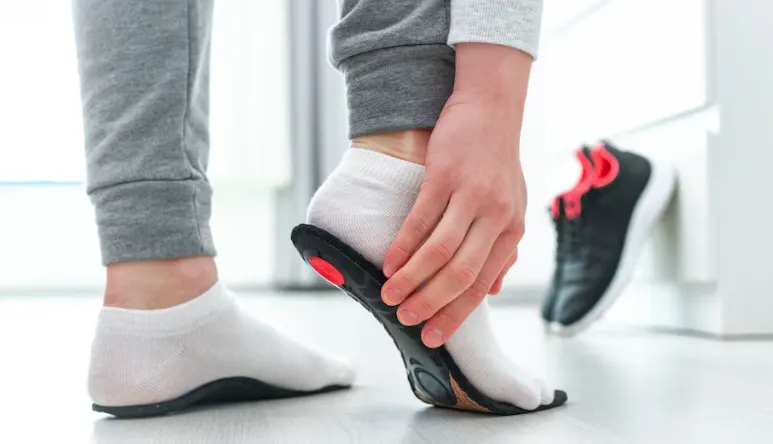
An insole changes what happens underneath your foot, while the original shoe still controls width, depth and stability. Orthotic footwear gives the clinician more scope to work around the whole foot.
Built-In Foot Control or an Added Insole?
A prescribed insole can support an arch and redistribute pressure. Depending on your needs, clinicians may use heel cups, metatarsal pads, pressure-relief areas or materials with different densities.
The shoe still sets limits, though. A narrow toe box remains narrow after you add an orthosis. A loose heel can continue moving. Likewise, a shoe that twists through the middle may provide a poor base for a supportive insert.
That difference often gets missed during orthotic shoes vs shoe inserts comparisons. More cushioning does not automatically mean better support.
Good arch support footwear should give the orthosis a stable base and enough room. If you already wear an orthotic device, check it for compression, cracks and wear as well. KARE covers those basic checks in its guide on care of orthotics and orthotic devices.
Internal Space Can Change the Result
Put a thick orthosis into a shallow shoe and your foot moves upwards. The heel may slip. Toes can rub against the upper, while pressure may develop around bunions or hammertoes.
Clinicians therefore check width and depth, not shoe length alone. They may also remove the original liner when the design allows it. Closures need attention too, since laces or straps should secure the foot without squeezing it.
People with swelling or unusual foot shapes may need custom orthotic footwear because standard shoes cannot provide enough internal room. Meanwhile, suitable arch support footwear can work well when the foot fits safely and the shoe gives the orthosis a firm base.
Pressure Mapping Can Show What Eyes Miss
Pressure under your foot keeps changing as you walk. Your heel accepts load, weight moves forwards and the forefoot takes pressure before toe-off. A deformity, previous injury or restricted joint can alter that pattern.
Plantar pressure mapping records where higher loading occurs. Clinicians can use the information alongside a physical assessment when planning an orthosis or footwear adjustment.
A systematic review examined 10 randomised controlled trials involving 1,686 participants. Researchers assessed interventions including custom insoles, therapeutic footwear and other orthoses. Several trials found lower diabetic-foot-ulcer recurrence with customised orthoses, although results differed across interventions.
The findings do not turn one type of footwear into a universal answer. They do show why clinicians pay close attention to pressure in high-risk feet.
Soft Insoles and Supportive Insoles Are Not the Same
A very soft insert can feel pleasant when you first try it. After repeated loading, however, soft material may compress and provide less control than expected.
Orthotic design often uses different materials for different jobs. EVA can add cushioning, while firmer sections may control selected areas. A softer covering can protect skin over sensitive regions.
When choosing orthotic insoles for foot pain, look beyond the first few minutes of comfort. The device needs to work with your foot and the footwear around it.
KARE explains the assessment process in more detail in its guide to foot pressure mapping and orthotic design.
Foot Shape Can Rule Out an Ordinary Shoe
A flexible foot problem may fit inside standard footwear with an orthosis. A rigid deformity can make that difficult.
Take a prominent bunion. An insert may support the foot underneath, yet a narrow upper can keep rubbing the enlarged joint. Hammertoes can create a similar problem when the shoe lacks depth.
Some people may instead need orthopedic shoe modification. A clinician might consider a heel raise, sole raise, rocker sole or another change after examining the person’s gait and physical needs.
Footwear changes affect walking mechanics, so adding material without assessment can create another problem elsewhere.
Which Choice Can Work Better Over Time?
Long-term use exposes problems that a five-minute shoe trial cannot reveal. Foam compresses, soles wear and feet can change. Swelling, weight changes and changes in activity may also alter how an old orthosis fits.
A person with flexible flat feet might use a custom insert inside stable lace-up footwear. Someone with severe forefoot deformity and reduced protective sensation may need diabetic orthotic shoes with more depth and a pressure-relieving insole.
Check your skin during use. New rubbing, callus, blisters or persistent redness can indicate that the setup needs another look. This becomes especially important when neuropathy reduces the ability to feel excessive pressure.
Orthotic Shoes vs Shoe Inserts for Different Foot Conditions
There is no single footwear recipe for foot pain. Flat feet may need arch contouring or heel control. Plantar heel pain may call for cushioning, mechanical support and changes to activity.
Bunions raise another issue. The shoe needs enough width around the enlarged joint. Adding a thick insert to narrow footwear can actually reduce available room.
Diabetes calls for greater care, particularly when neuropathy reduces protective sensation. In selected cases, diabetic orthotic shoes can provide extra depth and space for pressure-relieving insoles.
One study followed 47 high-risk patients using therapeutic sports footwear with an insole. At one year, researchers recorded 14.9% ulcer recurrence, 6.4% minor amputation and no major amputations.
Those results apply to the study population and should not be taken as a promise for every patient. They do, however, support careful attention to footwear and pressure management in people at higher risk.
For more on this area, KARE explains footwear features and foot-care considerations in its guide to orthopaedic footwear for diabetic patients.
What Should You Check Before Buying?
Footwear can look wide on a shelf yet leave little usable room after you add an orthosis. Check the complete setup with the insert in place rather than judging the shoe separately.

An orthotist may use casting, foam impressions, gait assessment, digital scanning or plantar pressure testing. These methods do different jobs. A digital scan records foot shape, for example, while pressure testing records loading.
KARE discusses more device choices and clinical considerations in its guide to orthotics in India.
How KARE Prosthetics & Orthotics Approaches Foot Care
KARE Prosthetics & Orthotics started in 2013 as the Prosthetics & Orthotics division of Ktwo Healthcare Pvt. Ltd. Our team offers one-to-one consultation, evaluation, recommendations, fitting, education and rehabilitation around individual treatment needs. Orthotists measure, design, fabricate, fit and adjust devices, then provide follow-up when required.
We use modern digitising systems, CAD/CAM processes and microprocessor technologies where clinically suitable. Our team includes highly trained American Board Certified clinicians. Our foot-care services cover customised orthoses, diabetic footwear, offloading footwear, wound-healing shoes and CROW solutions.
The range also includes:
- Pre-fabricated, customised and digitised foot orthoses. Our customised insoles offload pressure areas and use high-quality FDA-approved raw materials imported from the US.
Custom-Moulded Shoes and Sandals

Our custom-moulded shoes and sandals give clinicians another option when standard shoes cannot accommodate ulcers, amputations, bunions or other deformities.
Instead of asking an unusual foot shape to fit a standard shoe last, clinicians can shape footwear around individual requirements. Less complex cases may need orthopedic shoe modification rather than fully custom-made footwear.
Diabetic Neuropathic Footwear

Our diabetic neuropathic footwear includes additional depth and customised insoles for diabetic and neuropathic feet.
The extra space can accommodate the foot and reduce unwanted contact around vulnerable areas. Patients still need regular skin checks because footwear cannot replace wider diabetic foot care.
Customised Foot Orthoses and Insoles

We offer pre-fabricated, customised and digitised foot orthoses. Before choosing a device, the clinician may check posture, joint movement, painful areas, footwear and pressure points.
Customised devices can use arch contours, heel control, pressure-relief areas and different material densities. The design therefore targets an identified requirement rather than simply adding a soft layer inside the shoe.
Orthotic Shoes or Insoles: Which May Suit You?
Your choice between orthotic shoes vs shoe inserts comes down to how much support and accommodation your feet require. A prescribed insert can work well when regular footwear has enough width, depth and stability.
Specialist footwear becomes more useful when the whole shoe needs changing. Extra depth, an unusual foot shape, pressure-sensitive areas or a substantial deformity can push the decision towards therapeutic or custom footwear. Some people may need a combination of both.
Do not use price as the main test. A low-cost insert becomes poor value when it crowds your toes or moves inside the shoe. At the other end, fully customised footwear may be unnecessary when a suitable shoe and prescribed orthosis can handle the problem.
Conclusion
The choice between orthotic shoes vs shoe inserts depends on foot shape, pressure distribution, symptoms, shoe fit and the amount of support you need. Inserts can work well inside suitable footwear, while specialist shoes allow greater control over depth, width and construction.
At KARE Prosthetics & Orthotics, we assess your foot mechanics, pressure areas and footwear requirements before suggesting an option. Whether you need customised shoes, diabetic footwear or foot orthoses, we can support you through assessment, fitting and follow-up care. Contact us to discuss your footwear needs with KARE.
Frequently Asked Questions
Are orthotic shoes better than regular shoes with insoles?
Neither option works better for every person. Orthotic footwear suits some complex needs, while well-fitted shoes with prescribed insoles can support less complex conditions.
Who needs custom orthotic footwear?
People with major deformities, unusual pressure areas, diabetes-related foot risks or difficult shoe-fitting needs may require customised footwear after a professional orthotic assessment.
Can diabetic patients use regular shoes with inserts?
Some can, provided the shoes offer suitable depth, width and support. People with neuropathy, deformity or previous ulcers should seek professional assessment first.
How long do orthotic shoes typically last?
Wear depends on materials, walking activity, body weight and care. Arrange reassessment when soles deteriorate, support changes or the footwear no longer fits properly.
Is orthotic footwear covered by insurance?
Insurance coverage varies across Indian providers and policies. Check prescription requirements, reimbursement limits, exclusions and required documents directly with your insurer before purchasing footwear.