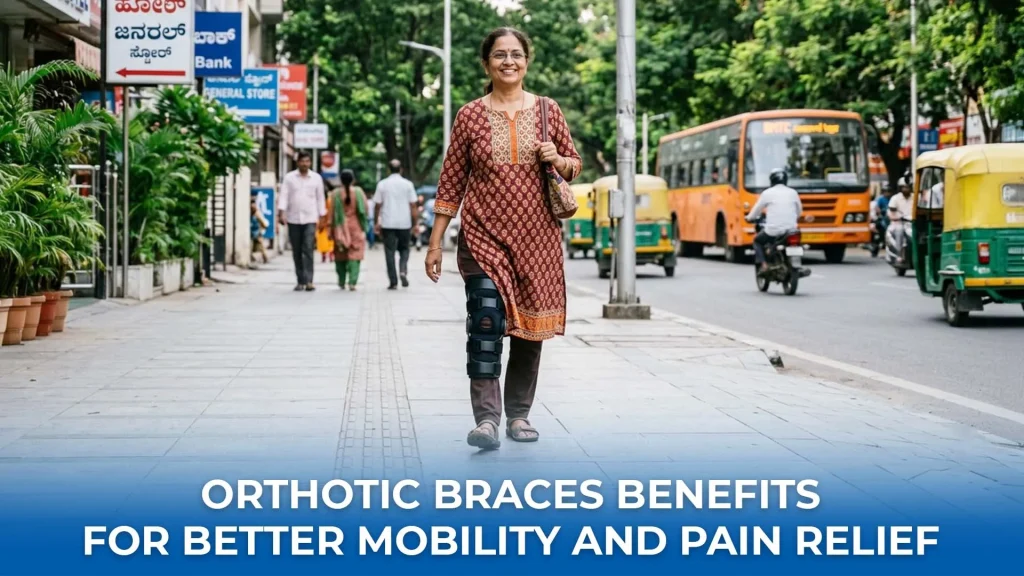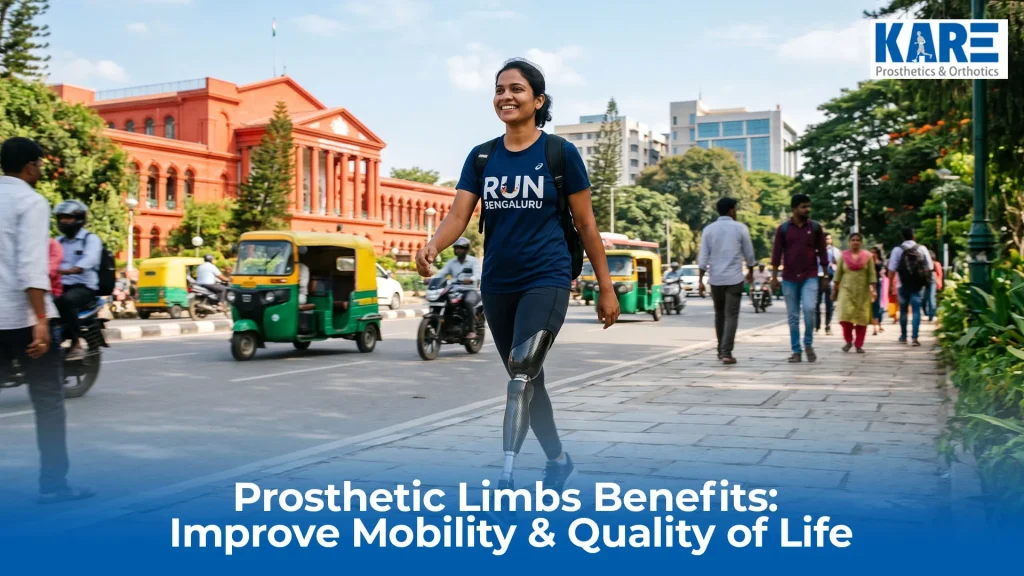
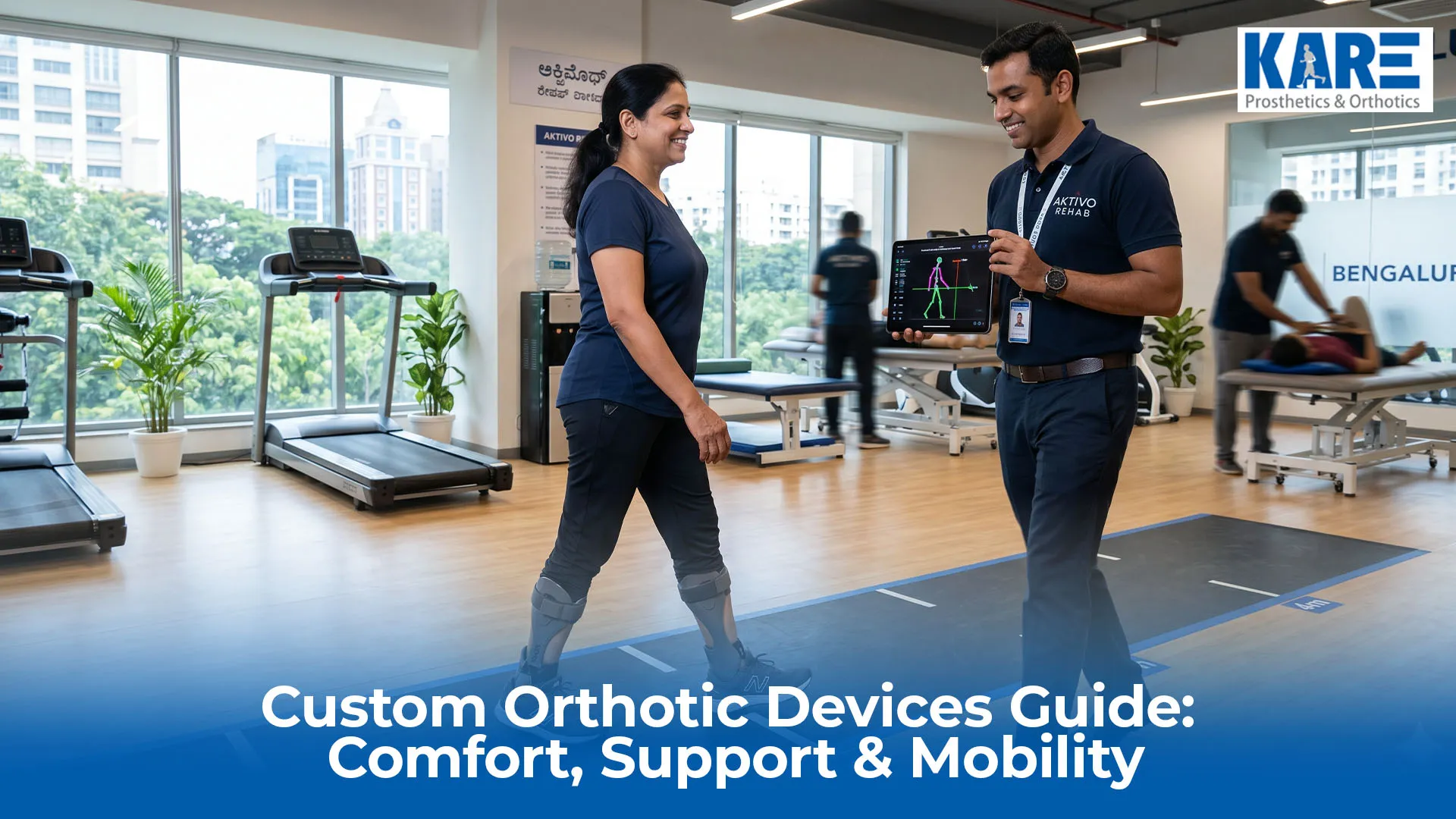
Why does a simple walk feel tiring when the body loses proper support at the feet, knees, hips, or spine?
That problem often starts small. You may notice heel pain in the morning. You may see a child drag one foot. You may feel knee strain after standing at work. Then, over time, the body starts to compensate. The ankle rolls in. The knee rotates. The back tightens. As a result, movement gets harder, not easier. Custom orthotic devices correct that chain early and with precision. They support alignment, guide motion, and reduce pressure where the body struggles most.
At the same time, the benefits of orthotics go beyond comfort. A well-planned orthosis can improve gait, protect joints, and support daily function at school, work, or home. So, if you want long-term support, you need more than a generic brace. You need a device that matches your body, your condition, and your routine.
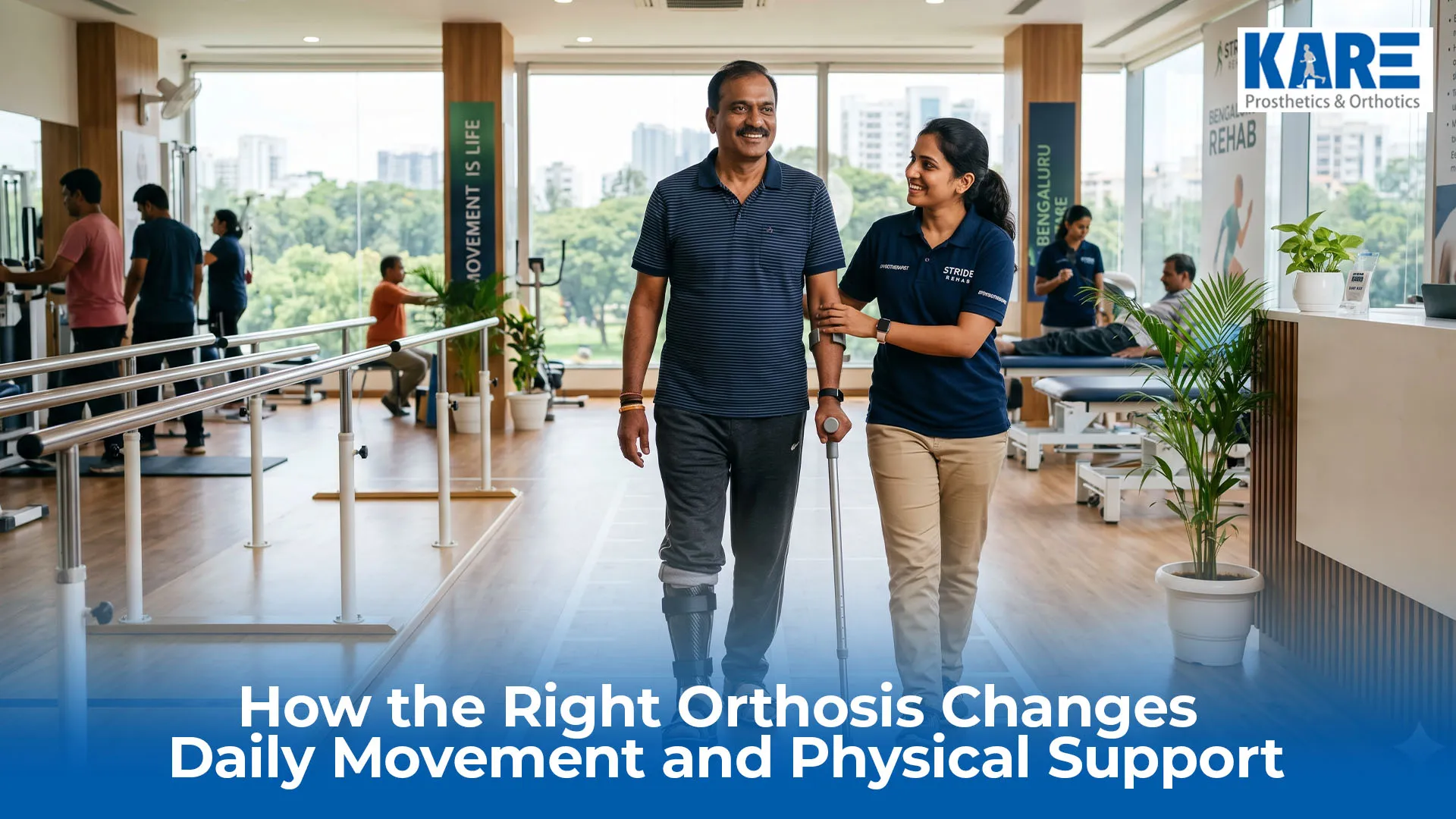
How the Right Orthosis Changes Daily Movement and Physical Support
The right orthosis changes more than comfort. It supports joint alignment, controls unwanted movement, and helps the body work with less strain during daily tasks. As a result, walking, standing, and even simple routine movements can feel more stable, efficient, and controlled.
Better body alignment from the foot right up to the spine
When the foot collapses, the body often follows. The ankle may tilt inward. Then the knee may drift. After that, the pelvis may rotate. So, pain rarely stays in one place. Custom orthotic devices help break that pattern by guiding the body into a safer position during standing, walking, and transfer movements.
Clinicians use gait analysis, pressure mapping, and manual assessment to trace the source of poor movement. Therefore, we do not guess. We look at joint range, muscle control, tone, limb length, and load points. Then we choose the right design, stiffness, trimline, and padding. In many cases, orthopedic support devices help reduce compensatory movement before it becomes a larger mechanical problem.
More stability for work, school, home, and rest
Stability does not help only active users. It helps office workers, older adults, school children, and people in recovery too. For example, a person who stands for long hours may need arch support and heel control. Meanwhile, a child with poor gait control may need ankle guidance during school and play. Still, both users need the same thing, steady movement.
This is where the second layer appears. The advantages of orthotics are sharing of load, motion control and optimum use of energy during walking. Indeed, musculoskeletal disorders comprise approximately 33.3% of orthotics demand in 2026, demonstrating the frequency of individual requests to receive professional assistance in the form of an organized support of the pains, stresses, and restrictions of movement.
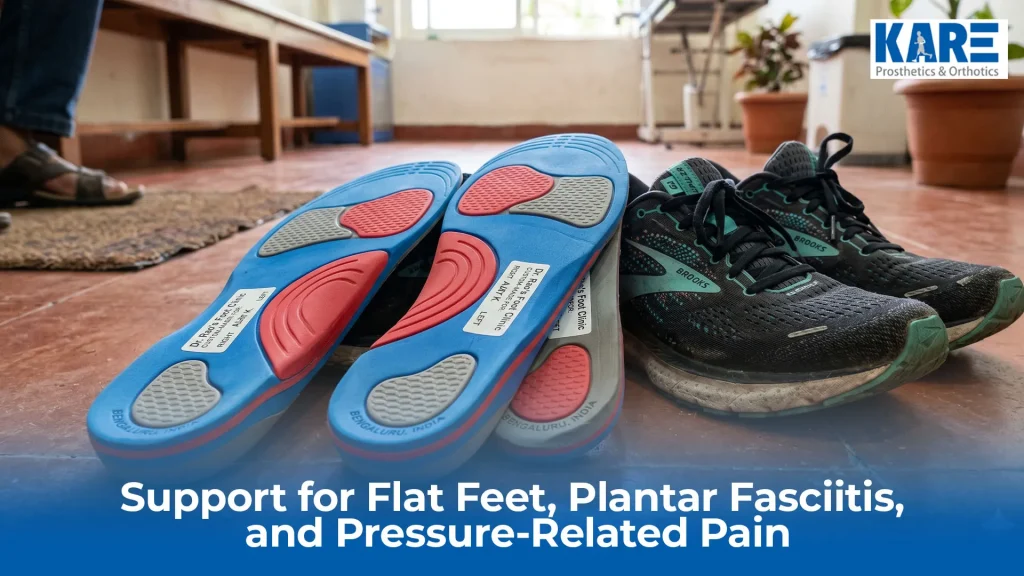
Support for flat feet, plantar fasciitis, and pressure-related pain
Flat feet, plantar fasciitis, tendon strain, and pressure pain often start from repeated overload. Yet many people still buy generic insoles and expect a strong result. That usually fails because the device does not match foot shape, body weight, gait pattern, or shoe type.
Custom orthotics for feet work better because we build them around arch height, heel angle, forefoot loading, and tissue stress. Likewise, foot orthotics for pain relief target the pressure pattern instead of masking it.
Condition | Device plan | Main aim |
Flat foot strain | custom arch support | support the medial arch and reduce collapse |
Plantar fasciitis | foot orthotics for pain relief | reduce heel pull and lower fascia stress |
Mild gait instability | ankle guidance or in-shoe support | improve step control and balance |
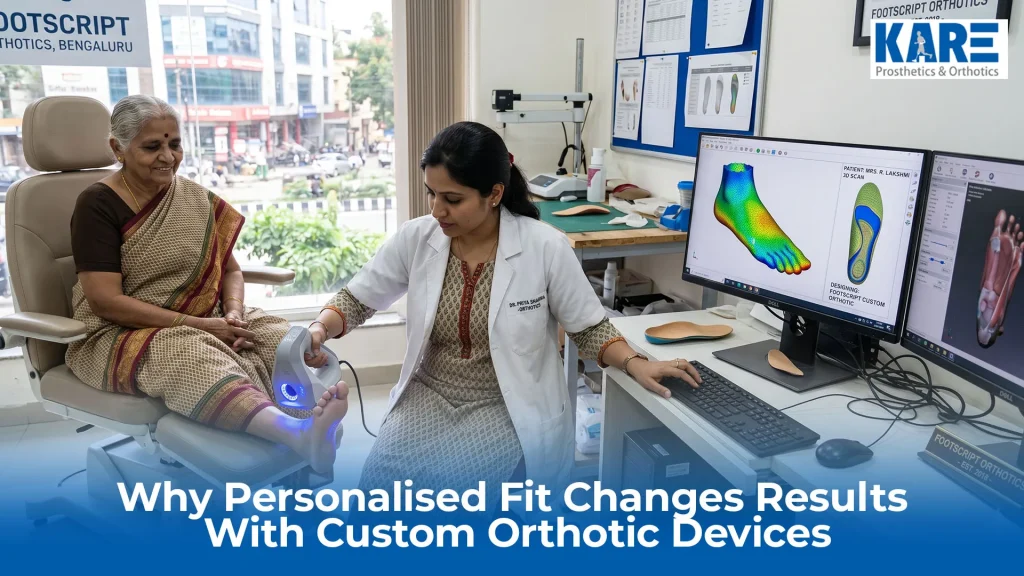
Why Personalised Fit Changes Results With Custom orthotic devices
A good orthosis starts with assessment, not stock inventory. First, we study gait. Next, we check joint angles, muscle tone, and skin risk. Then we take plaster casts or digital scans. After that, we choose shell material, strap position, posting angle, and lining. Custom orthotic devices work because each element serves a clinical purpose.
This is also why types of orthotic devices cannot follow one formula. A rigid foot shell may suit one person. However, a flexible design may suit another. An AFO may control toe drag well. On the other hand, a KAFO may support the knee and ankle together.
Lower-limb orthotics now hold about 47.8% share in 2026, which reflects strong demand for custom insoles, ankle-foot orthoses, and knee braces. So, the fit process must stay precise, or the result will fall short.

Which Orthotic Designs Suit Different Body Needs
Different diagnoses need different plans. Therefore, we choose from several types of orthotic devices after clinical review. We may also combine custom orthotics for feet with higher-level bracing when gait starts at the ground and then affects the knee or hip.
Ankle Foot Orthosis
Clinicians use an ankle foot orthosis when the ankle lacks control during swing or stance. It can guide dorsiflexion, limit toe drag, and improve heel strike.
Knee Ankle Foot Orthosis
A Knee ankle foot orthosis supports the knee and ankle in one frame. It suits users who show knee instability, weakness, or poor stance control.
Hip Knee Ankle Foot Orthosis
An hip knee ankle foot orthosis extends support to the hip as well. Clinicians may use it when the user needs broader lower-limb control during early rehabilitation.
Wrist, Hand, and Elbow Orthosis
Upper-limb orthoses help control joint position, reduce strain, and support function during daily tasks, school work, or injury recovery.
Fracture and Trauma Bracing
Trauma braces stabilise healing tissue while still allowing planned movement. That helps reduce stiffness and supports gradual return to function.
Custom Spinal Orthosis
Spinal orthoses guide trunk position, reduce excessive motion, and support users with scoliosis, postural weakness, or spinal instability.
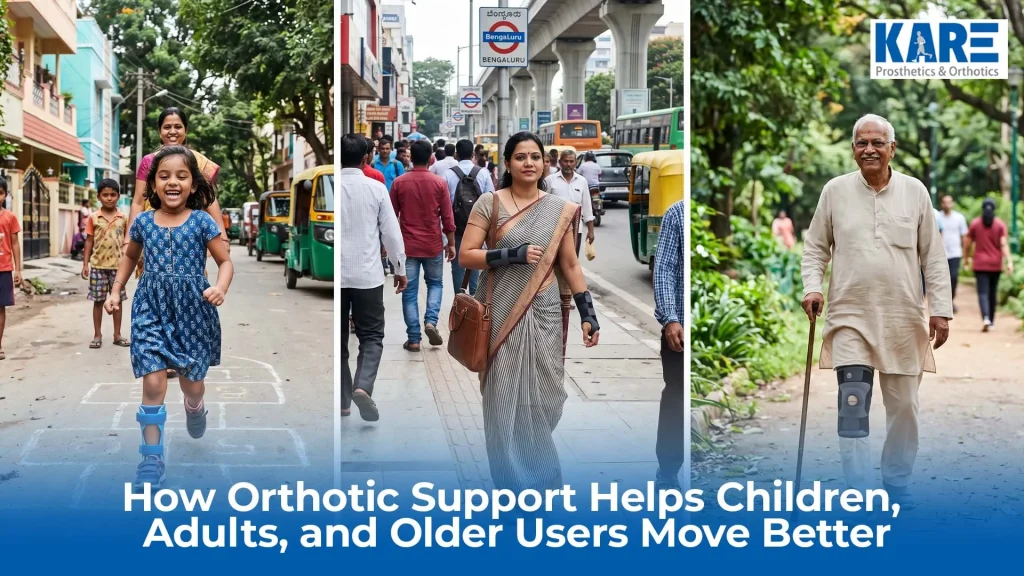
How Orthotic Support Helps Children, Adults, and Older Users Move Better
Age changes the goal, yet the clinical method stays focused. A child may need support for gait training, tone control, or posture during growth. An adult may need pressure control, work tolerance, or sports recovery. An older user may need balance support and joint protection. In each case, custom orthotic devices can improve daily movement when we match the design to the user, not the label.
Our team combines clinical care with fabrication, fitting, and review. As a result, you get one connected service instead of scattered steps. We also work with paediatric, spinal, upper-limb, and lower-limb cases, so the plan stays specific.
A few strong reasons families and users choose us:
- We build each orthosis from patient-specific molds or digital measurements.
- We use gait analysis, pressure review, and structured fitting for better clinical control.
- We offer advanced prosthetics and orthotics in India with international-grade methods and materials.
- We plan follow-up, training, and review instead of stopping at delivery.
So, when you compare orthopedic support devices, check the process, not the brochure. Karepo India focuses on precision, comfort, mobility, and long-term use.

Final Thoughts
The body moves as one system. Therefore, when the foot, knee, hip, wrist, or spine loses support, the rest of the body starts to compensate. That is why proper assessment, precise design, and regular review shape better results than stock solutions.
If you need custom orthotic devices for pain control, gait support, posture correction, or child mobility care, choose a team that builds the device around your movement goals.
Speak with us for a personalised plan that supports daily comfort, stronger function, and safer mobility with KARE.
FAQs
What are custom orthotic devices and how do they work?
Custom orthotic devices support body alignment, control joint motion, reduce pressure, and improve gait. Clinicians design them from your measurements, condition, and movement needs.
Who should use custom orthotics?
People with flat feet, plantar fasciitis, gait issues, joint instability, posture problems, diabetes-related foot stress, or recovery needs may use custom orthotics after assessment.
What are the benefits of custom orthotic devices?
They improve alignment, reduce strain, support weak joints, ease pressure points, improve walking comfort, and help the body move with better control daily.
How do orthotics improve comfort and mobility?
Orthotics spread pressure more evenly, support arches and joints, reduce painful motion, and guide safer movement patterns during standing, walking, work, and exercise.
How long do custom orthotic devices last?
Most custom orthotic devices last several years, though lifespan depends on material, body weight, activity level, growth, and how regularly you review fit.