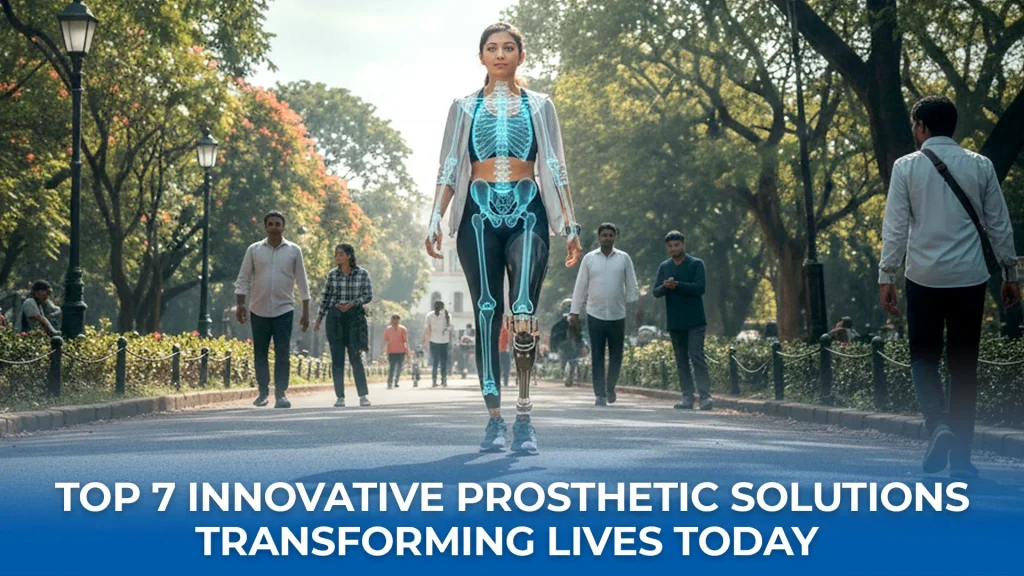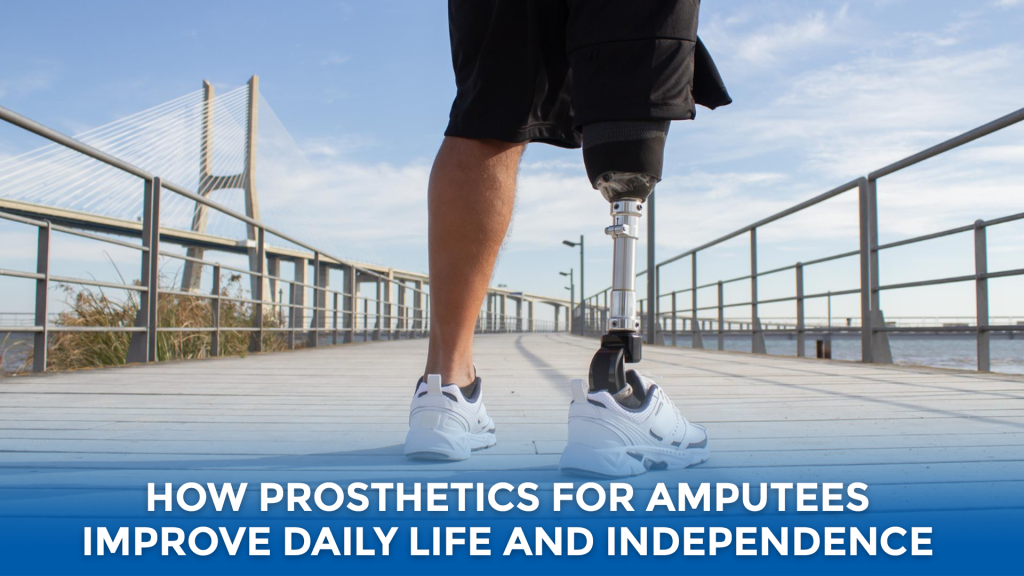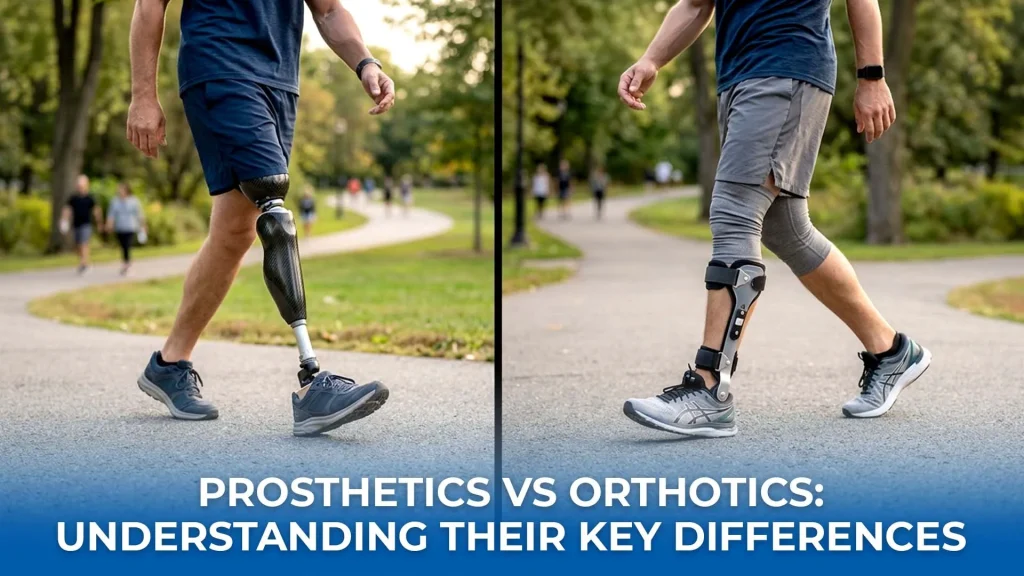
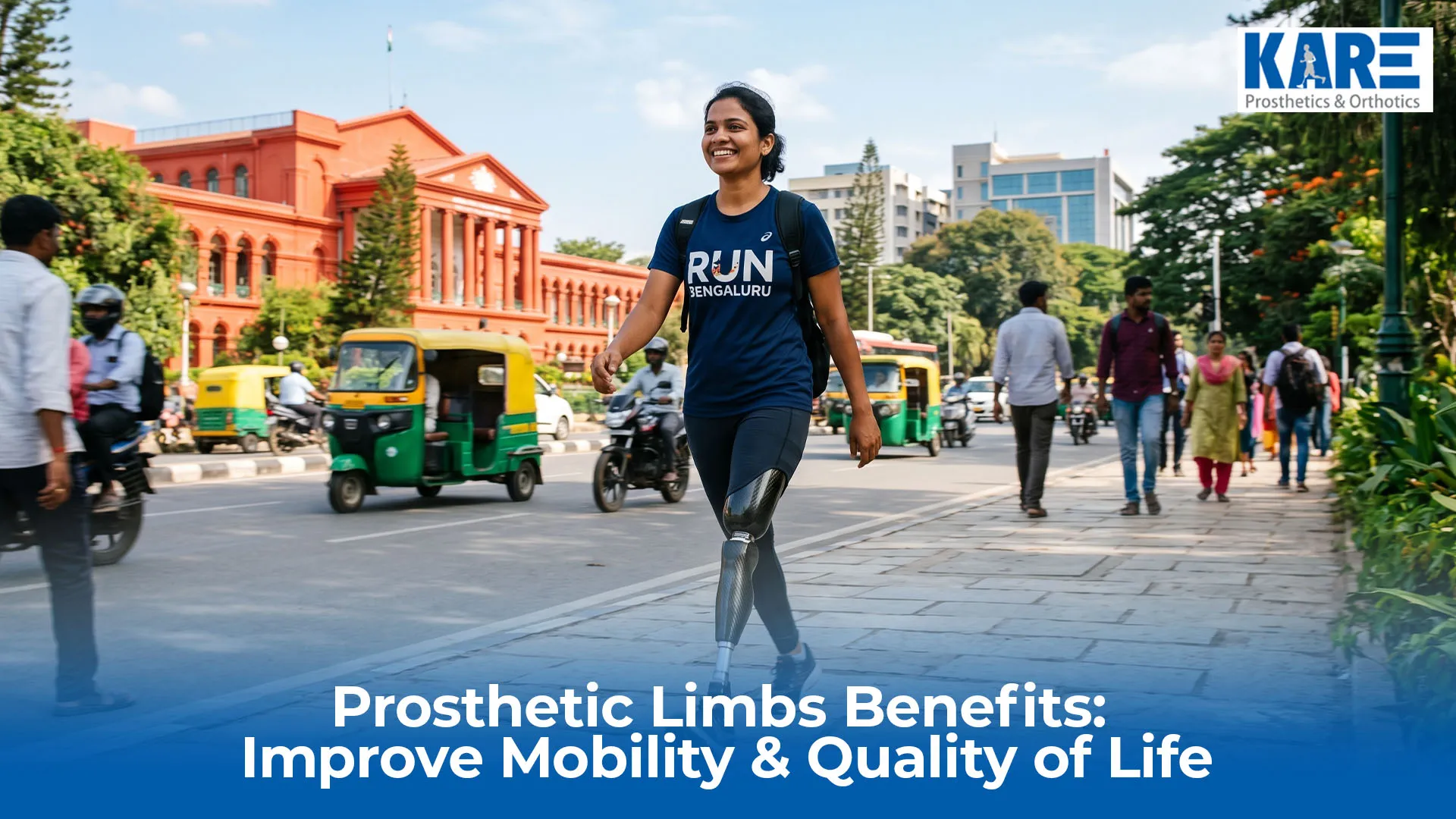
What changes when you stop planning every step around pain, imbalance, or fear of falling?
For many people, that change starts with the right prosthetic limb. A well-fitted device can support movement, reduce strain, improve posture, and bring back routine confidence. So, daily tasks feel less tiring. Stairs feel less stressful. Travel feels possible again. Research also links better prosthetic mobility with stronger quality of life and higher satisfaction, which is why prosthetics limbs benefits matter far beyond walking alone.
The bigger point is simple. A prosthetic limb must match your body, goals, and routine. When clinicians align the socket, suspension, foot system, and training plan well, you get a stronger prosthetic limb for mobility and better control through the day. So, this blog explains what improves, why that improvement lasts, and how the right clinic shapes each stage.
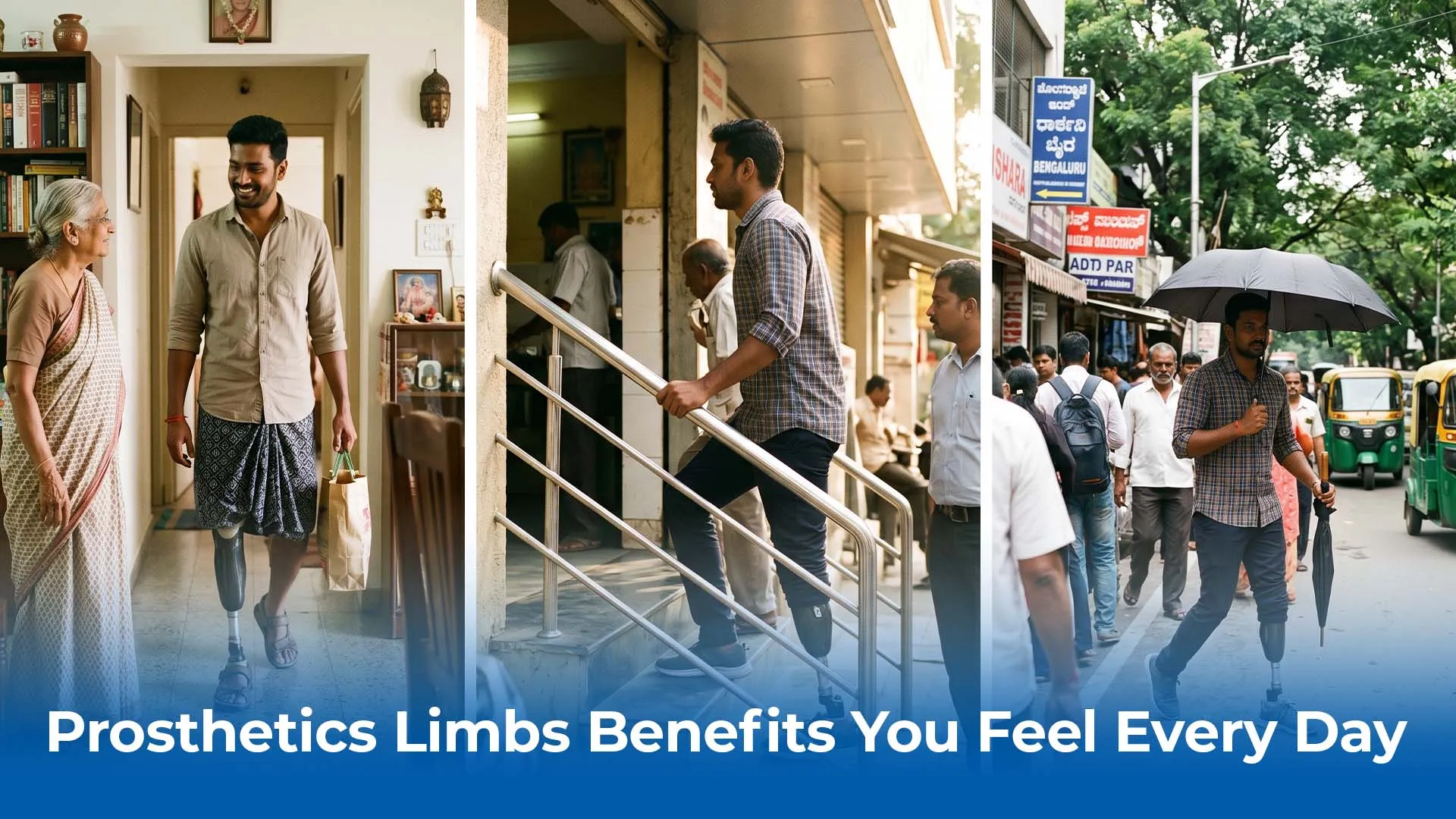
Prosthetics Limbs Benefits You Feel Every Day
The best outcomes never come from a device alone. They come from fit, training, follow-up, and steady use. That is where the real benefits of prosthetics start to show.
Walking and Daily Independence
Walking stands at the centre of recovery for many lower-limb users. A good prosthetic supports weight transfer, foot placement, and safer step rhythm. So, you move through home, office, market, and public spaces with less hesitation. You also spend less energy correcting every movement. That makes a big difference in bathing, dressing, commuting, and simple outdoor activity.
One study found that amputees who wore their prosthesis for more than 50% of waking hours reported better general adjustment and fewer functional restrictions. That result matters because regular use usually reflects comfort, trust, and routine confidence in real life.
Prosthetics Limbs Benefits for Better Balance and Less Strain
When your body loses a limb, the rest of the body starts compensating fast. You lean more on one side. Your back stiffens. Your hips rotate badly. Then pain builds slowly. The right prosthetic corrects much of that pattern. It supports alignment, reduces uneven loading, and helps your sound limb avoid overwork. In turn, you stand longer and walk with better balance.
Clinicians improve this outcome through socket contouring, liner selection, suspension choice, and alignment checks. For example, they may use a dynamic response foot, a silicone liner, vacuum suspension, or a microprocessor knee depending on your limb level and activity. These choices shape comfort as much as technology does.
Prosthetics Limbs Benefits for Confidence and Social Life
Mobility changes the mind as well. When you move with less fear, you start stepping out more. You join family events. You travel again. You meet people without thinking about every chair, surface, or staircase. That shift improves confidence, and it often improves life with prosthetic limbs in a very real way.
Another study reported that 75% of patients who engaged in peer support after lower extremity amputation had an improved outlook on life and greater mobility. So, support, movement, and emotional recovery often grow together.
Returning to Work, Study, and Daily Duties With Less Effort
People rarely ask for a prosthetic just to walk in a clinic corridor. You want to return to work, college, parenting, errands, and social routine. That is why function matters more than appearance alone. A good setup helps you sit, stand, transfer, walk, and manage long days with less fatigue. Those are the daily artificial limbs advantages people feel first.
This return takes planning though. Office users may need a stable, low-maintenance setup. Active users may need better energy return and terrain control. Upper-limb users may need grip training, task practice, or myoelectric options. In each case, clinicians must build the device around the life you want back.

Building Better Health Through Regular Movement
Movement protects long-term health. When you walk more, you support circulation, muscle use, joint range, and weight management. You also reduce the risk of staying inactive for months. That matters after amputation because inactivity often brings new issues, including stiffness, weakness, and low morale. So, the limb must help you stay active, not just stand upright.
Regular movement also improves life with prosthetic limbs over time because the body learns better movement patterns. Meanwhile, the mind learns trust. Then, step by step, mobility turns into independence.
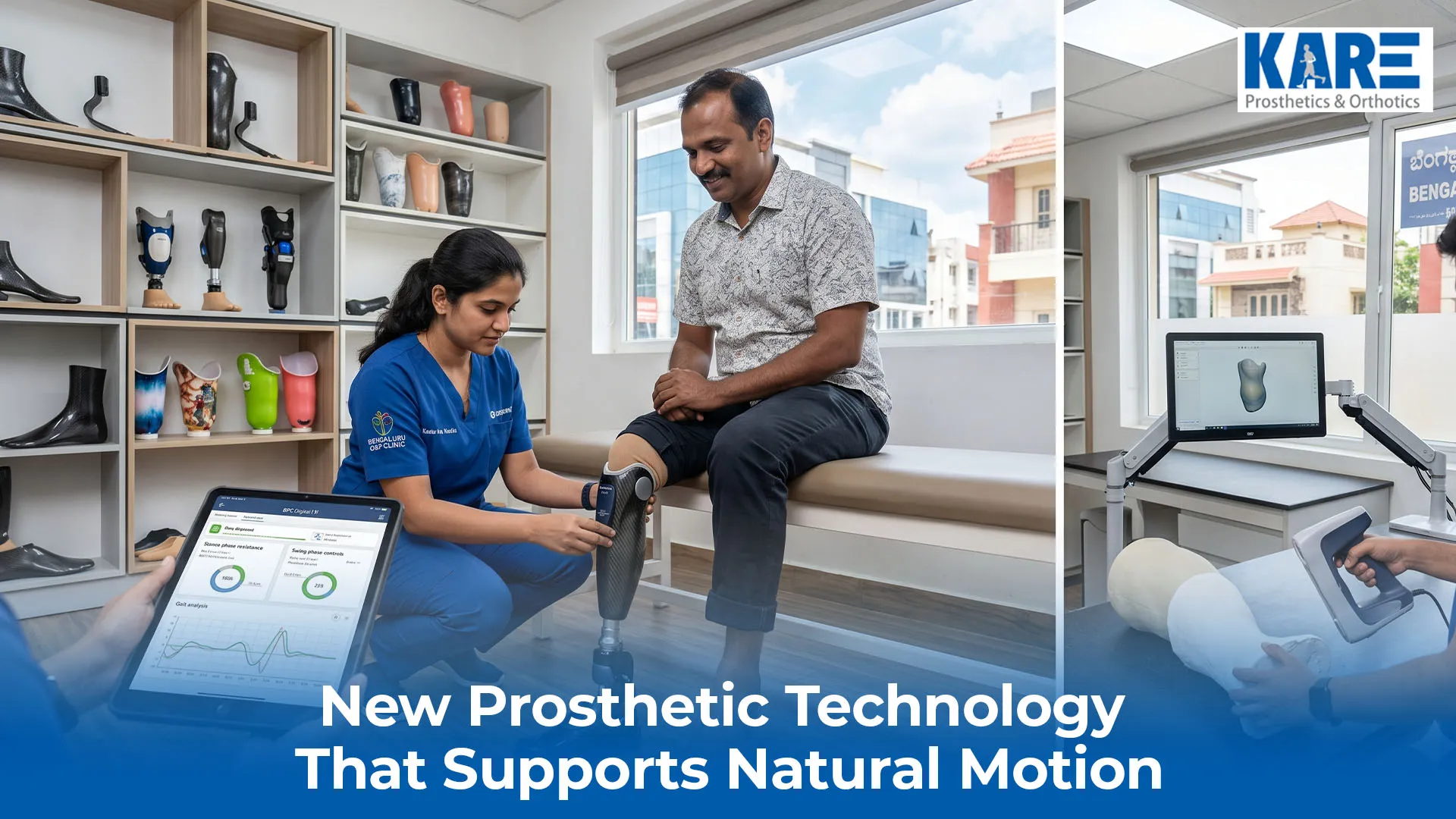
New Prosthetic Technology That Supports Natural Motion
Modern prosthetic care now goes far beyond basic replacement. Today, clinicians may use CAD/CAM design, pressure mapping, trial sockets, microprocessor knees, and lightweight component systems. These tools help them tune fit, gait, and energy use more precisely. So, you get a device that matches your body and routine more closely.
Technology still needs judgment. A costly component alone cannot fix poor socket fit. However, when a skilled team pairs advanced parts with proper assessment, you get a stronger second outcome from prosthetic limb for mobility and a smoother rehabilitation path.
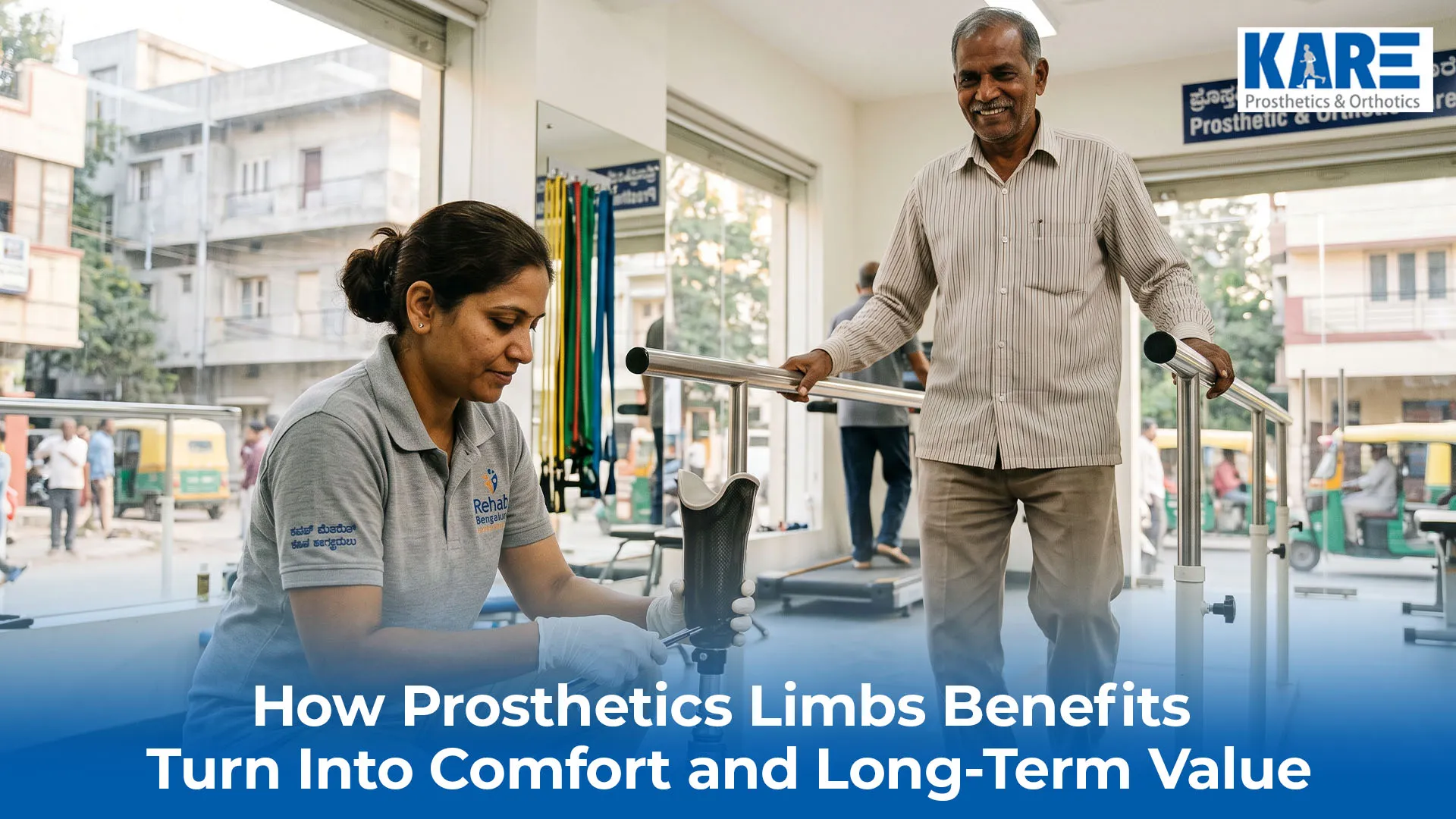
How Prosthetics Limbs Benefits Turn Into Comfort and Long-Term Value
Comfort decides whether you keep using a prosthesis daily. If the socket pinches, slips, or creates sores, usage drops. If the fit feels stable, you move more, build tolerance, and gain lasting independence. That is where the deeper prosthetics limbs benefits show up in daily routine and long-term value.
What changes | What you feel |
Better socket fit | Less rubbing, fewer pressure points |
Good alignment | Smoother steps and better balance |
Right component choice | Less energy loss during walking |
Regular reviews | Better comfort as body shape changes |
Gait training | More confidence on uneven surfaces |
So, the real artificial limbs’ advantages go beyond movement alone. You save energy. You reduce strain on the back and sound limb. You lower the risk of stopping use midway. In simple words, comfort protects progress.

Fitting, Prosthetic Rehabilitation, and Ongoing Care
A prosthetic journey usually starts with assessment. The clinician checks limb condition, muscle strength, skin health, range of motion, activity goals, and home demands. Then the team plans socket design, suspension, foot or hand type, and training schedule. After that, trial fitting begins. Next comes alignment tuning, gait drills, and adaptation support. That full process defines strong prosthetic rehabilitation from day one.
This stage needs patience. Residual limbs change shape. Liners may need adjustment. You may need desensitisation work, strengthening, stump care, and walking practice. Some users adjust in weeks. Others take longer. Both paths are normal. Strong prosthetic rehabilitation works best when you attend follow-ups, report discomfort early, and train consistently with the care team.
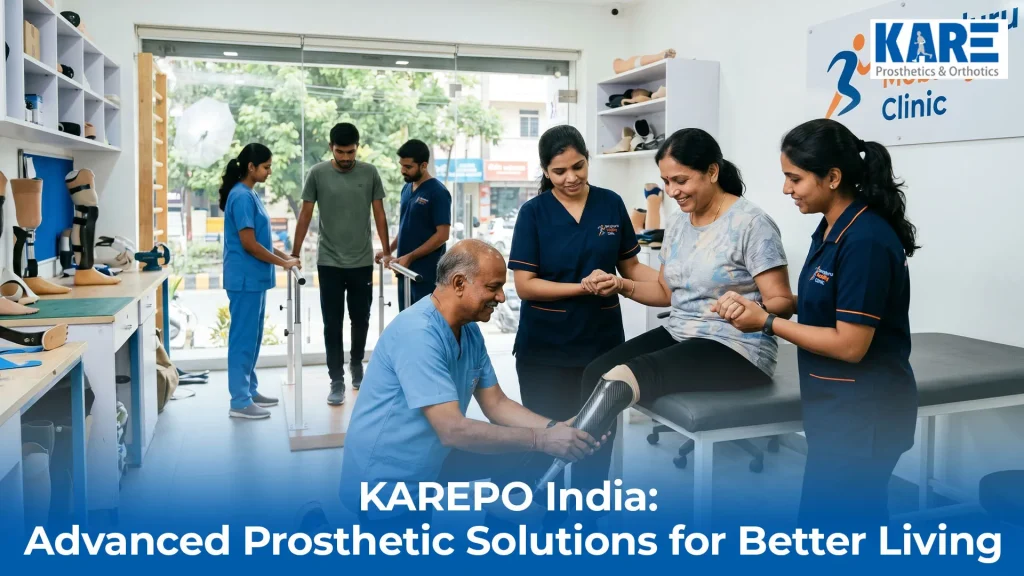
KAREPO India: Advanced Prosthetic Solutions for Better Living
At KARE Prosthetics & Orthotics, we have focused on one thing from the beginning: helping people move better and live with more ease. We make advanced prosthetic and orthotic care more accessible across India. We work with people who need custom prosthetic legs, orthotic support, flat foot solutions, and steady care after fitting.
That combination is essential because prosthetic care does not end on fitting day. The body changes. Comfort changes. The walking pattern changes too. So, we keep the focus on proper assessment, careful fitting, regular review, and support that continues over time. That is where better results usually come from.

Final Thoughts
The right limb can change the quality of your day, your work, and your confidence. That is the heart of prosthetics limbs benefits. You gain movement, balance, comfort, and stronger participation in daily life. You also see the true benefits of prosthetics when expert fitting, training, and follow-up stay consistent.
If you want a safer, stronger, and more active future, choose a clinic that plans for your full recovery, not a quick handover. For advanced prosthetics and orthotics in India, personalised fitting, and steady support, connect with KARE.
FAQs
How do prosthetic limbs improve mobility?
Prosthetic limbs improve mobility by restoring support, balance, and step control. They help you walk safer, move longer, and handle stairs, transfers, and routine tasks.
What are the benefits of using prosthetic limbs?
They improve movement, reduce body strain, support posture, increase confidence, and help you return to work, study, travel, exercise, and everyday independence.
Can prosthetics limbs improve Quality of Limbs?
They improve quality of life more than limb quality itself. Better fit, alignment, and training reduce pain, improve function, and support confidence in daily routine.
How long does it take to adjust to a prosthetic limb?
Adjustment time varies by fit, strength, amputation level, and training. Many users improve within weeks, while full comfort and confidence may take months.
Are modern prosthetic limbs comfortable to use?
Modern prosthetic limbs can feel comfortable when clinicians match socket fit, liners, alignment, and components to your body, activity level, and skin needs.