From balancing your body to helping you push off the ground, the forefoot handles a lot of pressure. So when you feel pain, swelling, ulcers, or injuries, choosing the right footwear is important.
In this blog, you’ll understand the nature of forefoot, why pain develops, and whether a forefoot offloading shoe or traditional footwear is right for your recovery. You’ll also see Medical shoes for forefoot pain, pressure-relief shoes, and post-surgery footwear.
What is the Forefoot & Forefoot Offloading Shoe?
The toes and the ball of your foot are considered the forefoot. It maintains your balance and helps you move forward. When this area is injured, every single move can feel difficult.
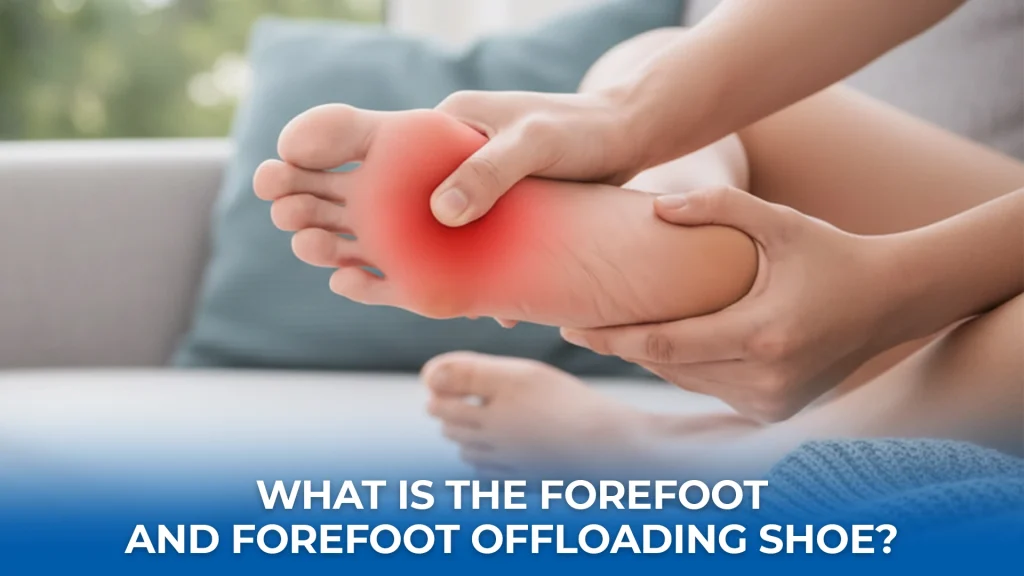
A forefoot offloading shoe is a medically designed shoe that reduces weight-bearing on the front of the foot. With its rocker-bottom sole and raised heel design, it keeps pressure off healing tissues. This shoe is also a common part of post-surgery footwear, especially after procedures involving the toes, forefoot fractures, or diabetic ulcers. Many people recovering from chronic foot issues rely on this design to move more safely.
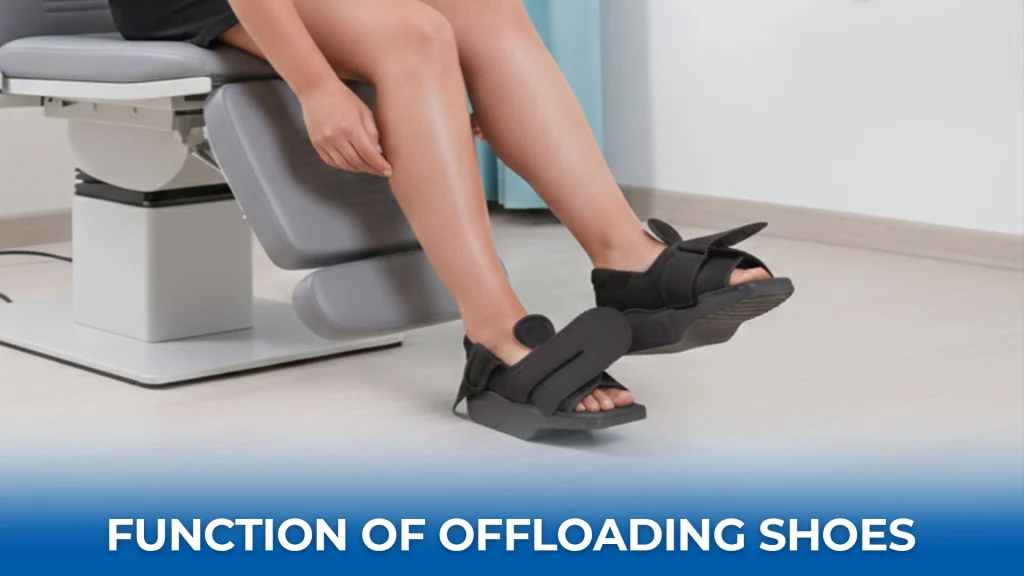
Function of Offloading Shoes
It’s the very front of your foot is made of metatarsals and toe bones. It can bend, absorb shock, and support your body weight during movement.
Mechanism / How It Works
Shifts body weight to the midfoot and heel
Normally, a large portion of body weight is borne on the front of the foot during walking. Forefoot offloading shoes change this balance so more weight falls on the middle and back of the foot. This helps the front of the foot rest and recover.
Rocker bottom sole reduces pressure while walking
The sole of the shoe is curved. When you take a step, your foot rolls smoothly from the heel to the toe. This rolling motion reduces the need to push hard with the toes, lowering pressure on the forefoot.
Raised heel and lowered toe area unloads the forefoot
The heel of the shoe is slightly higher than the toe. This slanted design gently lifts the forefoot off the ground. As a result, the injured or painful area at the front of the foot is not forced to take weight during walking.
Stiff sole controls toe bending and protects the forefoot
The front part of the shoe does not bend easily. This prevents the toes from bending too much while walking. By limiting toe movement, the forefoot stays protected from strain, irritation, or re-injury.
Common Issues or Conditions Affecting the Forefoot
It usually affects the forefoot, including the ball of the foot (metatarsalgia), bunions, fractures, diabetic ulcers, and Morton neuroma. It becomes aggravated with the ill-fitting shoes that keep shaking the affected region directly. In these cases, a forefoot offloading shoe has been shown to protect the area and facilitate healing.
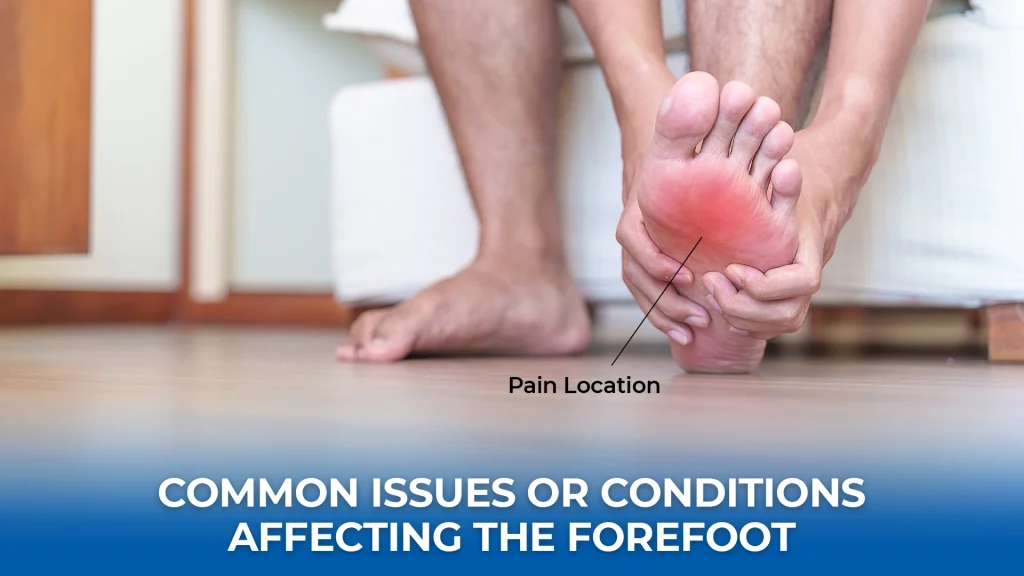
What is the Reason for the Pain or Swelling in the Forefoot?
Repeated striking, wearing of tight shoes, structural deformity, or a medical condition such as diabetes are likely causes of pain and swelling in the forefoot.
In this case, footwear offloading is useful because it reduces the load on delicate parts and allows your foot to rest more easily.
Diagnosis of Forefoot Pain and Treatment Interventions?
Doctors typically check your foot, assess your mobility, and perform imaging. The management of this condition regularly involves rest, ice, physiotherapy, and a change of footwear. A Medical shoe is recommended for many people to take pressure off the forefoot and protect healing tissues during walking.
Which Shoes or Insoles are the most Supportive for the Forefoot?
The forefoot should be well cushioned, have a wide toe box and have the correct arch support. Orthotics will also help improve alignment and reduce strain. However, if your injury is moderate or severe, you might not be able to get comfortable in your traditional footwear, and forefoot offloading shoes or pressure relief shoes may be a preferred option for comfort and protection.
How Do Forefoot Offloading Shoes Differ From Regular Footwear?
Traditional shoes are meant for everyday comfort and general use. But the offloading shoe has one primary purpose: keeping pressure off the front of the foot. It prevents painful loading and supports healing.
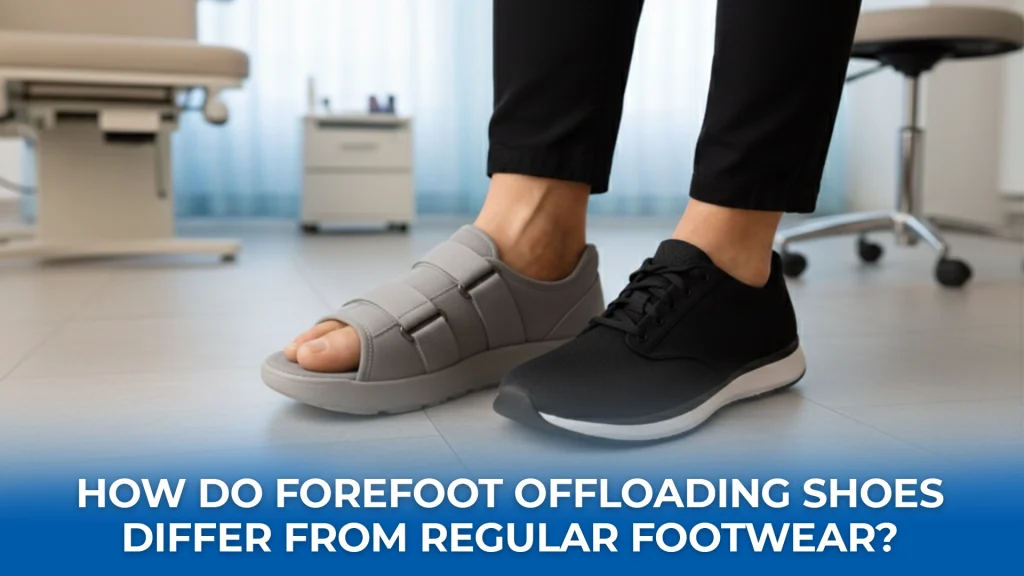
Compared to regular footwear, Offloading footwear for foot injuries, Medical shoes for forefoot pain, and pressure relief shoes offer far better protection and controlled pressure distribution, especially during recovery.
Who Should Use Forefoot Offloading Shoes, and Can You Walk Normally in Them?
It’s widely used as post surgery footwear to protect wounds and prevent complications. You can walk safely in these shoes, though your stride may feel slightly different. Many people also pair them with pressure relief shoes or Offloading footwear for foot injuries to increase comfort during the healing phase.
Can Offloading Shoes Be Effective in Recovery?
Absolutely. One of the surest methods of protecting the forefoot during the recovery process is by the use of a forefoot offloading shoe. To support you over the long term, you can use options such as Medical shoes that protect your feet after the primary healing period ends, like post-surgery footwear.
Conclusion
The decision of whether to use a forefoot offloading shoe or regular footwear would actually be determined by what your feet are experiencing today. And you know, perhaps you are on your feet after surgery, have an injury, or have persistent forefoot pain, and the right support can make your day much easier and your healing process quicker. Offloading shoes provide your foot with the unique rest and pressure relief that it requires, whereas ordinary footwear only has an effect when your foot is healthy enough to accept normal loads.
When considering your recovery, comfort, and movement needs, the first step is to choose footwear that promotes healing rather than slows it.
And when you are not sure of the right choice to make, KARE is also there to provide you with the appropriate medical footwear solutions, as well as professionally approved forefoot offloading solutions, which may be designed to fit your recovery requirements.