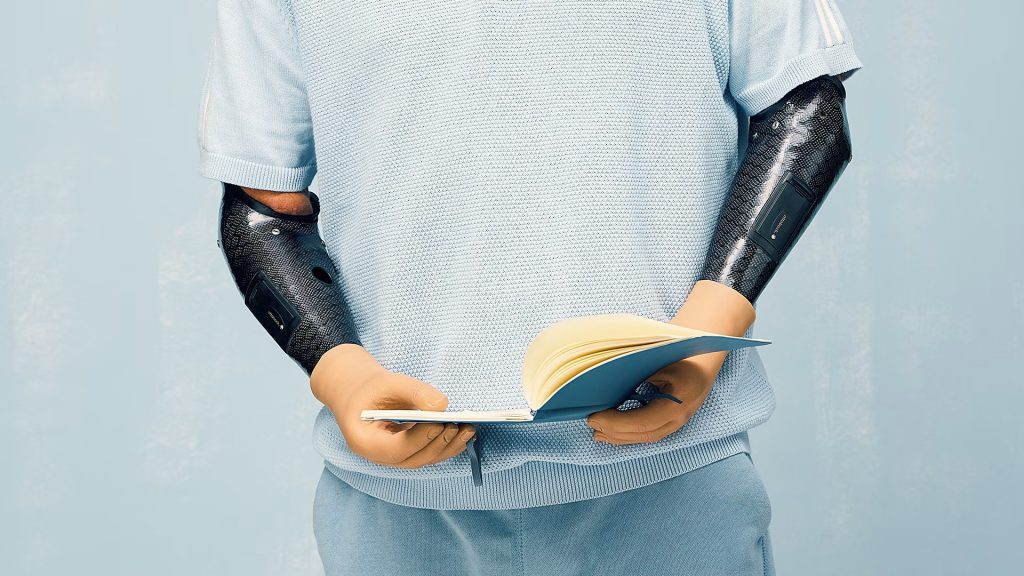

Which prosthetic arm would actually suit the way you work, travel, cook and manage everyday tasks? One user may need fine finger control, while another needs a durable arm that works through long hours.
The myoelectric vs. body-powered prosthesis choice depends on how you plan to use the device. Myoelectric systems read muscle signals and convert them into powered hand movement. Body-powered systems use cables and upper-body movement. For people exploring upper limb prosthetics, control, weight, upkeep, training and socket fit all need attention before choosing a system.
Myoelectric vs Body-Powered Prosthesis: Main Differences Before You Choose
Both systems replace part of the function lost after upper-limb amputation, but they operate in different ways. A body-powered arm uses shoulder or upper-body movement to pull a cable, while a myoelectric arm uses electrical activity from suitable muscles.
Neither option suits every user. Residual-limb length, skin condition, muscle control, occupation and socket design can change the result. Your prosthetist should review these points before recommending specific prosthetic hand options.
KARE explains the working differences between cosmetic, body-powered, myoelectric and advanced systems in its guide on how prosthetic arms work.
How Myoelectric Arms Use Muscle Signals
Myoelectric arms use surface electrodes placed inside the socket. These electrodes detect electrical activity when you contract selected muscles, then send that signal to the powered hand.
For example, one muscle contraction may open the hand while another closes it. Some systems use one electrode, while others use two or more. More advanced models can support several grip patterns, but the user still needs reliable muscle control.
When comparing myoelectric vs body-powered prosthesis systems, look beyond the number of grips. Sweat, socket movement and poor electrode contact can affect control, especially during long wear periods.
A user who handles documents, phones, utensils or small objects may prefer powered grip control. KARE explains EMG control and candidate selection further in its myoelectric prosthesis guide.
How Body-Powered Arms Use Shoulder And Cable Movement
A body-powered prosthetic arm uses a harness and cable system. Shoulder or upper-body movement creates cable tension, which opens or closes the terminal device.
This mechanical link gives some users useful feedback through cable resistance. It also avoids battery dependence for basic operation. That can help users who work for long hours or spend time away from charging points.
However, repeated shoulder movement may become tiring. Harness pressure can also affect comfort if the fitting or cable path is poor. For that reason, the clinician should test reaching, lifting and grasping from different positions during fitting.
Which Option Works Better During Everyday Tasks?
Daily activities reveal differences that a short clinic demonstration may hide. Preparing food, carrying bags, typing, using tools and handling clothes all place different demands on a prosthetic arm.
A myoelectric hand may offer powered opening, closing and several grip patterns. A body-powered arm gives direct mechanical control through shoulder movement. Neither option automatically works better for every task.
The myoelectric vs body-powered prosthesis comparison should therefore begin with your routine. During arm amputee rehabilitation, therapists can break daily activities into smaller movements and train the user around those exact needs.
KARE also discusses advanced powered systems and their use in its bionic arm India guide.
Which Prosthetic Arm Needs Less Maintenance?
Body-powered systems usually contain cables, harness parts, joints and a terminal device. These parts still need inspection, but the system does not rely on a battery for basic movement.
Myoelectric systems include electrodes, motors, electronic controls and rechargeable batteries. You need a charging routine and should follow the manufacturer’s instructions for water, dust and general care.
The myoelectric vs body-powered prosthesis decision should therefore include service access, repair costs, battery care and replacement components. Purchase price tells only part of the long-term cost.
How Weight And Battery Use Affect Daily Wear
Weight becomes more noticeable after several hours of use. The complete prosthesis includes the socket, suspension, hand, wrist and other components, so the hand alone does not tell you how heavy the system will feel.
A 2026 multisite observational study included 232 prosthesis users with transradial or transhumeral amputations. Researchers classified devices below 1 kg as light, 1 to 1.6 kg as moderate and 1.6 kg or above as heavy.
Balance and socket suspension also affect wear. A prosthesis that moves inside the socket can create skin pressure and make control harder, even when the hand itself is relatively light.
For someone considering a myoelectric arm in India, battery life should also be discussed for the specific product. Usage pattern, grip frequency and battery size can change daily charging needs.
How Cost And Long-Term Care Can Differ
The cost of a prosthetic arm may include the socket, wrist, hand, suspension, control system and rehabilitation. Myoelectric systems add electronics, programming and battery-related components.
Body-powered systems rely more on mechanical parts and harness control. They may follow a simpler servicing route, but cables and harnesses can still require replacement or adjustment.
Ask whether the quoted price includes fitting, training, follow-up and socket changes. Also check where repairs can be carried out. A lower initial price can still become inconvenient if service support remains difficult to access.
How To Choose A Prosthetic Arm Around Your Routine
Start with your residual limb, then move to technology. Your prosthetist needs to check skin condition, limb length, socket requirements and available muscle signals before selecting components.
Next, review your daily work. An office user may need stable positioning for typing and paper handling. A technician may need repeated tool use, while a shop owner may handle stock, money and a phone throughout the day.
This is where upper limb prosthetics assessment should become task-based. Your clinician can review reach, grip, wearing time and two-handed activities before recommending a system.
Training remains equally important. Arm amputee rehabilitation can cover donning, removing, gripping, releasing, positioning and using both hands during common tasks.
KARE’s broader prostheses resource section covers prosthesis types, fitting and component-related topics for users researching their options.
A Closer Myoelectric vs Body-Powered Prosthesis Comparison
Choosing between these two systems becomes easier when you compare how each one works during daily use. Control method, power source, maintenance and training can affect your experience differently. The table below compares the main features of myoelectric and body-powered prosthetic arms before you discuss your options with a prosthetist.

No table can replace a clinical assessment. Socket fit, component weight and training quality can change how either system performs.
The same 2026 research found that heavier myoelectric devices were associated with 9.9 times greater odds of back pain compared with lighter devices. This shows an association, not proof that device weight alone caused the pain.
Kare Prosthetic Arm Options For Different User Needs
At KARE Prosthetics & Orthotics, we assess your residual limb, muscle control, work routine, fitting needs and budget before recommending prosthetic hand options. We offer advanced myoelectric and robotic systems alongside conventional prosthetic choices.
Our care can include assessment, measurement, fitting, user education, rehabilitation and follow-up. We have supported prosthetic users since 2013 and operate through multiple centres across India.
Our team also includes trained professionals and American Board Certified specialists. We use modern prosthetic processes, including CAD/CAM where suitable, and work with recognised brands such as Össur, ST&G, Orthomerica and Becker Orthopedics.
BS-MHB1W1 Myoelectric Hand

The BS-MHB1W1 Myoelectric Hand uses EMG signals from the residual limb. We stated that clinicians can fit it with one or two electrodes depending on the user’s needs.
It also includes a cosmetic glove and a battery system. The product weighs 295 g and has a 100 mm opening width, according to KARE.
Benatural Myoelectric Hand J-HT-01

The Benatural J-HT-01 Myoelectric Hand uses two channels and two electrodes. Muscle signals control finger movement, while the wrist rotates manually.
KARE lists the hand at 250 g with a 100 mm opening width. It is available in several sizes and can suit different upper-limb amputation levels after clinical assessment.
Benatural Myoelectric Hand J-HT-SJQ11

The Benatural J-HT-SJQ11 Myoelectric Hand uses a single channel and single electrode. The design combines myoelectric control with a three-jaw chuck grip pattern.
KARE lists the hand at 250 g and offers several size options. A clinician still needs to check muscle activity and socket requirements before recommending it.
Which Prosthetic Arm May Suit You Better?
A myoelectric system may suit users who need powered grip control and can produce reliable muscle signals. A body-powered prosthetic arm may suit users who prefer mechanical operation and less dependence on batteries.
Your work, wearing time, skin condition and previous prosthetic experience should guide the final decision. Heat, sweat and long working hours can also affect how a system performs in India.
For users researching a myoelectric arm India solution, product features should come after socket fit and muscle testing. A good hand cannot compensate for poor suspension or unstable electrode contact.
Conclusion
The myoelectric vs body-powered prosthesis choice should begin with your body, daily routine and work needs rather than product features alone. Socket fit, control method, weight and training can shape how useful the arm feels throughout the day.
At KARE Prosthetics & Orthotics, we help you compare suitable systems through assessment, fitting, rehabilitation and follow-up. Speak with our team to explore a prosthetic arm that fits your activities, comfort needs and long-term use.
Frequently Asked Questions
What is the difference between myoelectric and body-powered arms?
Myoelectric arms use muscle electrical signals and powered components. Body-powered arms use shoulder movement, cables and mechanical force to operate the device.
Which is easier to control for daily tasks?
Control depends on muscle signals, amputation level, training and routine. Some users prefer powered grip control, while others prefer mechanical feedback.
Are myoelectric arms suitable for manual work?
They can suit selected manual tasks, depending on device durability, workplace conditions and grip needs. A prosthetist should assess the job first.
How much training does an upper limb prosthesis need?
Training varies by device and amputation level. Therapy often covers control, positioning, gripping, releasing objects and using both hands during daily activities.
Which option is more affordable to maintain?
Body-powered systems often involve simpler mechanical servicing. Myoelectric systems include batteries and electronics, so long-term costs depend on the selected components.