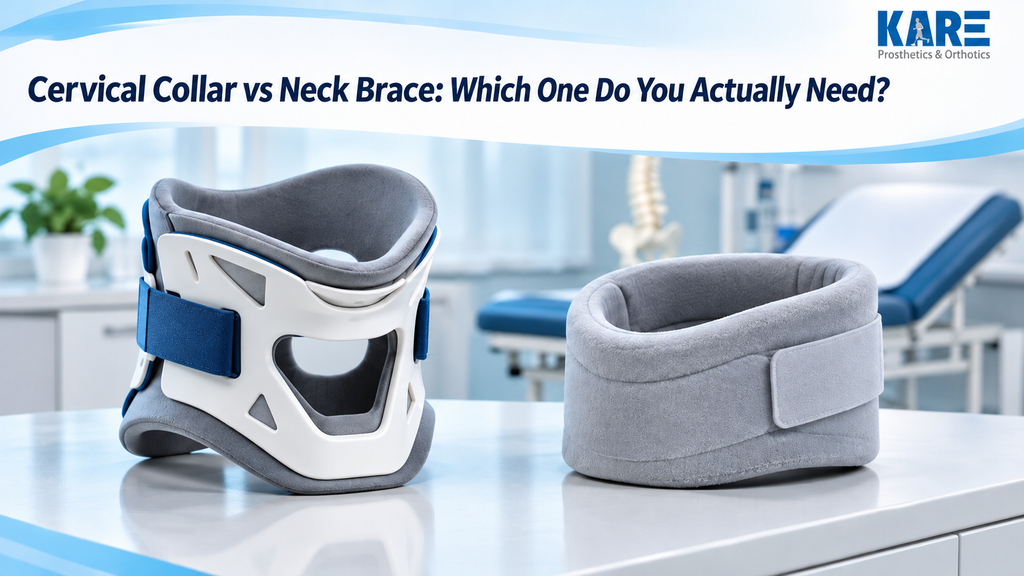
Does your neck need gentle support, or does it need firmer movement control after injury or surgery? That question changes the device you wear. The cervical collar vs neck brace choice depends on the condition, movement that needs restriction, skin tolerance, daily activity, and your clinician’s plan.
Poor fit can create pressure near the jaw or collarbone. Rigid designs demand closer fitting. Treat either device as part of care, not an accessory bought by size alone.
Cervical Collar vs Neck Brace: What Changes in Support and Control?
People often use “collar” and “brace” for the same group of cervical orthoses. Clinically, the useful difference lies in control. A soft collar gives light support and a reminder to limit sudden movement. A rigid cervical orthosis controls more motion and may protect the neck after trauma or surgery.
Start with the job the device must do. Pain alone cannot select the design. Diagnosis, healing stage, movement, skin condition, and treatment plan guide the choice.
When a Cervical Collar Gives Lighter Support
A soft collar has a foam core covered with fabric, so it rests around the neck without a hard outer shell. The padding gives mild support and some warmth. Wearing it can also discourage quick turns or sudden bending. Some people use it for short periods when a clinician wants limited support without strong immobilisation.
This is where cervical collar vs neck brace becomes more than wording. A collar that feels comfortable may still allow flexion, extension, rotation, and side bending. If your doctor wants tighter control, soft foam may not do enough.
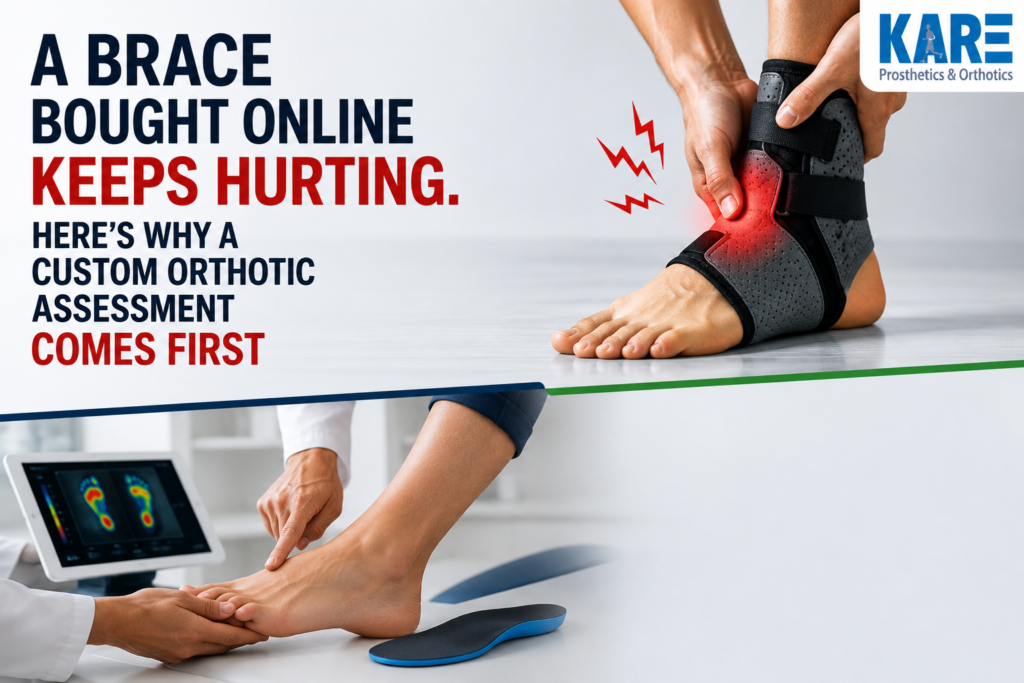
A neck support brace also needs the right height. Too tall can push the jaw upward. Too low can fail to support the chin. KARE’s guide on why an online brace may keep hurting explains why measurements and clinical assessment often come before comfort claims on a product page.
When a Neck Brace Needs Firmer Cervical Control
Rigid braces use shaped plastic, supportive pads, straps, and defined contact areas. They aim to reduce cervical motion more than a soft collar. Doctors may prescribe a neck injury brace after selected fractures, trauma, neurological conditions, or cervical procedures.
Even a rigid brace can shift out of position when the fit is wrong. Your chin should rest on the front support without being pushed upwards or backwards. At the rear, the panel should cradle the base of the skull rather than dig into one spot. The straps need to hold the brace steady without leaving the skin sore.
A 2025 randomised clinical trial, later published in 2026, followed 60 adults, including 30 who received a rigid cervical collar. The collar group improved over time in neck-pain VAS, Neck Disability Index, and SF-36 measures, with changes exceeding minimum clinically important thresholds. Those results still require individual clinical judgement.
Soft vs Rigid Cervical Support: How Restriction Changes
The soft vs rigid cervical collar decision starts with required movement control, not price or thickness. Foam gives less restriction. Semi-rigid and rigid designs use firmer structures around the head, jaw, neck, and upper chest.
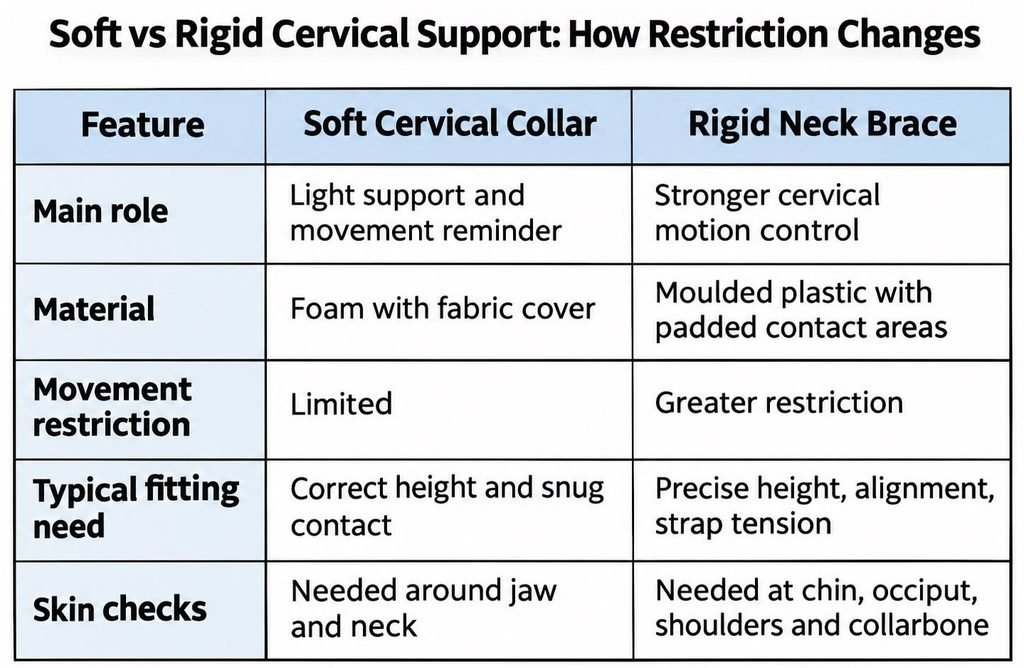
This cervical collar vs neck brace comparison explains why similar-looking products may behave differently. KARE’s guide to orthotic types, benefits and fitting shows how orthoses control movement, position, pressure, or alignment.
Which Option Feels Easier During Daily Wear?
Comfort starts at the contact points. Heat, sweat, beard growth, sensitive skin, swelling, and long sitting periods can change how a cervical device feels during the day. A softer collar may feel easier, but comfort alone cannot decide the prescription.
Rigid devices expose small fitting errors quickly. Chin pressure may make eating awkward, while a rising rear panel can rub the skull base. During post-surgery neck support, your clinical team may set rules for sleeping, bathing, cleaning, and removal.
Do not add padding on your own unless the orthotist approves it. Extra foam changes the brace position. It may also reduce the control your surgeon or rehabilitation team expects. If swallowing becomes difficult, contact the treating team rather than changing the brace position yourself. A mirror also helps you check whether the front panel remains centred after removal and refitting.
When Firmer Bracing May Enter the Treatment Plan
A clinician may use a rigid brace when the neck needs tighter movement restriction. Possible situations include trauma precautions, selected cervical instability, post-operative protection, or conditions where flexion needs control. The exact indication comes from the medical team.
AIIMS New Delhi is running a randomised study comparing long-term collar management with cervical fixation surgery for Hirayama disease. The trial targets 80 participants aged 18–60 years and tracks grip strength, electrophysiology, and cervical-cord imaging. It does not turn one approach into a general rule for every neck condition.
The same point applies to whiplash brace options. Neck pain after a road accident does not automatically mean rigid immobilisation. Your examination and diagnosis should come first.
Fit, Skin Pressure and Wear Time Need Regular Review
A prescribed brace still needs review. Swelling can fall, padding can compress, and straps can stretch. Each change alters contact with the jaw, shoulders, and head.
With a neck support brace, inspect the skin at every permitted removal. Persistent redness, broken skin, numbness, new pain, or pressure over bony areas needs clinical review. Do not solve repeated pressure by loosening every strap.
Wear time also varies. A neck injury brace used after trauma follows a different plan from a soft collar used for brief symptom control. For broader device selection, KARE’s article on choosing orthotics in India covers custom and ready-made support from a fitting perspective.
Cervical Support Options at KARE Prosthetics & Orthotics
We work with spinal and neck orthoses through clinical assessment, fitting, education, and follow-up. Our orthotic team looks at movement control, anatomy, skin, activity, and treatment goals before recommending a device.
Our team includes American Board Certified clinicians, while partnerships with Össur and Orthomerica support access to established orthotic technologies.
Our service includes:
- One-to-one assessment before fitting
- Custom and prefabricated orthotic options
- Precision fitting and follow-up adjustments
- CAD/CAM where the case requires it
- Access to international orthotic technologies
This approach takes cervical collar vs neck brace decisions beyond product shopping. Our article on prosthetics and orthotics differences explains where orthoses fit within rehabilitation care.
Miami J Collar for Cervical Immobilisation
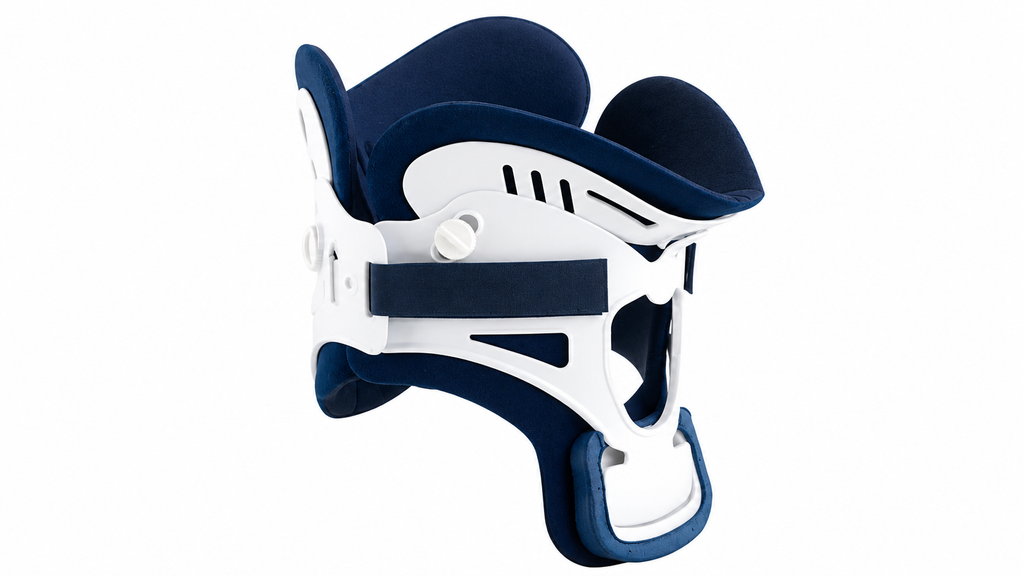
We list the Miami J Collar within its spinal orthosis range. The shaped design supports strong cervical immobilisation and manages pressure around key contact areas.
Soft Collar for Gentler Cervical Support
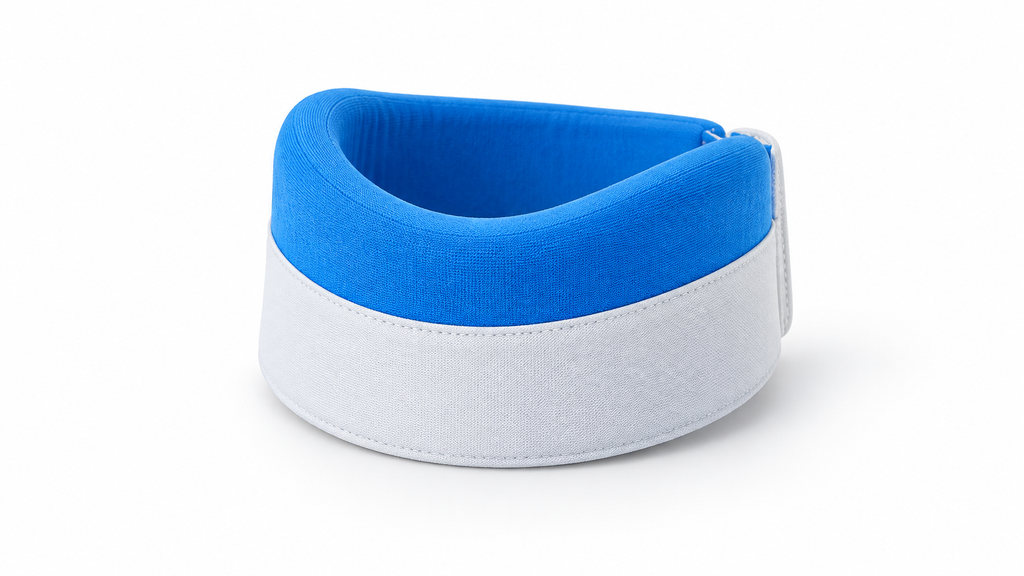
We list a Soft Collar within its paediatric spinal orthosis range. It gives lighter support, while growth, skin tolerance, diagnosis, and prescribed wear time guide paediatric fitting.
When Should You See an Orthotist for a Cervical Collar or Neck Brace?
A brace that starts sliding, presses into the jaw, or suddenly feels too high needs another fitting check. Swelling may also change how it rests on your neck as recovery progresses. An orthotist can check whether the original position still works for you.
After surgery, major trauma, or suspected cervical instability, the treating clinician should decide between soft vs rigid cervical collar support. Neurological conditions can change that choice too. With post-surgery neck support, follow the surgeon’s instructions for wear time, removal, cleaning, and refitting.
Neck pain after whiplash does not tell you how much cervical support you need. For whiplash brace options, get the neck examined before choosing a rigid product. Take any prescription, scans, reports, and your current brace to the appointment. That gives the orthotist useful information about what has already been prescribed or tried.
Conclusion
Choosing a cervical collar vs. a neck brace starts with the movement your neck needs to control and the reason behind that restriction.
A collar that pinches, shifts, or keeps losing its position needs a fitting review. At KARE Prosthetics & Orthotics, we check skin contact, movement control, fit, and how the device behaves during daily use. Our orthotic team can then review the cervical support and make fitting changes where the prescription allows.
Frequently Asked Questions
1. What is the difference between a cervical collar and a neck brace?
A cervical collar usually gives lighter support, while a rigid neck brace limits more movement when injury, surgery, or instability needs firmer control during recovery.
2. When is a soft collar enough versus a rigid one?
A soft collar may work for limited support. Doctors use rigid braces when the cervical spine needs stronger movement restriction during healing or recovery periods.
3. How long should a cervical collar be worn after injury?
There is no fixed wear period. Your diagnosis, scan findings, symptoms, healing progress, and clinician instructions decide how long the collar stays on after injury.
4. Can wearing a collar too long weaken neck muscles?
Prolonged immobilisation may weaken neck muscles in some cases. Your clinician can adjust wear time and begin rehabilitation when your neck is ready for movement.
5. Who should decide which neck support is needed?
Your doctor and orthotist should decide together. They use the diagnosis, required movement restriction, skin condition, fit, and recovery stage to choose support for you.