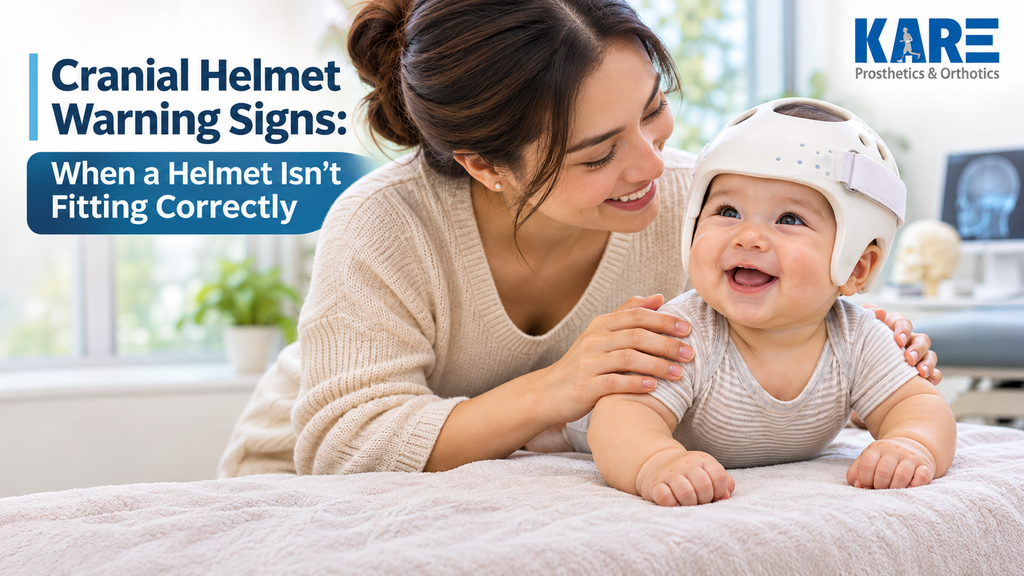
What should you notice when your baby’s cranial helmet stops fitting as expected? Small changes can appear between follow-ups while the head keeps growing. Some look minor at first, yet repeated rubbing or shifting can affect daily wear. If you spot cranial helmet fit problems, check the skin, helmet position, and your baby’s behaviour. Then contact the cranial orthotist when the fit no longer looks right.
A Daily Fit Check Can Catch Problems Early
Check the helmet after removal. Look at the forehead, ears, and contact zones. Then check whether it returns to its intended position during wear.
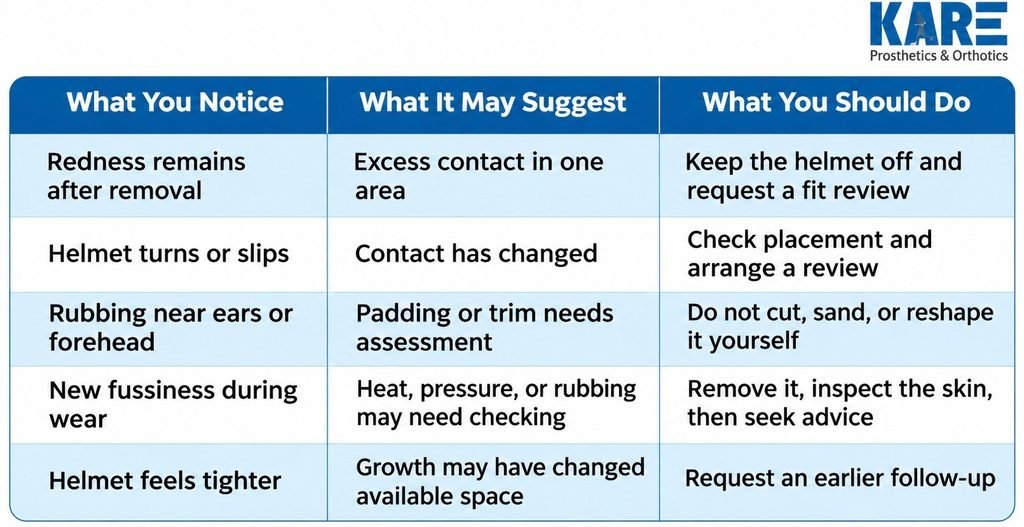
Use these signs as a quick daily check rather than waiting for the next scheduled visit. A small change in helmet position may come from normal head growth, but repeated slipping, rubbing, or redness needs closer attention. Note where the problem appears and contact the cranial orthotist if it returns during wear.
Cranial Helmet Fit Problems Parents Should Not Ignore
A helmet may look properly placed yet start behaving differently as your baby grows. Watch for repeated redness, shifting, rubbing, or changes around the ears and forehead. These early cranial helmet fit problems often appear during everyday wear, so spotting them early gives the orthotist time to review the fit before discomfort increases.
Redness That Remains After You Remove the Helmet
Temporary redness may appear where the helmet contacts the head. Repeated cranial helmet pressure marks may show excessive contact at one spot.
Among common cranial helmet fit problems, persistent redness deserves an early review. If you see broken skin, blisters, swelling, or soreness, keep the helmet off and contact the clinician or orthotist.
KARE also explains how different head-shape patterns affect treatment choices in its guide to plagiocephaly, brachycephaly, and cranial helmets.
A Helmet That Slides, Turns, or Drops Out of Position
If the helmet rotates or drops repeatedly, the contact pattern may have changed. These can become helmet refitting signs when normal repositioning no longer fixes movement.
Slipping also belongs among cranial helmet fit problems because it changes contact against the skull. Do not add homemade padding. Ask the orthotist to inspect alignment instead.
Rubbing Around the Forehead, Ears, and Contact Zones
Look for shiny skin, friction lines, abrasions, or tenderness near trim lines. These cranial helmet pressure marks can worsen when heat and perspiration collect around one contact area.
Check helmet placement and closures without altering their settings. If rubbing returns, the orthotist may need to assess trim, padding, or position.
Changes Near the Eyes, Ears, or Forehead
Watch how the helmet rests around the face. A low front rim, eyebrow contact, facial swelling, eye irritation, or altered ear contact needs prompt review. Growth can shift helmet position. Compare today’s fit with the clinic fitting, and photograph repeated changes.
New Fussiness During Sleep, Feeding, or Play
Behaviour alone cannot confirm a fit issue. Still, repeated baby helmet discomfort during wear deserves a careful check for warmth, rubbing, pressure, or movement. Note when fussiness starts and whether removal changes it. If your baby seems unwell, contact the paediatrician too.
When Growth Makes the Helmet Feel Tight
Head growth can change fit between appointments. More resistance during donning, reduced room, or new skin contact may appear. A baby helmet that is too tight can create repeated pressure.
This is another point where cranial helmet fit problems need professional review. Do not force the helmet on or alter its settings yourself. Request an earlier check.
Why Helmet Fit Changes During Cranial Remoulding
Cranial remoulding works alongside infant growth. As the skull changes, the orthotist must maintain planned contact while preserving room for guided growth.
A 2025 meta-analysis covering 1,189 infants found greater improvement in cranial asymmetry with helmet treatment, with SMD −1.16, p<0.00001. That result concerns treatment effect, while safe use still depends on proper fitting and follow-up.
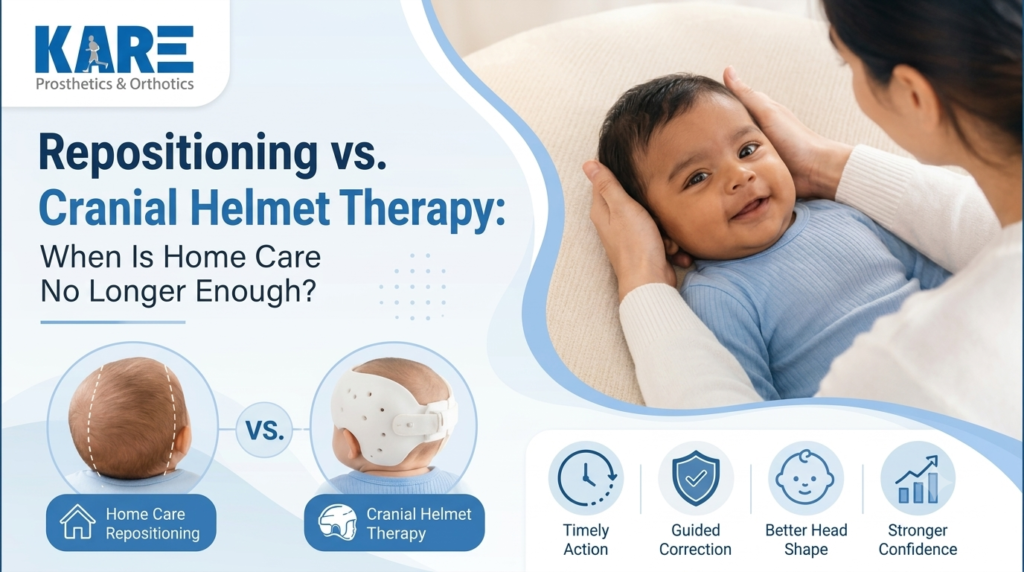
Parents weighing repositioning against helmet care can also read KARE’s comparison of repositioning and cranial helmet therapy.
When Cranial Helmet Fit Problems Need Professional Adjustment
Request a fitting review when redness persists, movement repeats, facial contact changes, or helmet refitting signs appear after growth.
During a cranial helmet adjustment, the orthotist can check contact, relief areas, trim lines, closures, and overall alignment. The clinician may compare the current head shape with earlier scan data. This approach is safer than home modification.
Compared with natural progression alone, helmet therapy produced greater improvement with SMD −1.37 (p=0.004). Structured follow-up helps keep treatment usable as the head changes.
Regular Fit Reviews Keep Treatment Comfortable
Growth may change a good fit between visits, while heat may increase perspiration.
Regular reviews help the orthotist address baby helmet discomfort before it interrupts wear. If a baby helmet that is too tight starts resisting normal placement, do not wait for the next routine appointment.
KARE covers assessment, fitting, and follow-up in its cranial remoulding helmet guide.
What Parents Should Avoid Changing at Home
A cranial orthosis uses planned contact and relief areas. Small home changes can shift pressure to the wrong place.
Avoid cutting the shell, sanding foam, adding pads, changing trim lines, or altering closures without instruction. Also avoid forcing the helmet on when placement becomes difficult. Remove it, inspect the skin, and contact the orthotist.
Follow the clinic’s cleaning method and let the helmet dry before reuse. If moisture, odour, or irritation continues, ask the clinical team to review hygiene and fit together.
How KARE Supports Cranial Helmet Fitting and Follow-Up
At KARE Prosthetics & Orthotics India, we use custom cranial care instead of standard helmet sizing. SmartCam™ digital head scanning captures the baby’s head shape, while CAD/CAM fabrication supports an individual orthosis. Follow-up visits allow our team to review growth, skin contact, and fit changes.
Our approach also gives parents a direct route back to the orthotist when daily wear changes. At each review, we compare wear concerns with head shape and helmet position.
- If the helmet slips or rotates, we review alignment instead of adding home padding.
- For persistent redness or rubbing, we assess the contact area and decide whether the fit needs modification.
- When growth changes the original fit, we review the orthosis rather than asking parents to force it.
- For heat and perspiration, STARband 3D uses ventilation to support airflow. STARband Plus uses a living hinge and added adjustability for easier handling.
This follow-up process supports timely cranial helmet adjustment as the baby grows.
Cranial Remoulding Helmet for Custom Head-Shaping Care
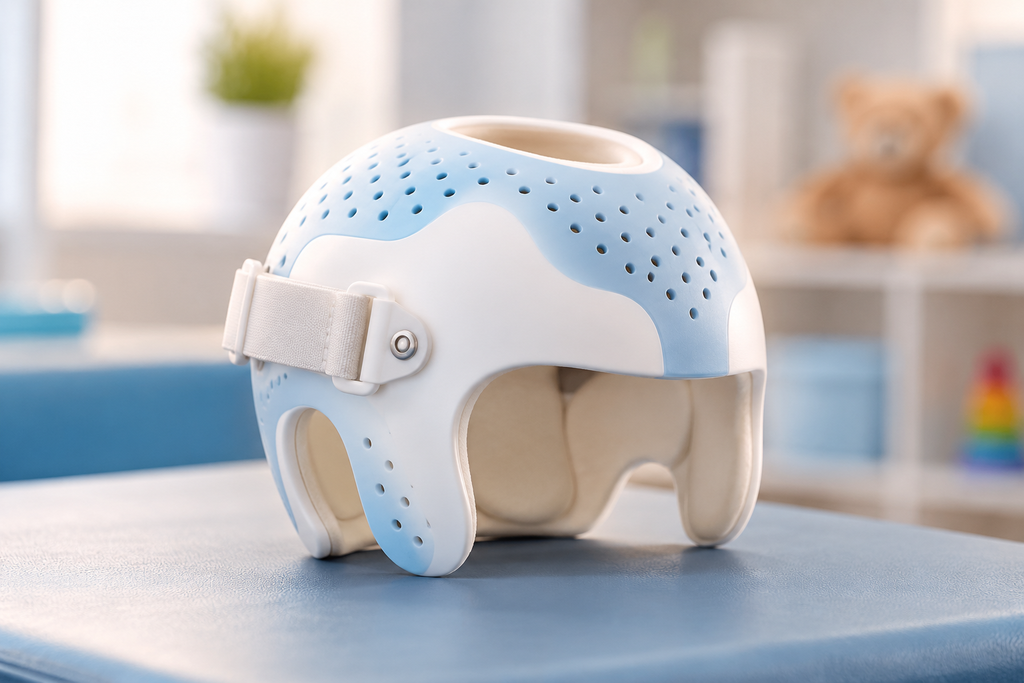
Our cranial remoulding helmet service combines digital head capture with a custom cranial orthosis. The fitting plan places contact where required and preserves room for guided growth.
That custom approach becomes useful when the helmet starts rotating, rubbing, or feeling different after growth. Our team reviews fit through treatment rather than treating the first fitting as final.
Parents who want broader treatment guidance can read KARE’s guide to infant helmet therapy.
When Should You Contact a Cranial Orthotist?
Contact the orthotist when a mark persists, rubbing returns, the helmet rotates, or donning becomes difficult. Arrange a review sooner if it reaches the eye area, changes ear contact, or leaves broken skin.
Note where redness appears, when discomfort starts, and how the helmet moves. Those details can help the orthotist assess the problem. For urgent medical symptoms beyond helmet fit, contact your paediatrician or seek suitable medical care.
Conclusion: Check the Fit Before Small Problems Disrupt Daily Wear
A cranial helmet needs more than a correct first fitting. Growth, skin contact, heat, and daily handling can change how it behaves. Early checks help you catch rubbing, slipping, or poor positioning sooner.
If you notice cranial helmet fit problems, contact KARE Prosthetics & Orthotics India for a professional fitting review. We can assess helmet position, skin-contact areas, and the next clinical step without unsafe home alterations. Speak with our team to arrange a fitting or follow-up consultation.
Frequently Asked Questions
What are signs a cranial helmet doesn’t fit properly?
Persistent redness, slipping, rotation, pressure spots, rubbing, facial contact changes, or unusual fussiness can signal poor fit and require an orthotist review soon for adjustment.
Can a helmet cause pressure marks or skin issues?
Yes. Poor contact can create persistent redness, rubbing, moisture irritation, or broken skin. Stop wearing it and contact your orthotist when skin becomes sore or damaged.
How often should helmet fit be reviewed?
Follow the review schedule your orthotist sets, and request an earlier appointment whenever growth, redness, slipping, tightness, or discomfort changes between planned visits for reassessment.
What should parents do if the helmet feels too tight?
Remove it, inspect the skin, and contact the cranial orthotist. Do not trim padding, loosen components, or alter the helmet without clinical guidance at home.
How quickly does a baby’s head shape change during treatment?
Head growth can change helmet contact between appointments. The pace varies by child, so regular fitting reviews help the orthotist respond to growth during treatment.