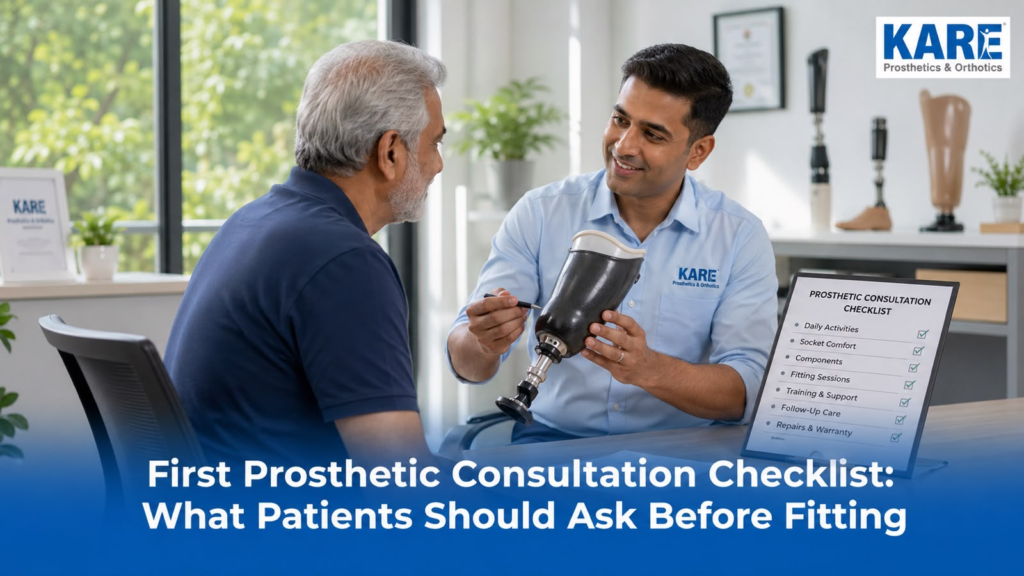
A prosthetic clinic can feel unfamiliar at first. You may hear terms such as “socket,” “liner,” “suspension,” and “alignment,” while your own questions are far more direct. Will the limb hurt after a few hours? Can you climb stairs, ride a scooter or return to work?
A written prosthetic consultation checklist keeps those concerns in front of you. It helps you discuss skin care, travel, home access, repair needs and daily movement before the fitting begins.
This blog covers what patients should ask before prosthetic fitting, from comfort and skin care to mobility, repairs, follow-up support, and choosing a prosthetic limb that fits their daily routine.
What Happens During a First Prosthetic Consultation?
The clinician usually begins with your surgery history, present medicines, pain, skin condition and physiotherapy progress. Then comes a physical examination of the residual limb.
The prosthetist may check scars, swelling, bone prominence, muscle power, joint movement and tender areas. During the artificial limb consultation, mention sweating, phantom pain, numbness or old socket marks. Small complaints can worsen after several hours.
The team may measure directly, use a scanner or make a plaster model. They may watch you stand or walk with an aid. Bring your usual footwear because heel height affects alignment.
By the end of the first prosthetic appointment, you should know the next step, likely fitting stages, broad cost range and expected training
For the full fitting journey, read KARE’s guide on how to get prosthetics fitted with 5 simple steps.
Questions That Help Patients Choose the Right Prosthetic Fit: Prosthetic Consultation Checklist
A good fitting starts with ordinary details. Where do you work? How many stairs do you climb? Do you use an Indian-style toilet? Write the answers down because product names often blur after a long appointment.
What Type of Prosthesis Suits My Daily Activities?
Describe one normal weekday from morning to night. Mention bathroom use, travel, office hours, lifting, scooter use and how long you stand.
An indoor user may prefer stability and easy care. A local-train commuter may need quicker turns and safer stair control. During the prosthetist consultation, ask where the device may struggle.
Keep the prosthetic fitting questions direct. Can the limb handle rain, dust and broken roads? Can you get replacement parts locally?
For basic prosthesis types and fit choices, read KARE’s guide on what is prosthesis.
How Will the Socket Be Designed for Comfort?
The socket often decides whether the prosthesis gets used daily.
Ask where the socket should feel firm and where pressure should stay low. Sharp pain, burning, numbness, broken skin or lasting redness needs review.
Add this question to your prosthetic consultation checklist: “Which marks are normal after I remove the socket?” The answer should be simple enough to remember later.
India has approximately 138 million elderly people, many of whom may require prosthetic, orthotic or assistive interventions. Older users may need softer pressure control, easier suspension and shorter wear periods.
Try removing the socket yourself. Weak hands, arthritis or poor balance may make some suspension systems difficult.
Which Prosthetic Components Match My Mobility Needs?
Every component should solve a specific problem. A costly knee may offer little value indoors, while a basic foot may frustrate a daily slope user.
For lower-limb devices, discuss knee safety, foot response, ground clearance, weight and water exposure. Upper-limb users can compare cosmetic, body-powered and myoelectric choices.
Your prosthetic treatment plan should name each part, its purpose and limits. During the second artificial limb consultation, request the brand, model, warranty and replacement cost in writing.
Check repair access. Waiting weeks for an imported part can disrupt work.
How Many Fitting Sessions Will Be Required?
One measurement rarely gives the full picture. Limb volume changes through the day, and a seated socket may pinch during walking.
Ask whether the clinic uses a transparent test socket. This temporary socket lets the team inspect pressure areas before making the final version.
Bring your prosthetic consultation checklist to every trial. Note the pain spot, wear time and any later looseness.
Your second set of prosthetic fitting questions should cover alignment. Why does one step feel shorter? Why does the knee feel uncertain on slopes?
What Training Is Provided After the Prosthesis Is Fitted?
A finished prosthesis still needs practice. Training may cover weight shifting, ramps, stairs, falls, grip selection, charging and object handling.
During the second prosthetist consultation, ask who will lead training. Some clinics involve a physiotherapist; others divide the work.
The prosthetic treatment plan should include a wear schedule. It should tell you when to remove the device, inspect the skin and contact the clinic.
Keep a short diary of wear time, redness, pain and looseness. Specific notes beat saying the limb felt uncomfortable.
For life after fitting, read KARE’s guide on how prosthetics for amputees improve daily life and independence.
What Follow-Up Care and Adjustments Are Included?
A prosthesis needs review after delivery. Limb volume, socks and walking style change.
Ask exactly what the package includes.
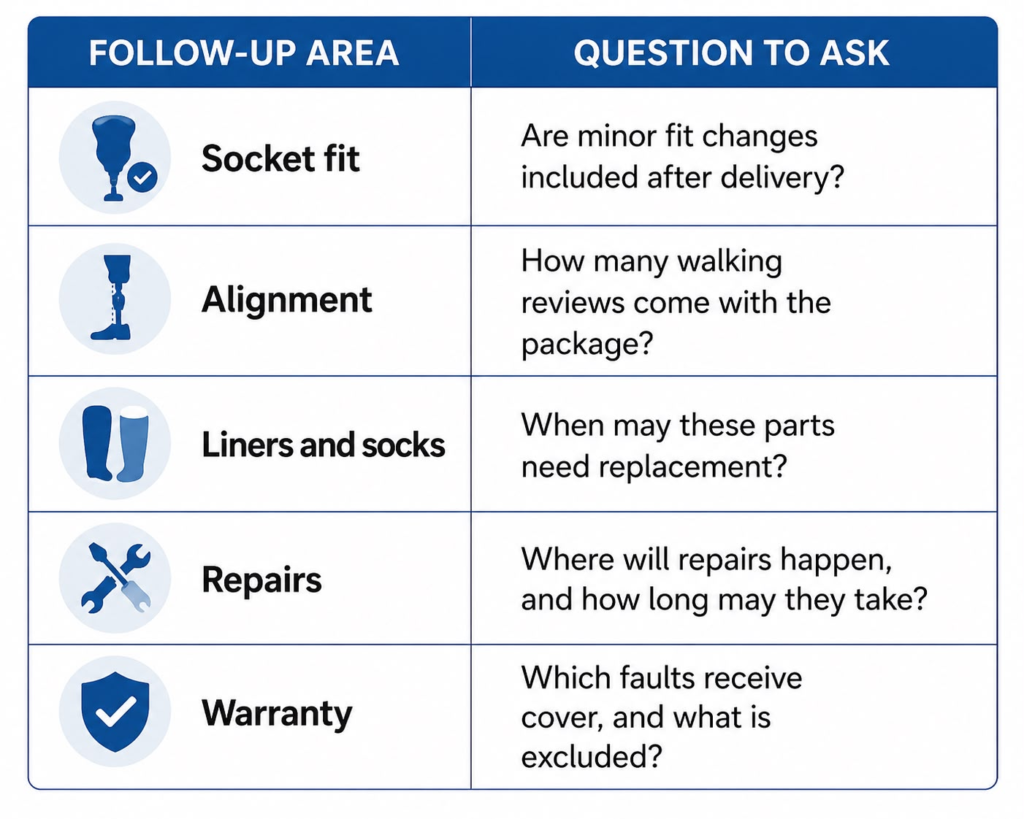
Keep invoices, labels, warranty papers and clinic numbers together for urgent repairs.
For daily device care, read KARE’s guide on prosthetic and orthotic home care tips.
How a Detailed Consultation Supports Better Comfort and Long-Term Use
India’s estimated potential demand for prostheses, orthoses and assistive-technology intervention is around 250 million people. Their needs vary by age, work, health and mobility. A detailed consultation helps the clinician notice those differences before fitting begins. Pain after two hours of standing may point to another issue than pain during the first ten steps.
Evening looseness can show limb-volume change, while redness over one bone may suggest local pressure. Share the exact activity, time and pain area during reviews. A phone photo can help too. As strength improves, the prosthetist may adjust alignment or revise the socket.
What Should Patients Carry to Their Prosthetic Appointment?
Bring surgery notes, discharge papers, scans, prescriptions, therapy records and a medicine list.
Carry your old prosthesis, liners, socks, walking aid and usual footwear. Wear clothes that allow limb inspection. Bring a towel too, especially during summer, because sweat can change how the liner feels against skin.
A family member may attend when they help with travel, dressing or home care. Write down walking distance, work hours, stairs and painful tasks.
Why Choose KARE Prosthetics & Orthotics for Prosthetic Consultation?
KARE brings assessment, custom design, fabrication, fitting, rehabilitation and review into one care path. American Board-certified clinicians lead the work.
Our team handles lower-limb, upper-limb, paediatric, cosmetic, body-powered and myoelectric options. It also uses test sockets, feedback, dynamic alignment and gait training.
KARE began this work in 2013. Its multi-city network supports consultations, trials, repairs, residual limb care and adjustments, with affordability in view.
Patients can carry their prosthetic consultation checklist into the clinic and connect each question with a fitting step, training need or review plan.
Final Checklist Before Confirming a Prosthetic Fitting
Before signing, compare the device with the written prescription. Check the socket, liner, suspension, foot, knee, hand and accessories.
Try your usual tasks. Walk, turn, sit, stand and use a ramp where suitable. Upper-limb users can practise holding a cup, opening a container and changing grips.
Confirm the price, warranty, review dates, repair location, cleaning method and replacement costs.
Use your prosthetic consultation checklist one last time before approval. Speak with us at KARE for custom assessment, trial fitting, training and continued care.
FAQs
What happens during a first prosthetic consultation?
The clinician reviews medical history, checks the residual limb, discusses daily needs, explains options and plans measurements, trials, costs, training and later reviews.
What questions should I ask before getting a prosthetic limb?
Ask about socket design, components, trial sessions, training, price, warranty, repairs, wear time, replacement parts, skin checks and planned review visits.
Should family members attend prosthetic consultation?
Yes. A family member can explain home routines, remember advice, support travel, learn care steps and help compare options after the visit.
How does a prosthetist decide the right prosthetic solution?
The prosthetist reviews limb condition, strength, occupation, activity level, home access, mobility goals, budget, safety needs, available parts and repair access.
What documents or reports should i carry for consultation?
Carry surgery notes, discharge papers, scans, prescriptions, therapy records, medicine details, identity proof and information about earlier devices, wounds, allergies or falls