Can one wrong socket choice during prosthetic fitting after diabetes amputation delay walking, wound healing, and home life?
For many Indian families, the first prosthetic visit feels heavy. Surgery has already taken energy. The wound may still look tender. Sugar levels may keep changing. Relatives want the patient to walk again, yet they fear skin damage, pain, infection, and another hospital visit.
That is why the fitting process needs careful questions from day one. A diabetes-related amputation often comes with slower healing, reduced sensation, and poor blood flow. So families should ask about skin, socket pressure, walking goals, liners, footwear, training, and review visits.
A prosthesis can support daily life. Safe use comes first.
Before Fitting Starts, The Family Needs A Proper Plan
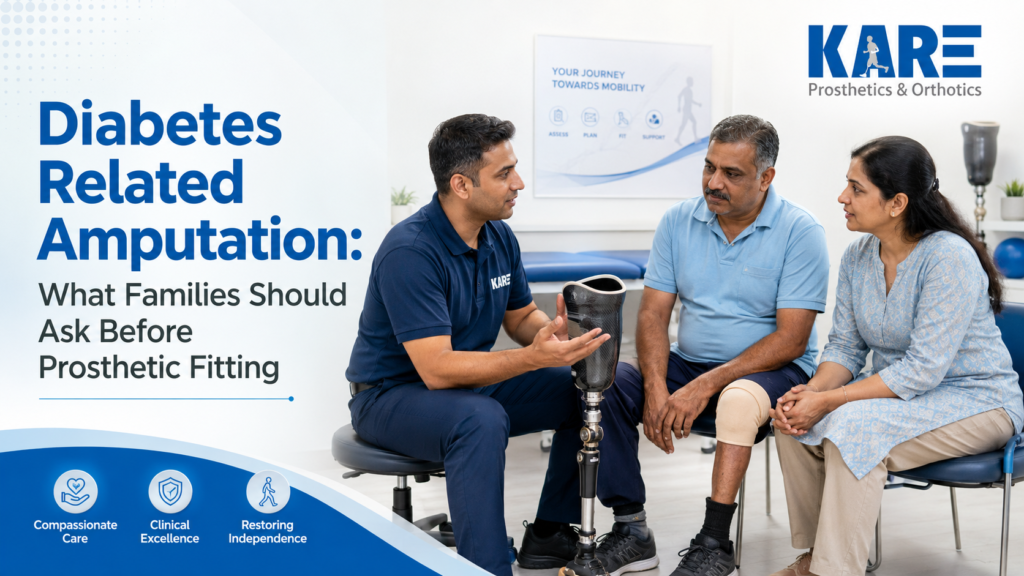
A new limb should start with a medical and functional review. The prosthetist checks the residual limb, muscle power, balance, skin colour, swelling, pain areas, and walking goal. This step is called a prosthetic limb assessment. It helps the team select the socket, foot, liner, and suspension method.
Family members should attend this visit. They notice details the patient may hide. For example, the patient may say the limb feels fine, while the son has seen redness after dressing removal. That point can change the socket plan.
Good diabetic amputee prosthetic care needs teamwork. The surgeon, diabetologist, prosthetist, physiotherapist, and caregiver should stay connected. If sugar control stays poor, skin can break faster. If the limb shape keeps changing, the socket may need refitting sooner.
Foot ulcers often begin before the prosthetic stage, and KARE explains care routes in this guide on diabetic foot ulcer treatment.
Family Checks For Prosthetic Fitting After Diabetes Amputation
Families should walk into the clinic with written questions. This saves time. It also reduces confusion when medical terms start coming fast.
Has The Residual Limb Healed Enough For A Socket?
The first question should be direct. Is the surgical wound closed, dry, and ready for load?
A socket presses around the limb. For this reason, sockets are designed to apply pressure in tolerant areas. So the wound must heal enough before regular use. The prosthetist may start early planning, measurements, or limb shaping, but walking use needs care.
Look for discharge, warmth, swelling, bad smell, deep redness, or pain that stays after rest. Report these signs before trial fitting. Families should ask if the scar line can tolerate socket contact.
Residual limb care for diabetics starts before the patient wears the limb. Washing, drying, wrapping, desensitisation, and gentle movement prepare the limb for fitting.
What Can Reduce Pressure On Sensitive Skin?
Pressure is a common reason diabetic amputees stop wearing a prosthesis. However, neuropathy can make the problem harder to detect. Some patients cannot feel rubbing early. By the time they notice, a blister may appear.
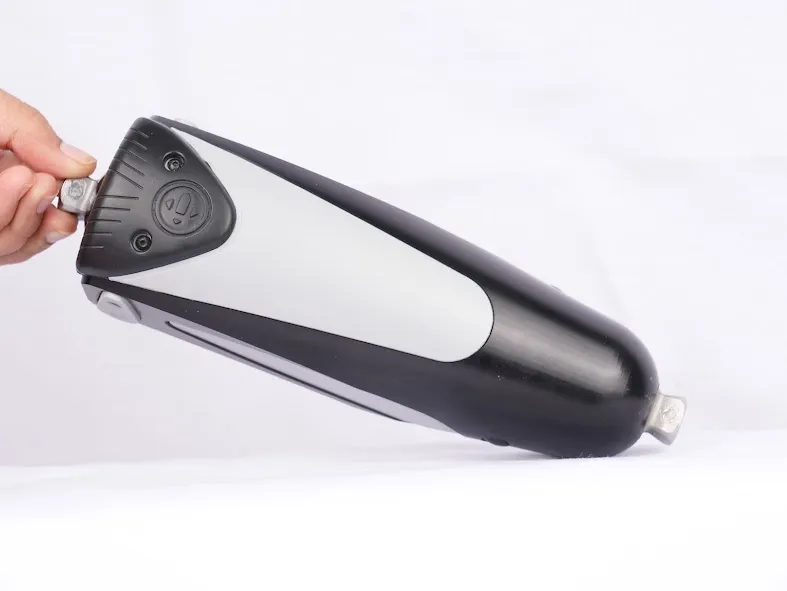
Ask about total contact socket design, pressure relief near bony areas, soft liners, sock ply changes, and suspension choice. The prosthetist may use a diagnostic socket first. This trial socket helps the team spot pressure points before the final limb.
A 2026 prosthetic rehabilitation review found that rigid/semi-rigid dressings and silicone liners reduced time to prosthetic fitting versus soft dressings. This supports early stump care when the medical team approves it.
Families should not add padding at home without advice. A folded cloth, thick sock, or loose bandage can create new pressure. For shoe choices after diabetes, KARE has a separate guide on orthopaedic footwear for diabetic patients.
How Will The Prosthesis Help With Balance At Home?
Many patients first want to walk outside. However, safe walking at home usually comes first. Indian homes often have narrow passages, wet bathroom floors, low cots, door thresholds, and uneven kitchen areas.
Ask how the prosthesis will support standing from a chair, turning near a wall, walking to the toilet, and climbing one step. The answer should match the patient’s age, strength, vision, and opposite foot health.
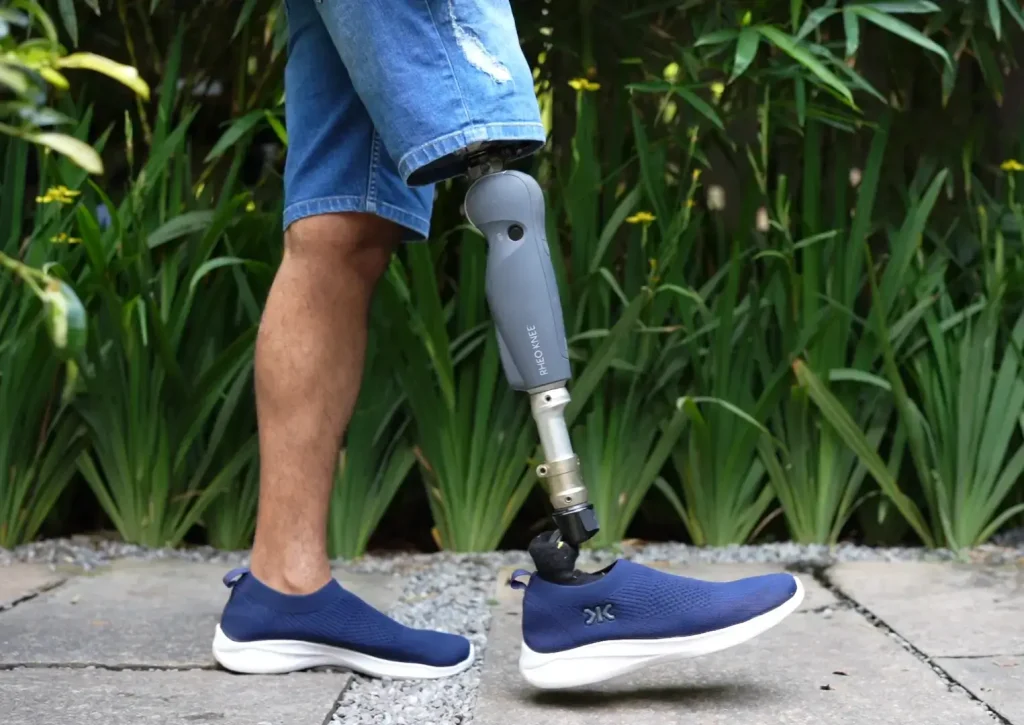
A prosthetic leg for diabetic patients must suit daily movement, not showroom walking. Some patients need a stable foot for slow steps. Others may need a design for longer indoor and outdoor use.
The family should ask about walker use, parallel bar training, stair training, and fall prevention. Careful training during the first weeks can save months of fear later.
Home activity can support circulation and stamina, and KARE shares exercises for diabetic patients at home for safer daily movement.
Skin Checks During Prosthetic Fitting After Diabetes Amputation
Skin checks should become a family habit. Do them after every wearing session in the early phase.
Remove the prosthesis. Check the full residual limb under good light. Look at the scar, back of the knee, end of the stump, liner contact area, and skin folds. Red marks that fade soon may be normal. Marks that stay, dark patches, wet skin, cuts, or blisters need a clinic call.
Residual limb care for diabetics should include proper drying. Moisture under a liner can lead to fungal infection or rubbing. Use only products approved by the clinician.
In addition, a family member should check the opposite foot because diabetes can affect both sides.
When Should Pain, Redness, Or Swelling Be Reported?
Pain does not always mean poor fitting. For example, new muscles may ache during training. The back may feel tired. The sound side may work harder. Still, families should separate training discomfort from warning signs.
Call the prosthetist if redness stays after rest, swelling increases, the socket feels loose by evening, or the patient starts changing walking style. Report sharp pain at one point, skin breakdown, socket rotation, or repeated falls.
A 2025 Indian diabetic foot case series reported amputation levels among patients who needed surgery as 41.7% toe, 25% transmetatarsal, and 25% below-knee. Each level needs different care.
A toe or forefoot loss may need footwear and filler support. A below-knee loss needs socket fitting, alignment, gait training, and review visits. This is where diabetic amputee prosthetic care becomes personal.
How Often Will Socket Changes Be Needed?
The first socket may not stay perfect for long. This is because the residual limb can change shape after surgery. As recovery continues, swelling may reduce, muscles may shrink or strengthen, and body weight can change.
Ask the clinic how often reviews happen in the first few months. Also, find out who to contact if the socket becomes loose. If the fit changes, check whether the team recommends socks, liners, socket modification, or a new socket.
Do not wait until the patient stops wearing the limb. Instead, early adjustment can help protect the skin.
How A Good Prosthetic Plan Adds Comfort And Long-Term Value
A good plan links medical safety with daily life. The family should ask what the patient wants to do first. Walk to the bathroom? Stand for prayer? Visit the shop nearby? Return to office work? Cook for ten minutes? Each goal changes training.
The prosthetic limb assessment should include walking speed, hand strength, vision, balance, pain, home layout, and footwear needs. It should include fear too. Many patients fear falling more than pain.
A prosthetic leg for diabetic patients may need a softer interface, stable foot, easy donning method, and strong follow-up. The highest-priced option may not suit every person. The lowest quote may fail if it creates skin damage.
Food affects healing and energy. KARE explains meal planning in this diabetic food chart, which families can discuss with their doctor.
How KARE Supports Families After Diabetes Related Amputation
KARE focuses on advanced prosthetics and orthotics in India, with custom prosthetic legs, orthotic support, flat foot solutions, and international-quality prosthesis and orthosis for people with disabilities. For prosthetic fitting after a diabetes amputation, KARE looks at residual limb shape, lifestyle, mobility goals, and family support before the final limb.
Our care includes:
- American Board-certified clinicians, one-on-one consultation, evaluation, treatment education, fitting, counselling, and rehabilitation.
- Diagnostic socket trials, gait training, CAD/CAM options, microprocessor technology where suitable, and support for diabetes-related partial foot and lower-limb amputation cases.
KARE also brings experienced clinical leadership with international training exposure. Families get guidance for home care, walking control, caregiver support, and follow-up planning.
Wound Healing Shoes For Post-Surgery Protection
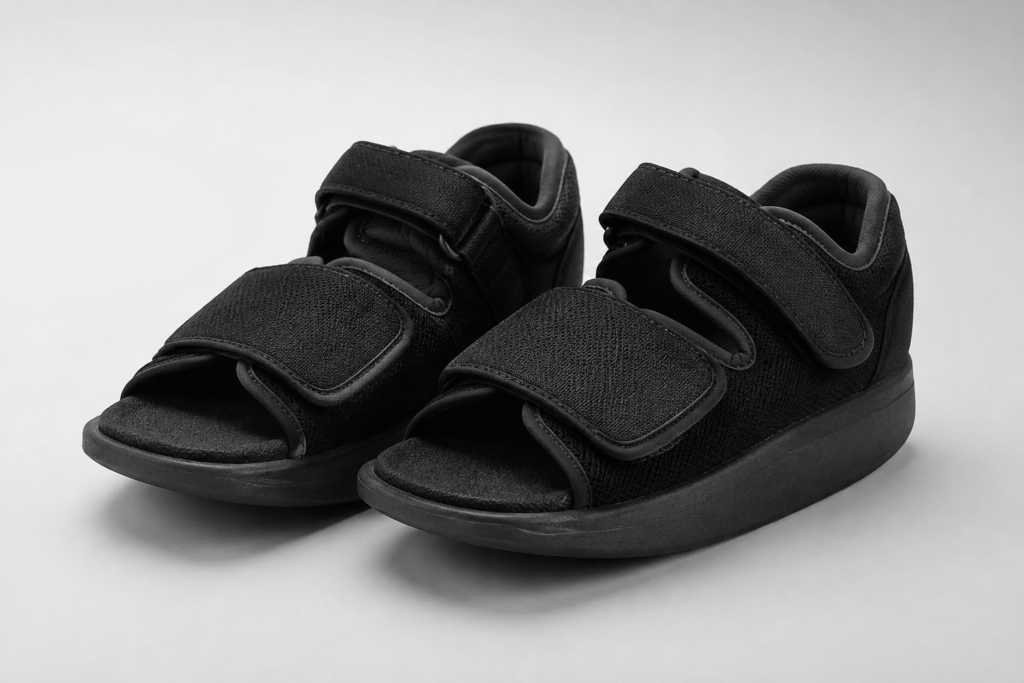
Wound Healing Shoes can protect sensitive areas after surgery or ulcer treatment. They may reduce direct pressure on healing tissue when the clinician permits walking.
Diabetic Gel Socks For Softer Cushioning
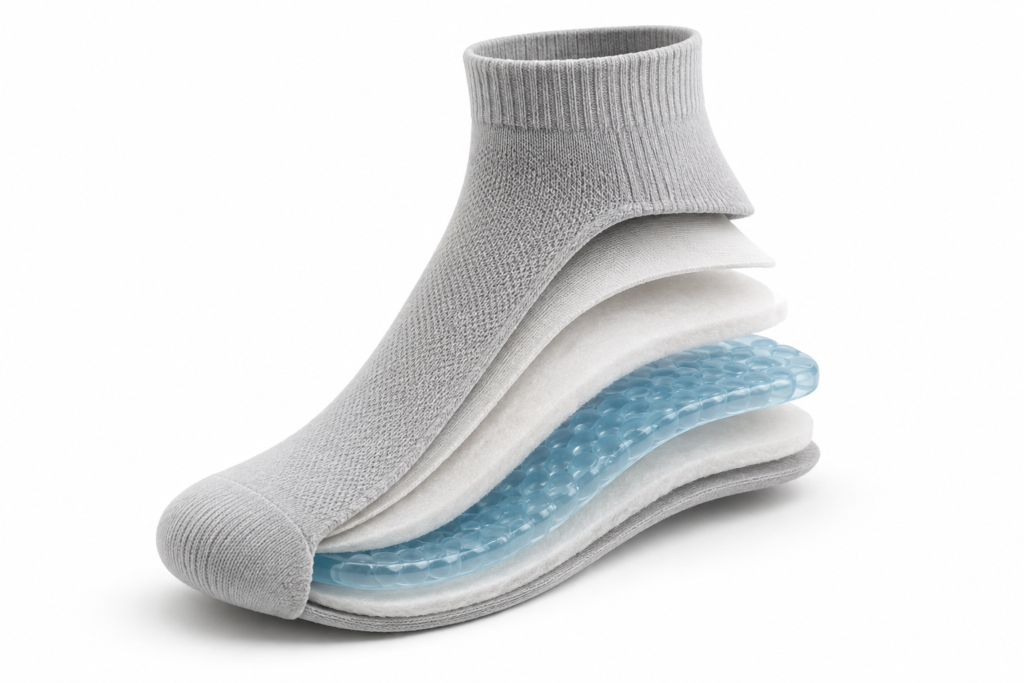
Diabetic Gel Socks can add soft cushioning for fragile skin. They may suit patients who need extra care against rubbing, dryness, or pressure.
Diabetic Neuropathic Footwear For Pressure Relief
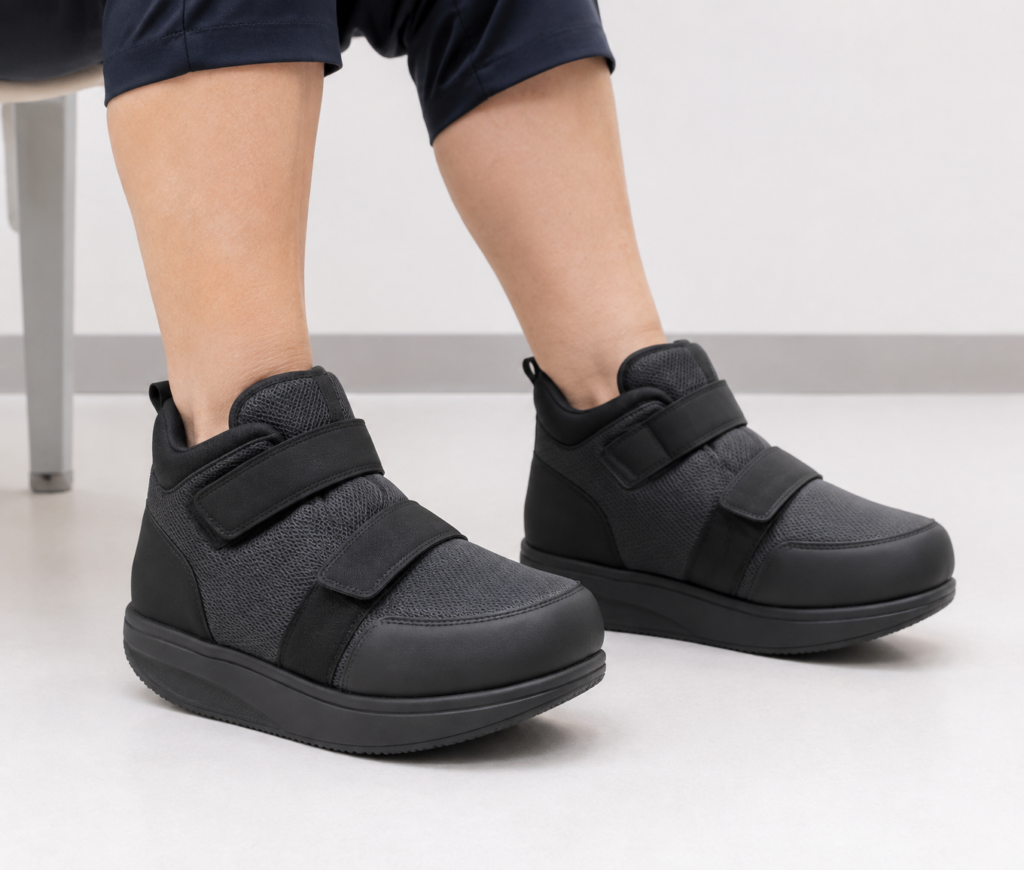
Diabetic Neuropathic Footwear can support feet with reduced sensation. It can reduce friction and help protect the remaining foot from injury.
Cost And Care Questions About Prosthetic Fitting After Diabetes Amputation
Families often ask price first. That is normal. Still, ask what the price includes. Does it include the socket, liner, foot, training sessions, review visits, repair support, and future adjustment?
A low quote may exclude items the patient needs later. A high quote may include technology the patient does not need. Ask the prosthetist to explain each part in simple words.
Families should also ask about daily cleaning, liner drying, sock replacement, monsoon care, and travel. India’s heat and humidity can increase sweating. That can affect skin.
Final Questions About Prosthetic Fitting After Diabetes Amputation
Before choosing a clinic, families should ask questions that reveal how the team works after delivery. A prosthesis needs review, skin checks, small changes, and walking training. These questions help families compare care quality, not only price.
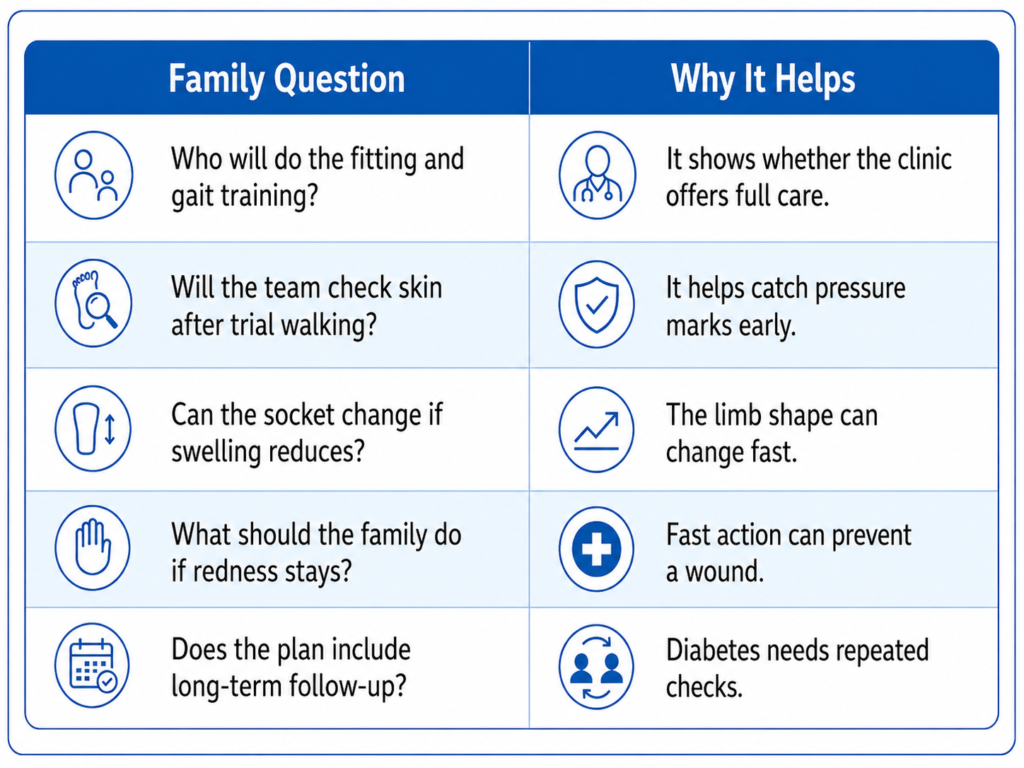
Do not rush this choice. A prosthesis becomes part of daily life. The clinic should answer questions without making the family feel small.
Conclusion
Diabetes changes the way families should approach amputation recovery. Skin care, wound healing, socket comfort, footwear, gait training, and follow-up all need attention. A rushed fitting can create pressure marks. A careful plan can help the patient return to safer movement at home and outside.
Families should ask direct questions, take notes, and watch the skin every day. They should involve the doctor when sugar control, infection, swelling, or pain changes.
For guided prosthetic fitting after diabetes amputation, custom prosthetic legs, orthotic support, and family-centred rehabilitation, speak with us at KARE and start the next step with proper clinical care.
FAQs
Can diabetic patients use a prosthetic leg after amputation?
Yes, many can use one after wound healing, sugar control, skin review, strength training, and prosthetist approval for safe walking.
What should families ask before prosthetic fitting after diabetes-related amputation?
Ask about wound healing, socket pressure, liner choice, skin checks, balance training, repair support, follow-up visits, and warning signs.
Why is residual limb care important for diabetic amputees?
Diabetic skin can break faster due to poor sensation, sweat, friction, and slow healing, so daily checks reduce wound risk.
How does a prosthetist decide the right prosthetic limb for a diabetic patient?
The prosthetist checks limb shape, scar health, strength, balance, activity goals, footwear, home needs, and medical history before selection.
What follow-up care is needed after prosthetic fitting?
Patients need socket reviews, gait training, skin checks, liner care, sock guidance, foot checks, and timely adjustments after body changes.