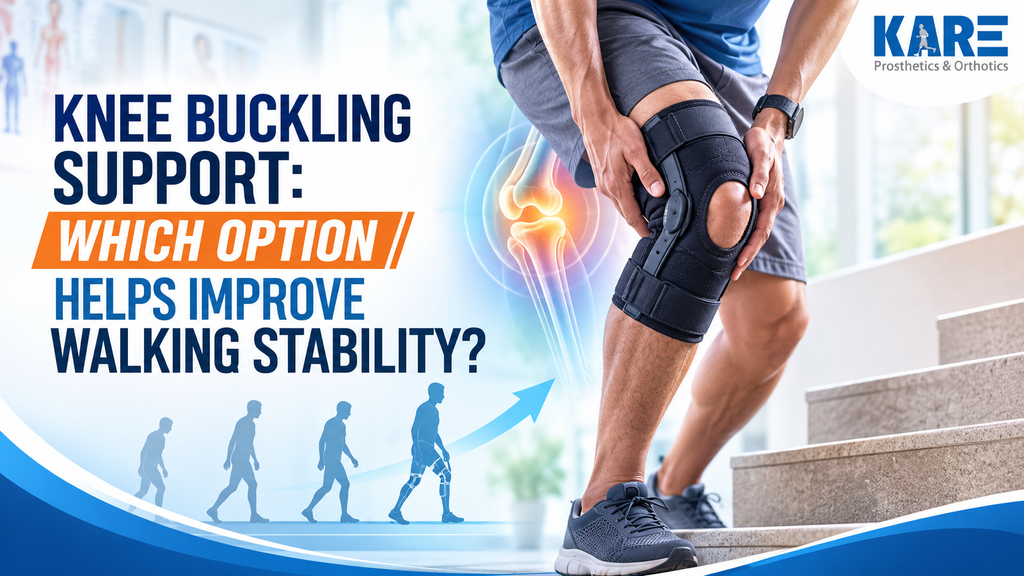
Does your knee suddenly give way while you walk across a room, climb one step, or stand up from a chair? That small slip can feel worrying because the body reacts before the mind catches up. Many people in India call it knee weakness, knee wobble, or the knee “folding.” In clinical care, the reason may come from osteoarthritis, ligament injury, quadriceps weakness, nerve weakness, poor alignment, or old trauma. The right knee buckling support depends on that reason, not on the most popular brace online.
Why The Knee Gives Way During Walking
Knee buckling usually starts when the knee cannot hold its position during weight bearing. The thigh muscles may fail to control the joint. The ligaments may allow extra movement. Arthritis may change the way pressure passes through the knee. Sometimes, pain itself makes the person avoid loading the leg, and that creates a short, unsafe step.
So the first question should be simple. When does it happen? Some people feel the knee dip when they turn. Others struggle on stairs. A few people walk fine on a flat floor but lose control on uneven ground. These small details guide brace choice.
The knee also works with the hip, ankle, and foot. Flat foot, weak ankle control, or poor footwear can push the knee inward. Then the person blames the knee alone. A trained orthotist checks the full walking pattern before suggesting a device. That is where a custom knee orthosis can differ from a ready-made sleeve.
Knee arthritis forms a large part of this discussion. A systematic review reported 47% pooled prevalence of knee osteoarthritis among older people in India. That number explains why many families now ask about bracing before surgery.
Knee Buckling Support Options For Safer Steps
A knee brace should match the type of instability. One person may need light compression. Another may need side bars, straps, or a full orthotic system. Therefore, the best knee support for walking comes after examination, muscle testing, joint checks, and gait review.
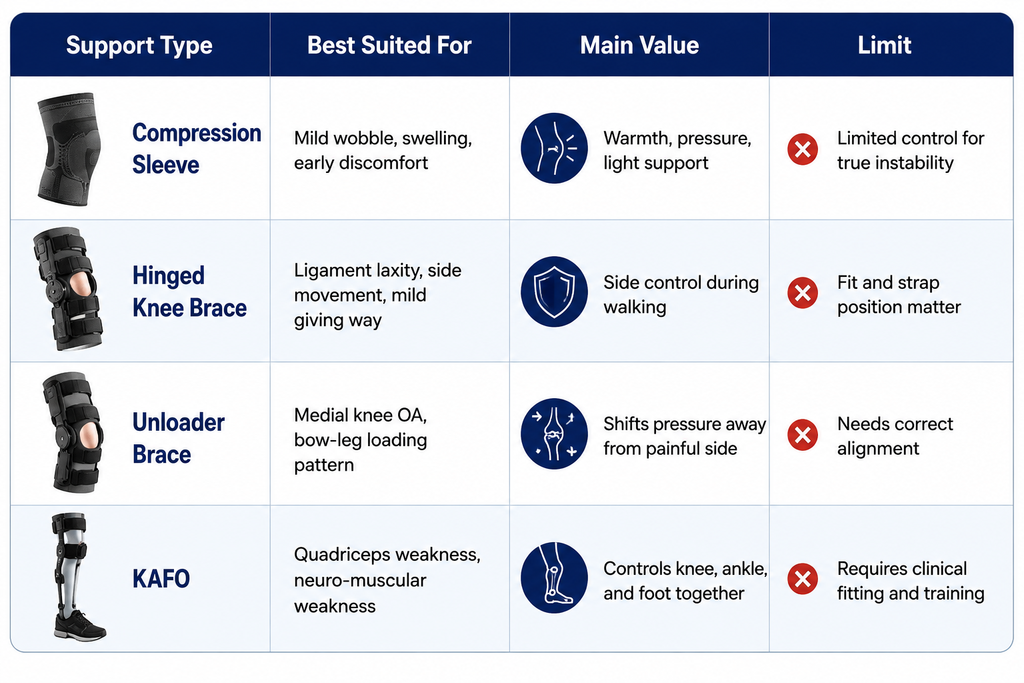
This table gives a quick starting point. Still, the knee needs a closer look before anyone buys a brace. A sleeve may suit light swelling, while a KAFO may suit weak thigh control. The right pick depends on pain, muscle strength, skin health, foot posture, and how the person walks at home or outside.
Choosing A Knee Brace For Instability And Side Control
A hinged brace helps when the knee moves side to side or twists during walking. It uses metal or polymer supports on both sides. These hinges guide knee bending and reduce extra movement. For many users, this creates a firmer step.
This type of brace works best when the person still has usable thigh strength. It may suit mild ligament weakness, post-injury support, and moderate walking difficulty. However, poor size selection can create skin marks or sliding. The brace must sit at the correct knee centre.
This is where assessment helps. The clinician checks whether the knee buckles forward, sideways, or during turning. A hinged brace cannot solve severe muscle failure. In that case, an orthotic brace for knee buckling may need to extend above and below the knee.
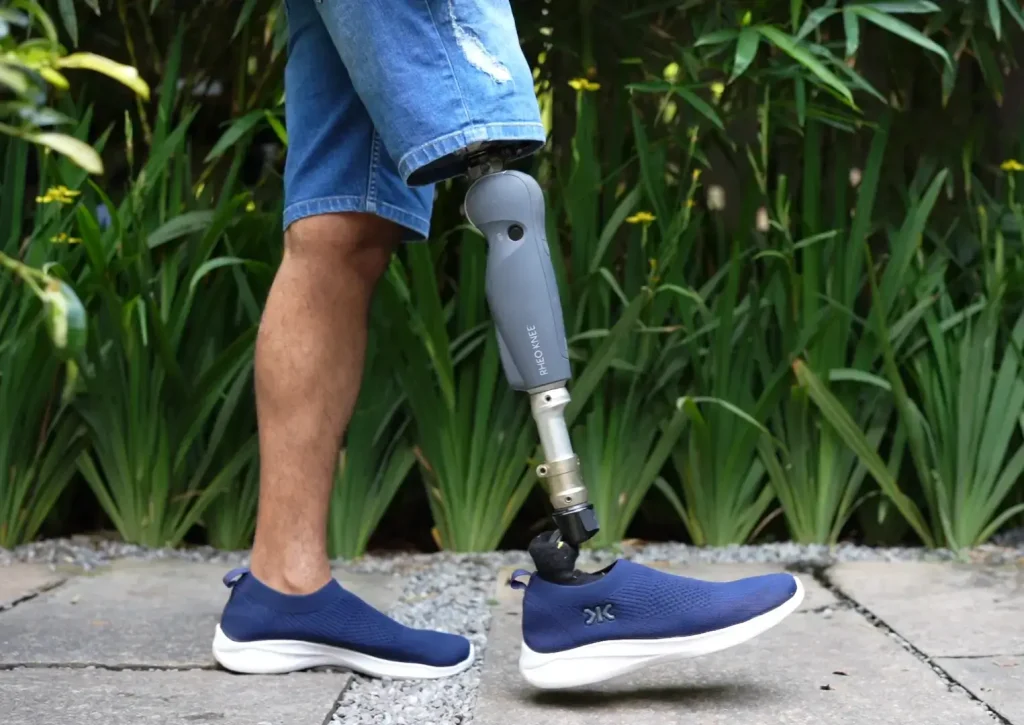
People recovering after limb loss also face balance changes. KARE explains how below-knee prosthetic choices affect daily movement in its guide on best prosthetic leg below knee in India.
Using A Walking Support Brace For Mild Wobble
A compression sleeve feels simple. It gives pressure around the knee and may reduce swelling. Some users like it during household work, short walks, or exercise. It can also make the knee feel warmer in cooler weather.
Still, a sleeve cannot stop strong buckling. It has no strong side bars. It cannot correct major alignment. So, choose it only for mild symptoms or as part of a rehab plan. If the knee folds without warning, do not depend on a sleeve alone.
Any brace should help movement without creating new pressure areas. People with diabetes, low skin sensation, or swelling should check the skin after use. Redness that stays after removing the brace needs review.
For users after surgery or amputation, stump care and walking training change the whole plan. KARE covers early recovery points in its article on below-knee amputation.
Custom Knee Orthosis For Arthritis-Related Pressure
Many older adults buckle because arthritis changes knee loading. The inside part of the knee often bears more weight. Pain then changes the step length. The person may bend the knee too little or too much. Over time, this pattern tires the muscles.
An unloader brace applies a gentle corrective force. It aims to move pressure away from the painful compartment. This can help people with medial compartment osteoarthritis, bow-leg posture, and activity-related pain. A made-to-measure design may give better control when body shape, deformity, or walking pattern makes standard braces slip.
In Maharashtra, news reports said around 40 lakh people above 40 suffer from arthritis and joint disorders, with nearly 10 lakh needing joint replacement. That figure shows why early bracing, weight care, exercise, and review visits deserve attention.
A knee brace for instability should never replace medical care when swelling, locking, severe pain, or recent injury appears. It can support movement. It cannot diagnose the cause.
KARE has also written on OA bracing and when surgery may enter the discussion in its guide on osteoarthritis OA knee brace.
How KARE Plans Knee Buckling Support
KARE works in advanced prosthetics and orthotics in India, with custom prosthetic legs, orthotic support, and flat foot solutions for people with mobility needs. Our clinical path starts with one-on-one evaluation, not guesswork. The team checks strength, alignment, pain points, skin condition, walking style, and daily goals before selecting a support.
KARE adds value through:
- Custom orthotic and prosthetic fitting with clinician-led review.
- Stance-control KAFO options for knee instability and quadriceps weakness.
- CAD/CAM, lightweight components, gait training, rehabilitation, and follow-up where suitable.
Our accreditation links include American Board, RCI, AAOP, and OPAI-linked claims. We also work with technology partners such as Össur, ORTHOMERICA, ST&G, and Becker Orthopedics. Since 2013, KARE has focused on accessible prosthetic and orthotic care across India, with clinics in Bengaluru, Chennai, Mysuru, Kochi, Kolkata, Hyderabad, Thiruvalla, Durgapur, and Calicut.
SPL2 Stance Control KAFO As Knee Support For Walking
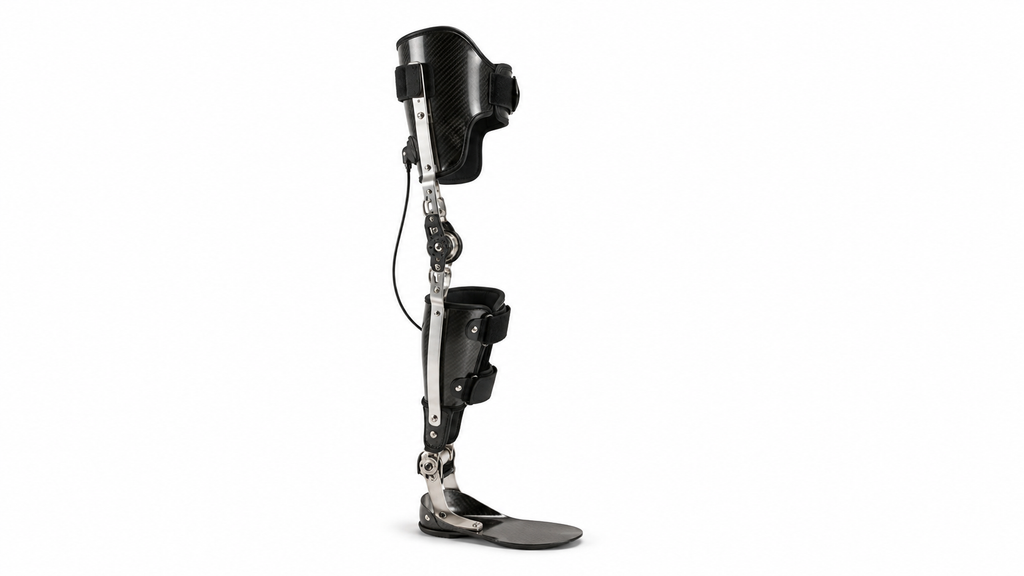
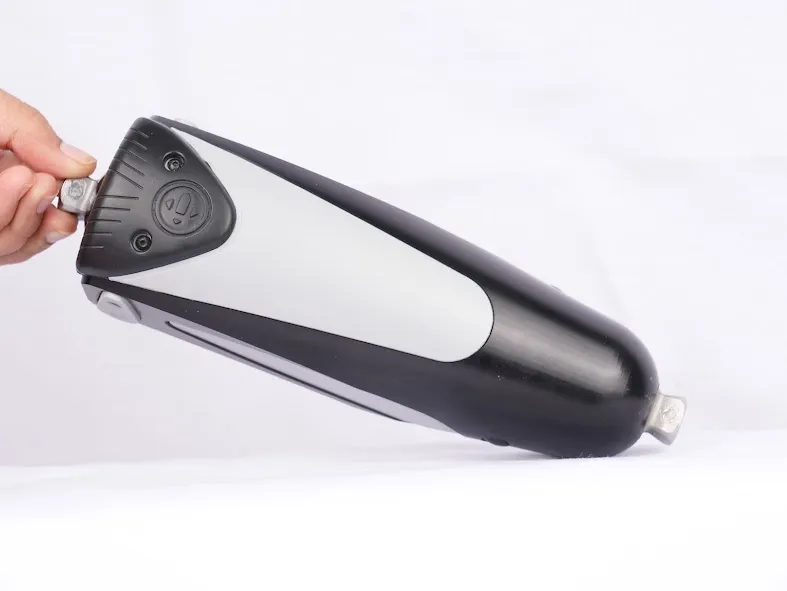
The SPL2 Stance Control KAFO suits people with quadriceps insufficiency, where the knee extension function partly or fully fails. This device locks during standing before heel contact and unlocks during the swing. That pattern supports walking stability without forcing the user into a stiff-leg pattern all the time.
This product can help when a simple brace cannot control the knee during weight bearing. It also offers automatic lock and unlock, manual lock, and free motion modes. The clinician decides suitability after checking contracture, spasm, alignment, and muscle control.
FullStride Stance Control KAFO For Knee Buckling Support
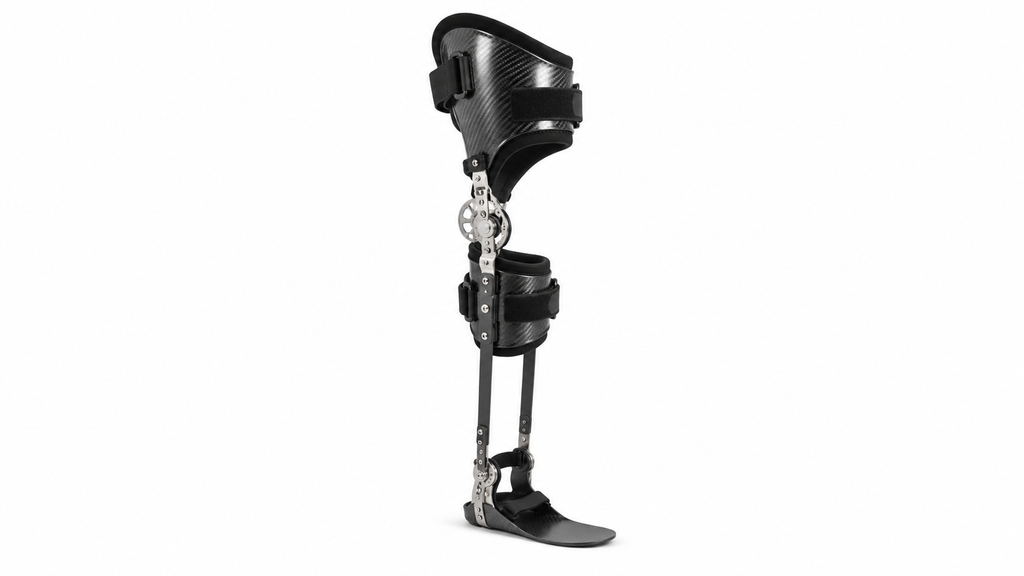
The FullStride Stance Control KAFO from Becker uses a cable system. It unlocks near the end of a step, then locks again when the leg straightens. This design can suit selected users who need stability in stance and knee flexion during swing.
A rigid locked KAFO may make walking tiring because the user must swing the leg out or lift the hip. FullStride aims to reduce that extra effort. Its core value comes from stance control, safer weight bearing, and a smoother step pattern.
People choosing any orthosis after limb loss may also need prosthetic planning at the same time. KARE explains socket, suspension, knee, foot, and training choices in its article on below-knee prosthesis.
SafetyStride As An Orthotic Brace For Knee Buckling
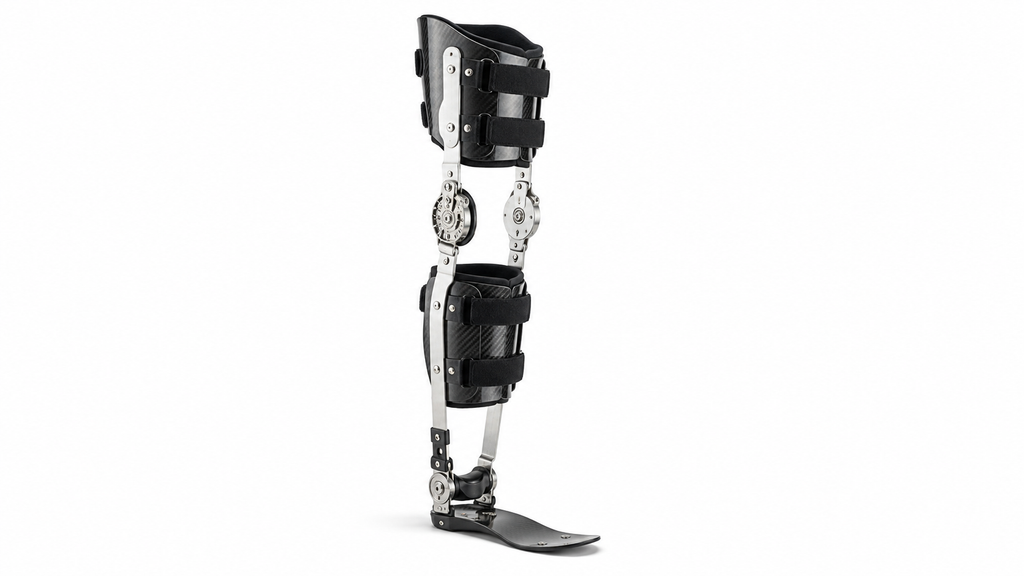
The SafetyStride Stance Control KAFO from Becker helps prevent the knee from bending at different angles during standing or walking. This can help users who cannot always reach full knee straightening before loading the leg.
That detail counts. Some people buckle because the knee misses full extension by a small angle. A device that supports stance at more than one angle may fit that walking problem better. The orthotist still needs to check ankle motion, hip strength, spasm, skin tolerance, and daily use.
This type of orthosis also needs training. The user must learn how to stand, turn, sit, climb, and manage straps. Without training, even a good device may feel awkward.
Final Thoughts
Knee buckling while walking deserves a proper check, especially when it repeats. A sleeve may work for mild wobble. A hinged brace may help side movement. An unloader brace may suit arthritis pressure. A KAFO may help when muscle weakness affects stance control.
Do not choose a device only by price or online reviews. The knee may buckle because of arthritis, nerve weakness, quadriceps failure, ligament injury, or poor foot alignment. Each cause needs a different support plan.
For knee buckling support, KARE can assess your walking pattern, suggest a suitable walking support brace, and guide fitting, training, and follow-up. Speak to our clinical team at KARE and take the next safer step with us.
FAQs
What causes the knee to buckle while walking?
Weak thigh muscles, arthritis, ligament injury, nerve weakness, pain, poor balance, or foot alignment issues can make the knee give way.
Can a knee brace help with knee buckling?
Yes. If the brace matches the cause, it can hold the knee steadier during steps and reduce sudden giving way.
When is a customised knee brace recommended?
A personalised device may be advised when standard braces slide, pinch, or fail to control muscle weakness or arthritis-related alignment.
Is a knee sleeve enough for walking instability?
A sleeve may help mild wobble or swelling, but repeated buckling usually needs a hinged brace, unloader brace, or KAFO review.
When should knee buckling be assessed by an orthotist?
Book an orthotist review when buckling repeats, causes falls, appears after injury, or affects stairs, turns, outdoor walking, or daily tasks.