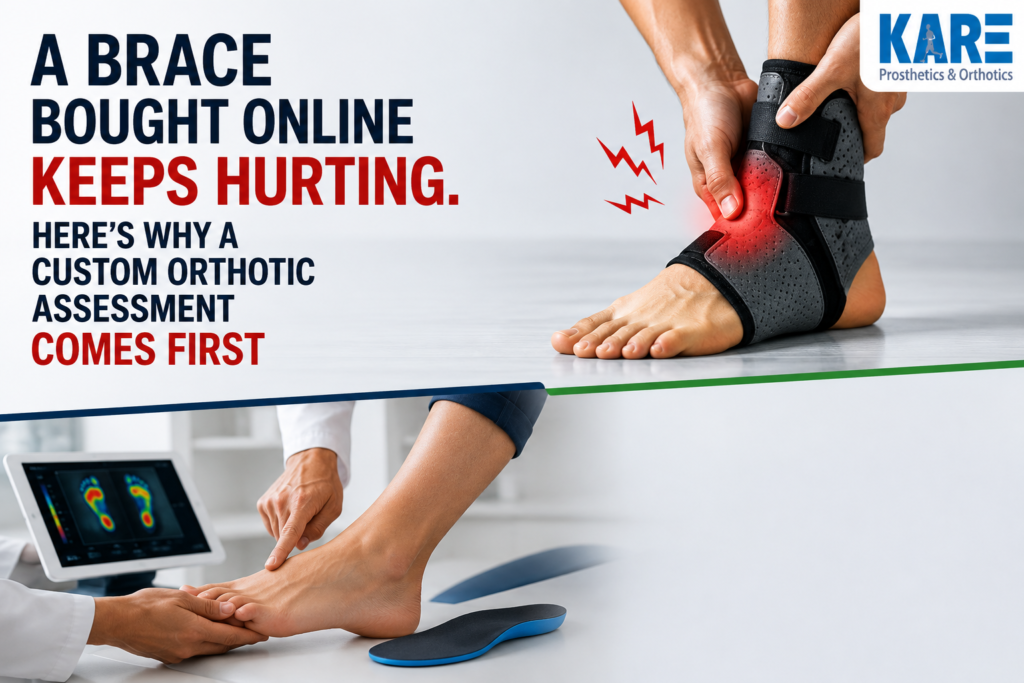
Do you feel your foot drag, turn in, or get tired too early? You may need a lightweight ankle foot orthosis that supports the ankle, lifts the foot better, and makes walking safer. KARE’s official AFO pages show that these devices support people with foot drop, stroke, cerebral palsy, spinal cord injury, muscular dystrophy, polio, post-surgical weakness, and sports injuries.
Still, one brace does not suit every leg. Your gait pattern, calf tightness, knee control, shoe shape, work hours, and skin tolerance all affect the final choice. Therefore, you should look at material, stiffness, foot plate length, ankle angle, and fit.
Many buyers start with price. Then they realise the brace feels bulky, rubs inside shoes, or fails during long walking. So this guide shows what makes an AFO practical in India, what changes walking quality, what to inspect before buying, and why KARE deserves a close look.
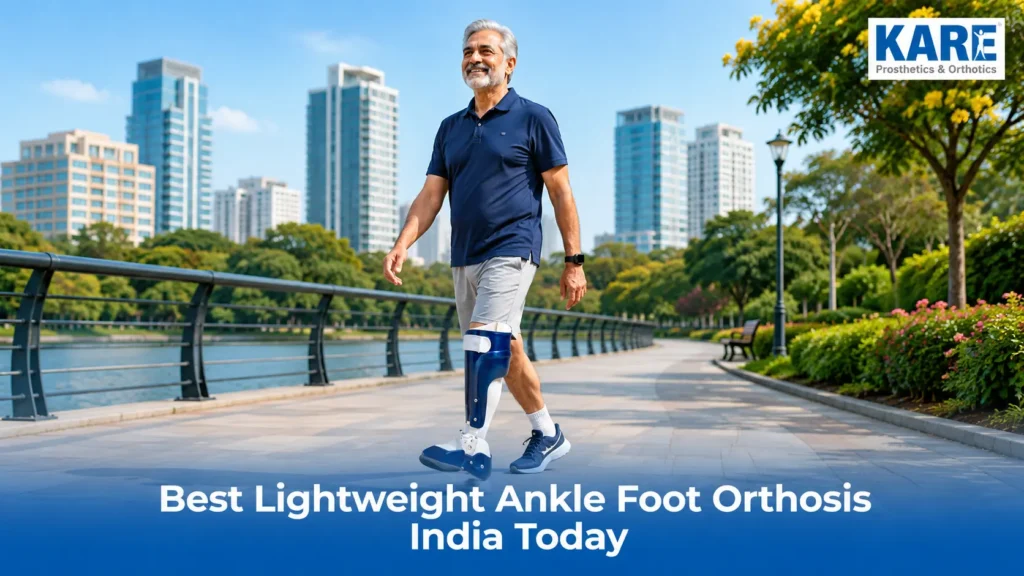
Why a Lightweight Ankle Foot Orthosis Works Better for India
In India, many users walk on mixed surfaces, use stairs often, stand for long hours, and deal with heat throughout most months. Because of that, weight becomes a daily issue. A lighter device usually feels easier during the swing phase, easier inside shoes, and easier during long wear. KARE’s prefabricated orthosis page describes AFO Light and AFO Dynamic as carbon fibre designs built to reduce bulk while supporting drop foot.
Recent lower-limb orthotic literature on children keeps returning to the same need: the device must stay strong, yet lightweight and comfortable, because fit, gait correction, and long-term mobility depend on regular wear and repeated adjustment during growth.
How the Right AFO Improves Daily Movement
The right AFO can make daily movement feel more controlled, stable, and less tiring. It supports foot positioning, improves step quality, and helps you walk with better ease through everyday tasks.
Reduced Weight Supports Longer Wear Time
A heavy brace changes the whole limb swing. As a result, you get tired faster and start skipping hours. That is where a lightweight ankle foot orthosis helps. It reduces extra load, feels less bulky, and often works better during office days, school hours, or travel. KARE states that AFO Light uses carbon fibre and Flex-Foot technology for mild to moderate drop foot.
Better Foot Positioning in Every Step
Most people need more than plain support. They need better toe clearance, smoother heel strike, and cleaner foot placement. Therefore, the right brace should hold the foot closer to neutral and stop unwanted drop during the swing phase. In that setting, a lightweight ankle foot orthosis can reduce toe drag and improve walking flow when dorsiflexion is weak.
KARE’s AFO guide says AFOs help correct gait deviation, support weak lower-leg muscles, and keep the foot in a functional position.
Pressure Distribution Decides Daily Comfort
Comfort is a fit issue. Good braces spread pressure across a broader area instead of forcing one hotspot to take all the load. Because of that, rubbing falls, pain drops, and wear time improve. KARE’s orthotics blog explains that better pressure spread can reduce repeated pain zones and improve comfort inside shoes during long daily use.
Flexible Fit Helps Different Foot Shapes
Flat feet, forefoot collapse, valgus posture, mild deformity, and calf tightness all change brace behaviour. So, the shell shape, trim lines, straps, and shoe volume must match the foot properly. In simpler cases, a ready-made option may work. In complex cases, custom fabrication usually gives better contour and safer long-term use. KARE offers both custom AFO systems and prefabricated ankle-foot options in its orthotic range.
Support During Standing, Turning, and Transitions
Walking is only one part of daily movement. You also stand from a chair, turn in narrow spaces, pause in queues, and climb short steps. Those moments expose weak ankle control very quickly. So, a lightweight ankle foot orthosis should improve control during transitions, not only during straight walking. KARE links AFO use with stroke care, post-surgical support, weak muscle control, and safer mobility.
Breathable Design Suits the Indian Climate Better
Heat changes wear tolerance. If the brace traps sweat, users stop wearing it. Hence, liner feel, ventilation, strap design, and inner boot quality all matter. KARE’s AFO blog mentions ventilation holes and adjustable straps for comfort, while its paediatric AFO page highlights a moulded foam inner boot for comfort and strength.
What You Should Check Before Buying
First, ask what problem the brace must solve. Is it toe drag, ankle collapse, weak push-off, poor balance, or side-to-side wobble? Next, inspect the material. Plastic usually gives stronger control and easier modification. Carbon fibre often gives a lighter feel and better energy return. Then, check the foot plate length, calf band height, strap position, and how the brace fits inside your shoes.
After that, ask about the ankle mechanism. Some users need solid control. Others need articulated motion. KARE’s custom AFO page lists Tamarack, Oklahoma, Camber Axis, Double Action, Triple Action, and Ultraflex ADR systems, which shows why joint choice must follow function. Finally, ask about follow-up. Even the best ankle foot orthosis may need trimming, wedging, or strap changes after a gait review.
Here is a simple product comparison based on KARE’s prefabricated orthosis page.
| Option | Best use case | Main strength | Practical note |
| AFO Light Carbon Fibre | Mild to moderate foot drop | Low bulk with energy return | Good for active daily use |
| AFO Dynamic Carbon Fibre | Drop foot with higher support needs | More support with dynamic response | Better when gait needs more control |
| Formfit Ankle with Figure 8 | Ankle instability or recovery after injury | Low-profile ankle stability | Fits easily into shoes |
Who Usually Needs This Kind of Support
If you are looking for ankle foot orthosis India options, the reason usually begins with gait control. People with stroke-related weakness often need better swing clearance and foot placement.
Children with cerebral palsy may need alignment support and contracture control. People with muscular dystrophy, multiple sclerosis, spinal cord injury, polio, or post-surgical weakness may also need this support, depending on muscle power and ankle stability. KARE lists these conditions on its AFO pages.
You may also be searching for a foot drop brace India choice because the foot slaps down, catches the floor, or makes walking feel guarded. In milder cases, a lightweight AFO brace may work well. In complex cases, a custom orthotic brace for walking usually gives better contour and better skin safety. So assessment must come before purchase.
Why KarepoIndia Deserves a Closer Look
KARE Prosthetics and Orthotics India is the prosthetic and orthotic division of Ktwo Healthcare. We deliver international-quality prosthesis and orthosis solutions and customise treatment around patient needs, comfort, and goals.
That counts in this category because you need more than a product. You need fitting logic, gait review, and follow-up. We cover adult and paediatric orthotic care, custom AFO systems, prefabricated ankle-foot options, and a dedicated KARE for Kids section with paediatric AFOs. Its official pages also show articulated ankle-joint choices, moulded foam inner boots, and carbon fibre options for drop foot support.
A few strengths stand out:
- custom fabrication instead of one-size supply
- adult and paediatric orthotic support under one roof
- access to carbon fibre, articulated, and prefabricated options
- Rehab-focused care linked to gait, comfort, and daily function
So, when you want the best ankle foot orthosis path, KARE offers assessment, fitting, and review, not a simple handover.
Top Product Options Available Today
Rehab is changing, too. New ankle-assist wearables and soft exoskeleton systems are emerging as future directions because lower device weight and softer assistance can improve walking comfort. Yet, for daily clinical use today, well-fitted orthoses still remain the mainstay for most users.
AFO Light Carbon Fibre
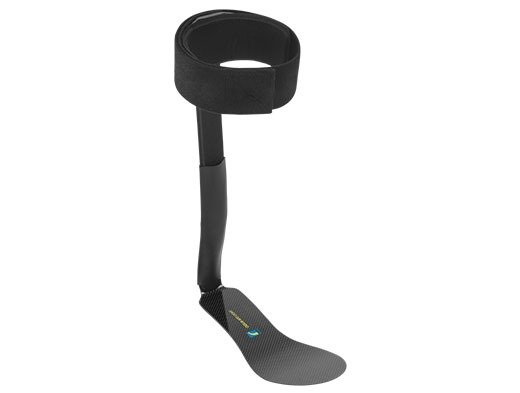
This model suits users with mild to moderate drop foot who want a lighter build and a cleaner swing. KARE describes it as a carbon fibre solution with an energy-storing design and reduced bulk. So, if you want a flexible daily support brace, this model deserves attention.
AFO Dynamic Carbon Fibre
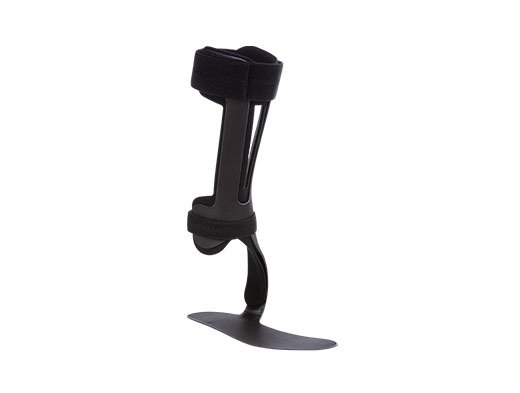
This option suits users who need more support than a very light entry design. KARE says it helps people with varying degrees of drop foot linked to neurological conditions and uses carbon fibre for energy return and a more efficient walk. It is a solid option when a lightweight AFO brace must still give firmer control.
Formfit Ankle with Figure 8 Support
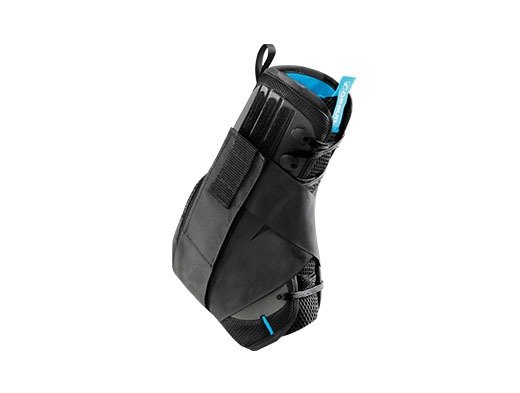
This model stays closer to ankle stability support than a full corrective AFO for stronger foot drop. KARE notes that it gives low-profile support, quick lace-up use, easier shoe fit, and breathable material. Therefore, it can work as an orthotic brace for walking after injury or in chronic ankle instability, and as a selective foot drop brace India option after review.
Conclusion
The right brace changes walking because it changes alignment, timing, and effort. The wrong brace does the opposite. It creates rubbing, poor shoe fit, knee compensation, and low wear time. So, choose after proper assessment. When you need a lightweight ankle foot orthosis for your gait, shoes, and daily routine in India, we assess carefully, fit precisely, and support your next step at KARE.
FAQs
Which brace is best for foot drop support?
A carbon fibre or custom articulated AFO often suits foot drop well. Your ankle strength, knee control, shoe use, and daily surface demands decide the final design.
Can it fit inside regular walking shoes?
Many low-profile designs fit regular walking shoes. You need enough shoe depth, firm heel hold, stable sole support, correct fastening, and proper sock thickness.
How long does it take to get comfortable wearing it?
Most users need a short break-in period. Skin checks, sock choice, alignment review, gradual wear hours, and timely review visits make adaptation much easier.
Does it help improve walking balance and stability?
Yes, when fitted properly. It supports foot position, reduces toe drag, improves step control, and gives steadier contact during stance, turning, and transfers.
What is the difference between carbon fiber and plastic braces?
Carbon fibre feels lighter and returns energy better. Plastic usually offers stronger control, easier modification, lower repair complexity, and wider custom shaping for difficult feet.