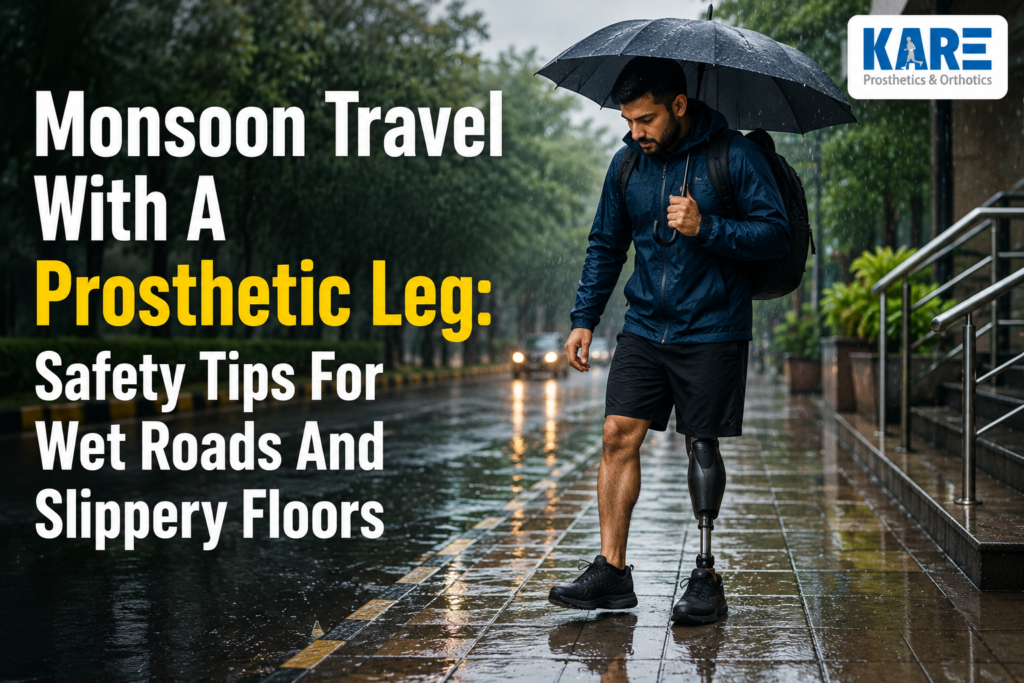
Do you plan outings when rain has already turned the road outside the gate into a small obstacle course? If you travel with a prosthetic leg in a monsoon, the safer trip starts before you step out, not after the first slip scare. In India, rain can mean a broken footpath outside a clinic, a slippery metro entry, a puddle hiding a pothole, or a hotel lobby where someone has just mopped the tiles.
This blog covers rainy-day risks, fit checks, safer footwear, skin care, and simple walking tips for prosthetic users during monsoon travel. Socket fit, shoe grip, liner dryness, and walking speed can change once water and humidity enter the day. So take one minute before leaving. Stand, walk a few steps, check pressure points, and notice how the prosthetic foot feels inside the shoe. Near ramps, lift doors, stairs, and shiny tiles, slow down before the floor forces you to.
Why Travel With a Prosthetic Leg In Monsoon Needs Extra Planning
Indian roads can change within minutes during rain. A dry pavement becomes slippery. A footpath hides broken tiles under water. Even a short walk from a cab to a clinic can feel different.
Rainy Roads, Hidden Potholes, And Waterlogged Footpaths
Road water hides depth. That is the first risk. When you travel with a prosthetic leg in the monsoon, avoid stepping into water you cannot judge. Use the side of a wall, railing, parked vehicle line, or pavement border as a visual guide.
Keep your step shorter than usual. Place the prosthetic foot flat, then shift weight. This simple method reduces sudden twisting at the knee or ankle. It also supports prosthetic leg safety in rain, mainly when the road has mud, algae, or loose gravel.
For uneven streets, try the “pause, plant, press” method. Pause before the surface changes. Plant the foot with care. Press the weight only after the grip feels stable. It sounds slow, but it saves energy.
For more guidance on weight transfer, balance, and controlled steps, read KARE’s guide on How to Walk With an Artificial Leg Below Knee.
Wet Floors At Stations, Malls, Airports, And Hotels
Polished floors create a different problem. They look safe, but water turns them slick. This makes walking with a prosthetic leg on wet floors risky near entrances, washrooms, escalators, and food courts.
Step away from shiny patches. Walk near mats, textured strips, or dry wall-side areas when possible. At railway stations, avoid painted platform edges after rain. Those strips often turn slippery.
Good fall prevention for amputees starts with body position. Keep the chest upright, avoid sudden turns, and use handrails without hesitation. A cane or crutch may help during long travel days, especially when luggage pulls the body sideways.
Humidity, Sweat, And Socket Irritation On Long Trips
Monsoon air traps heat inside liners and sockets. Sweat changes fit. Then the limb may slide, rub, or feel heavy. Research notes that thermal discomfort affects prosthetic users, with 54% reporting thermal discomfort on average.
This is why socket care cannot wait till night. Remove sweat when safe. Dry the liner. Check red marks. A red area that stays after 20 to 30 minutes needs attention.
Use prosthetic limb monsoon tips, like carrying an extra liner or dry socks. Also, avoid wearing damp socks for a long time. Wet fabric increases friction and can invite skin trouble.
Simple Checks Before You Travel With a Prosthetic Leg In Monsoon
A good day outside starts at home. Before you travel with a prosthetic leg in the monsoon, check three things: fit, grip, and skin.
Check Prosthetic Fit Before Stepping Out
Socket fit changes throughout the day. Heat, sweat, diet, activity, and travel time can all affect residual limb volume. A 2026 research page says poor socket fit can lead to residual limb health issues, gait abnormalities, and prosthesis abandonment.
So, never ignore looseness. Also watch for pinching, sinking, pistoning, or pressure near the bone. These signs mean the socket may need adjustment.
A prosthetist may use gait assessment, alignment review, pressure mapping, socket trim-line checks, or suspension testing. These are not fancy extras. They help find the exact reason behind pain, rubbing, or unstable walking.
Socket comfort should guide every rainy-day outing, so review Brand, Technology, Or Fit? What Should You Prioritise When Choosing A Prosthetic Limb? before ignoring rubbing, looseness, or pressure.
Pick Footwear That Holds Wet Ground
Footwear can make rainy travel safer or harder. Choose a firm sole with deep grooves. Avoid smooth sandals, thin slippers, worn-out sports shoes, and heavy shoes that pull the prosthetic side down.
When you travel with a prosthetic leg in the monsoon, keep one backup pair for longer routes. If one shoe gets soaked, the second pair protects your gait.
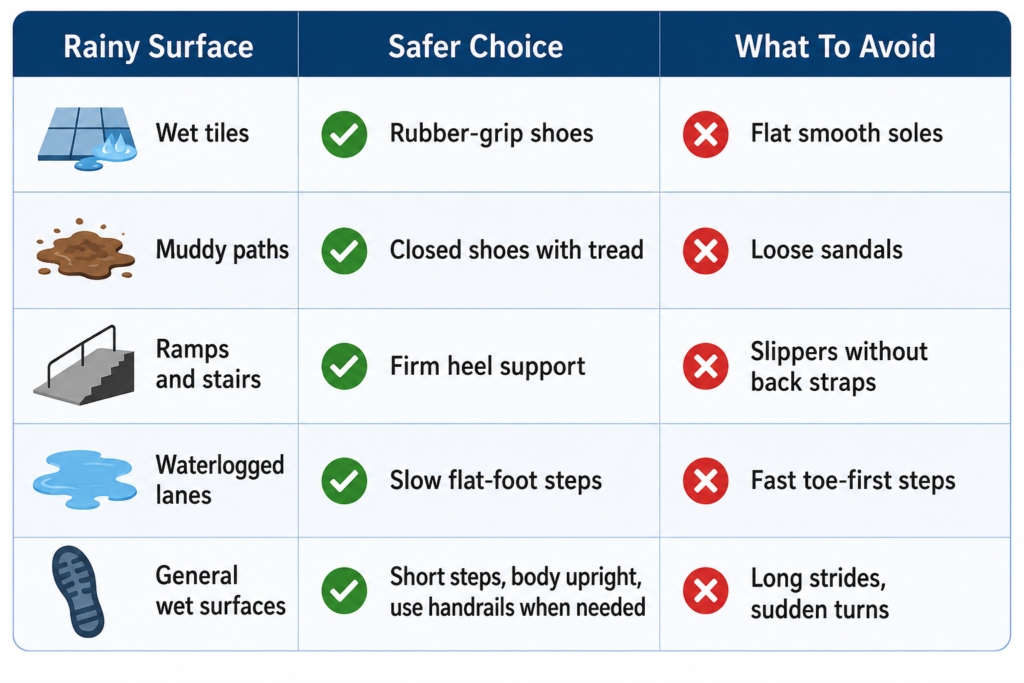
This small choice supports prosthetic leg safety in rain and reduces stress on the sound limb, too.
To compare prosthetic feet suited to different mobility levels and uneven surfaces, explore KARE’s Guide To Prosthetic Foot Types, Benefits, And Costs.
Carry A Dry Kit For Skin And Socket Care
A small kit works better than a large bag you never use. Keep a towel, spare socks, a liner cloth, skin-safe wipes, a plastic pouch, and an anti-slip walking aid if needed.
Here are a few prosthetic limb monsoon tips that work during Indian travel:
- Dry the liner during long breaks, then wear it again only when the skin feels dry.
- Keep luggage light, as heavy bags disturb posture on stairs and ramps.
- Check the residual limb after every long, wet commute.
These steps also improve prosthetic walking safety during bus rides, railway transfers, and hotel check-ins.
Slow Down On Tiles, Ramps, Stairs, And Slopes
Speed causes many rainy-day slips. The body moves faster than the prosthetic foot can grip. So slow down before the surface changes, not after.
On stairs, use the rail. On ramps, keep steps small. While walking with a prosthetic leg on wet floors, avoid sudden side turns. Turn in small steps instead. This keeps the body over the feet.
For better fall prevention for amputees, practice weight shifting at home under clinical guidance. Some users also benefit from step training, balance drills, proprioception work, and gait retraining. These techniques train the body to react better when rain changes the walking surface.
Steadier movement also requires regular balance practice, and KARE’s 7 Best Gait Training Exercises covers exercises that may support safer walking and better body control.+
How KARE Supports Prosthetic Users During Rainy Travel
Wet roads, slippery floors, and uneven paths can make rainy travel harder for prosthetic users. At KARE, we assess the user’s gait, daily routine, and mobility needs before recommending a prosthetic setup.
Our care starts with a one-on-one clinical consultation and may include evaluation, fitting, gait training, rehabilitation, and follow-up adjustments.
Depending on the user’s clinical needs, options may include the following:
- RAIZE Microprocessor Ankle for improved response on uneven or slippery surfaces
- PROPRIO FOOT for users who need terrain-adaptive ankle movement
- RHEO KNEE XC, POWER KNEE, and SYMBIONIC LEG 3 for selected higher mobility requirements
We also use CAD/CAM and gait-based planning when clinically suitable. With prosthetist-led support across Mysore, Kolkata, Hyderabad, Thiruvalla, Durgapur, and Calicut, KARE helps users choose a prosthetic setup suited to the surfaces and travel conditions they face every day.
Conclusion: Safe Monsoon Travel Starts With The Right Prosthetic Care
Rain should not stop movement, work, family visits, or daily life. Still, it asks for care. Better fit, better footwear, dry skin checks, and slower steps can change the full travel day.
For safer travel with a prosthetic leg in the monsoon, speak to KARE about custom prosthetic care, rainy-season mobility support, and long-term walking safety. We are here to help you move better.
FAQs
Is monsoon travel safe with a prosthetic leg?
Yes, for many users it is. Before a longer trip, check the socket fit at home, wear grippy shoes, and pack one dry liner.
What helps prosthetic users walk on slippery floors?
Slow the first step near wet tiles. Keep the prosthetic foot flat, hold the rail, then move once the floor feels steady.
Does rain change prosthetic leg grip or balance?
Rain can make shoes slide sooner than expected. Mud, ramps, wet stair edges, and loose mats often create the bigger risk.
What should prosthetic users pack during rainy travel?
Keep a small pouch ready. Add dry socks, a towel, skin wipes, a spare liner, a rain cover, and clinic contact details.
When should a prosthetic leg be checked after a slip?
Call the prosthetist if pain, swelling, a loose socket, skin marks, a strange sound, or poorer balance appear after the slip.