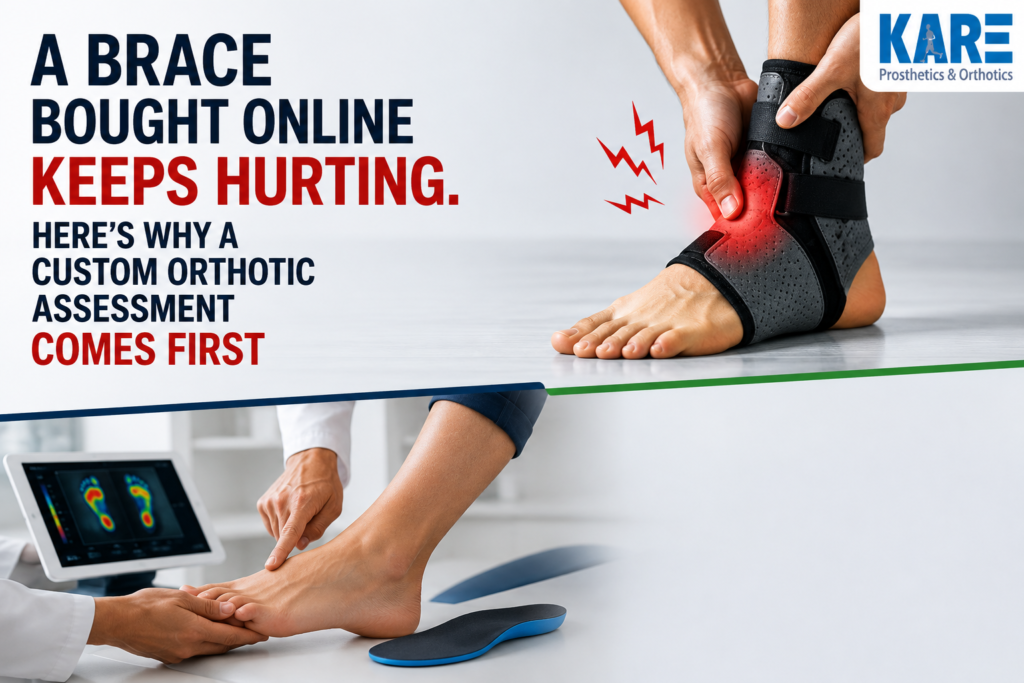
You bought a brace online because the pain had already started disturbing your walk, stairs, office hours, or sleep. The product looked simple. The size chart looked helpful, too. Yet, after a few days, the brace starts rubbing the skin, pressing the ankle, changing your step, or making the pain move somewhere else.
That happens more often than people admit. A custom orthotic assessment checks the person first, then the support. It looks at foot shape, joint position, walking pattern, skin tolerance, muscle strength, pain points, work routine, footwear, and daily movement. A brace should not only hold a body part. It should guide movement without hurting another area.
In India, many people wear braces for long hours during travel, office work, school, household tasks, and uneven outdoor walking. So, the brace must suit Indian movement patterns too. Crowded buses, wet floors, stairs without railings, scooter use, and long-standing hours all change orthotic needs.
Learn more in KARE’s Complete Guide to Custom Orthotic Devices.
Why A Store-Bought Brace Can Hurt More Than It Helps
A brace that feels firm in the first hour may feel harsh by evening. Many online products give general compression. They rarely provide controlled correction.
This is the big difference between a ready-made brace and a custom brace. One gives standard support. The other starts with the body’s exact need. A custom orthotic brace uses clinical evaluation, measurements, casting or scanning, material selection, alignment checks, and follow-up corrections.
A 2025 AFO user study reported common reasons for ankle-foot orthosis use as difficulty walking 35%, muscle weakness 20%, spasticity 19%, foot drop 10%, and toe-walking 9%. These are not small differences. Each condition needs a different brace angle, stiffness, trimline, strap position, and footwear plan.
So, one online brace cannot serve every ankle, knee, or spine problem. It may hold the limb, but it may hold it in the wrong way.
Standard Size Often Misses Your Pressure Points
Online braces usually follow small, medium, large, or extra-large sizing. Human bodies do not follow that chart.
Two people may share the same shoe size and still need different support. One may have a flat arch. Another may have a high arch. One may put weight on the heel’s inner side. Another may overload the outside border of the foot. A person with diabetic skin risk needs softer offloading. A person with foot drop may need stronger dorsiflexion control.
This is where a custom orthotic assessment gives better direction. The orthotist checks pressure zones, painful spots, bone shape, swelling, skin marks, and footwear space before choosing the brace design. Even a few millimetres can change comfort.
A custom orthotic brace can also protect areas that a normal brace keeps pressing. For example, a malleolus pad, heel cup depth, arch contour, ankle strap angle, or foam relief zone can reduce repeated rubbing.
The Wrong Size Can Change Your Walking Pattern
Pain rarely stays in one place. A tight ankle brace may force you to take shorter steps. A loose knee brace may shift load to the hip. A stiff foot support may make the lower back work harder.
That is why orthotic brace fitting should include walking observation. The clinician watches heel strike, foot clearance, knee bend, pelvic movement, balance, and step length. This process may use gait analysis, posture screening, trial walking, and alignment correction.
A wrong brace size can also increase fall risk. If the brace catches the shoe, blocks ankle motion, or delays toe lift, the user starts walking with fear. Over time, the body learns poor compensation. Then pain appears in the other foot, knee, hip, or back.
A ready-made brace vs. a custom brace comparison should not focus only on price. It should compare safety, skin health, gait correction, wear time, and long-term comfort.
For knee-specific support, read about the Osteoarthritis (OA) Knee Brace.
Material Choice Can Irritate Skin
Many painful brace stories begin with sweat.
India’s heat and humidity can make synthetic supports uncomfortable. A brace that works for one hour in an air-conditioned room may fail during a full day outside. Sweat increases friction. Friction causes redness. Redness can turn into bruising, wounds, or blisters.
A 2025 study found that among users who stopped using AFOs early, pain or discomfort accounted for 59%, fit, size, or shape concerns for 24%, appearance or stigma for 25%, and fear of falling for 17%. This shows why clinicians must check comfort, appearance, safety, and fit before long-term use.
The material must match the patient. Polypropylene, carbon fibre, EVA, silicone padding, leather straps, foam liners, and pressure-relief inserts all behave differently. Some give firm control. Some protect delicate skin. Some allow better air flow. Some suit children. Others suit adult work use.
A painful orthotic brace often improves after material changes, edge trimming, heat modification, padding, or strap repositioning.
Custom Orthotic Assessment Checks Gait, Posture, And Joints
Pain relief does not start at the brace counter. It starts with a full body check.
A foot problem can come from the ankle. An ankle issue can come from the knee. Knee strain may come from hip weakness. A spinal brace may fail when sitting posture, core strength, and daily bending habits go unchecked.
This is why a proper evaluation includes a range of motion testing, muscle strength grading, joint alignment review, balance screening, and pain mapping. The orthotist may also check footwear, walking speed, work tasks, stair use, and home layout.
A custom orthotic assessment connects these details before any device choice. For example, a flat foot case may need arch support, heel control, and shoe advice. A foot drop case may need an ankle-foot orthosis with toe clearance. A spinal case may need support that controls posture without blocking breathing or sitting comfort.
Long-Term Value Comes From Reviews And Adjustments
A brace is not a one-time purchase. The body changes. Pain changes. Swelling changes. Children grow. Adults gain or lose weight. A stroke patient may improve strength. A diabetic patient may develop new pressure points.
Follow-up keeps the device safe.
Orthotic brace fitting should include review visits after use begins. The orthotist checks skin marks, walking comfort, strap tightness, shoe wear, device cracks, and patient feedback. Even a well-made brace may need small corrections after a week of use.
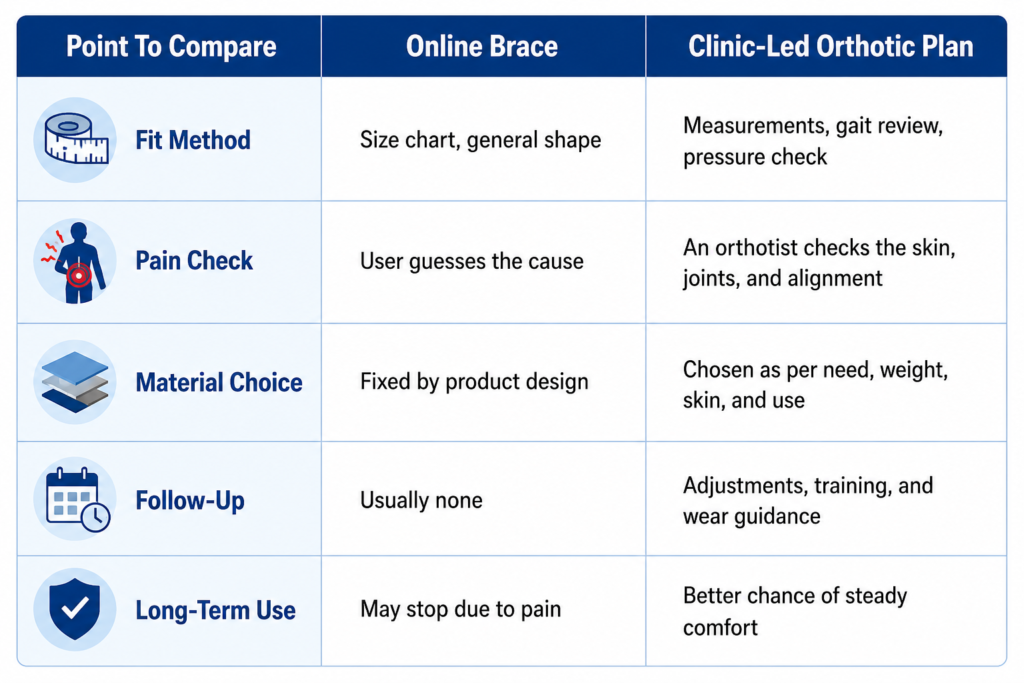
Here is how the buying route changes the outcome.
Explore the Benefits of Orthotic Braces for Better Mobility
How KARE Supports Better Fit Through Custom Orthotic Care
At KARE, we provide custom orthotic care for children and adults who need foot, ankle, lower limb, spinal, neck, or other bracing support. Our clinicians assess body alignment, movement, pressure areas, and daily needs before measuring and fitting the device.
Our orthotists and prosthetists bring clinical knowledge of biomechanics, material technology, and medical conditions. KARE also states that its clinicians are connected with ABC, AAOP, RCI, and OPAI professional and regulatory bodies.
Our orthotic care may include:
- UCBL Foot Orthosis and Dynamic Wraparound UCBL Foot Orthosis for selected foot alignment needs
- Low Tone SMO and High Tone SMO for flexible, flat, or pronated feet
- Foot-Up Orthosis, AFO Light, and AFO Dynamic for selected drop foot and ankle support needs
- Boston Type Scoliosis TLSO and Soft Frame TLSO for custom spinal support
These devices are listed across KARE’s foot, ankle, paediatric, and spinal orthotic ranges.
At KARE, we focus on personalised orthotic support that considers comfort, mobility, patient goals, and daily wear.
KARE also explains the Key Differences Between Prosthetics and Orthotics.
Custom Foot Orthosis
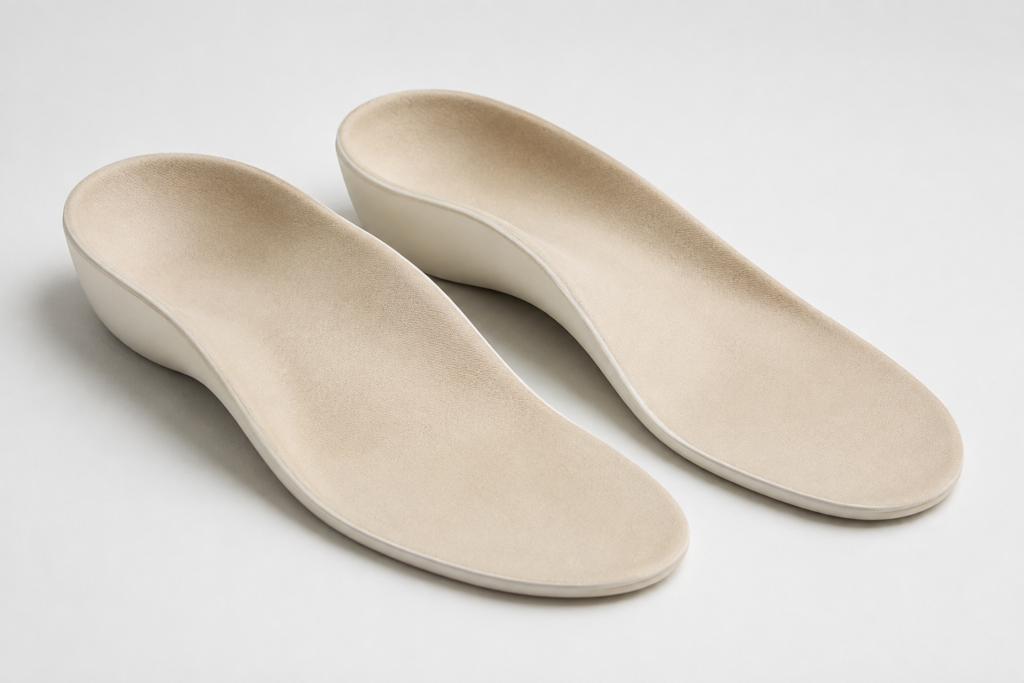
Custom foot orthosis is planned around the shape and position of the foot rather than a standard insert size. KARE offers options such as the UCBL Foot Orthosis and Dynamic Wraparound UCBL Foot Orthosis, which may be used for selected pronation and foot misalignment needs.
The orthotist also checks how the device works inside the user’s footwear. Shoe depth, available space, and everyday activity can all affect how comfortably the orthosis is worn.
Ankle-Foot Orthosis
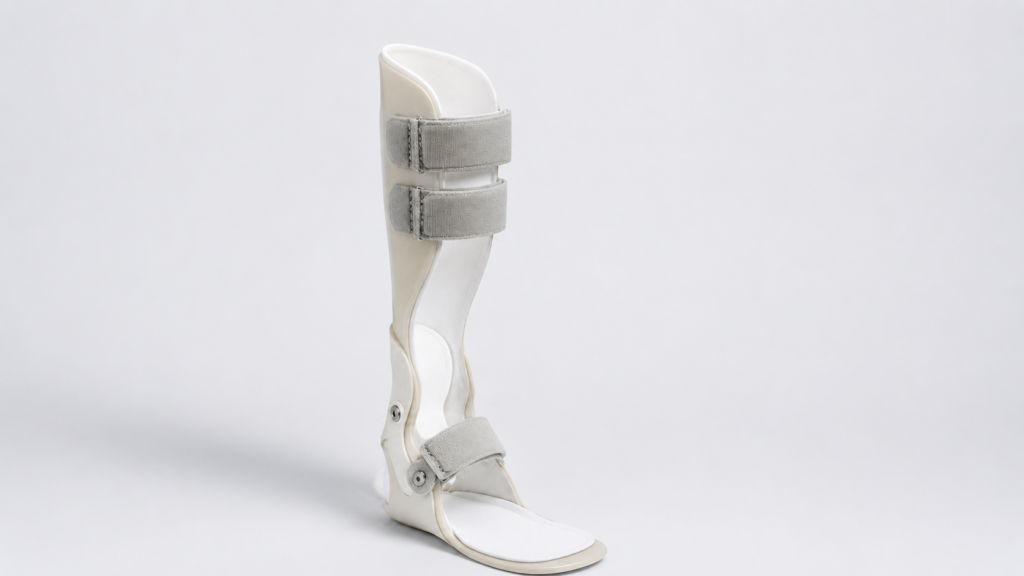
An ankle-foot orthosis may be considered for foot drop, muscle weakness, or ankle control problems. The clinician checks lower limb movement and support needs before choosing a custom or suitable prefabricated option.
KARE’s ankle and foot range includes the Foot-Up Orthosis, AFO Light Carbon Fiber, and AFO Dynamic Carbon Fiber. Each option serves different support requirements, so the choice depends on the user’s clinical and mobility needs.
Spinal Orthosis
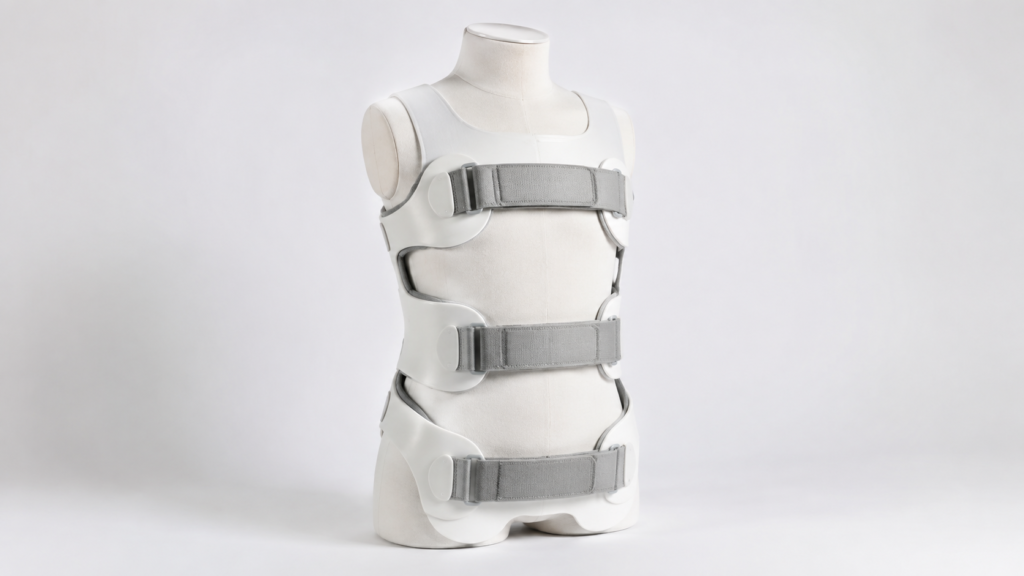
A spinal orthosis needs to follow the user’s body shape and the area that requires support. KARE provides custom spinal solutions, including the Boston Type Scoliosis TLSO and Soft Frame TLSO.
Clinical measurement and fitting are important because the brace must sit correctly during normal activities. The fit may be checked while the user sits, stands, and moves so pressure areas or discomfort can be identified.
Conclusion
An online brace may look simple, but pain after use should never be treated as normal. Your body needs the right support, not just the nearest size on a product page. A custom device starts with checking your movement, skin, joints, pain pattern, footwear, and daily routine. That is how a brace becomes safer, easier to wear, and useful for longer hours.
For clinic-led support, custom devices, careful fitting, and guided follow-up, book a custom orthotic assessment with KARE, and we will help you choose support that fits your body and daily life.
FAQs
Why does my orthotic brace hurt while wearing it?
Pain may come from the wrong size, pressure points, poor material, tight straps, swelling, or brace alignment that changes your walking pattern.
Are ready-made braces suitable for every patient?
No. Ready-made braces may help minor support needs, but complex pain, foot drop, deformity, and skin risk need clinical fitting.
What happens during a custom orthotic assessment?
An orthotist checks pain areas, posture, gait, joint motion, muscle strength, skin marks, footwear, daily activity, and support goals.
How is a custom orthotic brace fitted?
The clinician measures, casts or scans when needed, checks trial fit, studies walking, adjusts pressure areas, and teaches safe wear.
When should an uncomfortable brace be checked by an orthotist?
Get it checked when pain, redness, swelling, numbness, skin marks, walking changes, or fear of falling appear during use.