What should you do when your baby arrives with a limb difference and nobody has yet explained the next few years? Start with assessment, not a device catalogue. Good prosthetics for congenital limb difference care begins by looking at anatomy, skin, movement, family routines and future developmental goals.
For many families, limb difference in babies brings medical and everyday questions together. Feeding, floor play, standing and later school life all enter the plan. A congenital amputation prosthesis may help at one stage, while therapy or observation may come first.
Planning Prosthetics for Congenital Limb Difference From the First Assessment
A child born with a partial or absent limb does not follow an adult amputation pathway. Often, there is no post-surgical recovery stage. Clinicians instead watch growth, joint range, muscle control, skin and new movement.
The goal changes with that starting point. The team asks what helps your child use the body well. Care may involve paediatrics, prosthetics, physiotherapy or occupational therapy, with review access shaping the plan in India.
When Should Your Child First Meet a Paediatric Prosthetist?
The first prosthetic visit may end without a prescription. It gives the clinician a baseline for limb shape, joint motion, muscle activity and developmental stage.
For parents asking about early prosthetic fitting for infants, timing needs clinical judgement. A device may support a new developmental task, while another child may need more time. The prosthetist can also explain skin care, wear routines and review signs.
Good pediatric limb difference care gives you a plan for the next milestone, without pressure to choose advanced technology too early.
How Early Assessment Builds the Prosthetic Plan
Assessment starts with the child before any prosthesis goes on. Watch reaching, sitting, crawling or standing, then note what the child already does well.
For prosthetics for congenital limb difference, clinicians may review limb length, joint stability, muscle signals, sensation and family goals. Home life counts too. Floor seating, stairs, school transport and outdoor surfaces can change component choices.
Appearance may draw attention first, yet function deserves equal weight. KARE’s guide to paediatric limb prosthesis and child growth explains how growth and daily movement affect planning.
Choosing a Prosthesis for Comfort and Daily Movement
Comfort starts with fit, then components. Technology cannot rescue a socket that rubs or rotates. Even a light component causes trouble when poor alignment creates pressure.
Use this table during fitting:
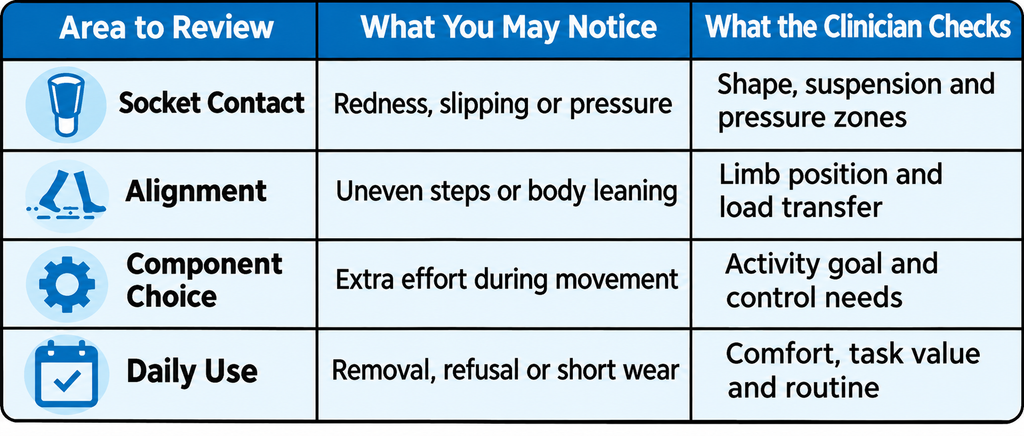
For limb difference in babies, ask whether the device supports today’s task. Your child may accept one activity before another, which can happen during learning.
Why Socket Fit Changes While Your Child Grows
Children grow through the socket. Limb volume, bone growth and muscle development change contact inside it. A socket that worked earlier may start leaving marks or allowing movement.
That is why prosthetics for congenital limb difference need repeated fit review. Changes in walking, device rotation, skin marks or resistance to wearing the limb can justify a check.
In 2025, The New Indian Express reported on a 3-year-old child in Tamil Nadu whose custom below-knee prosthetic leg weighed less than 500 grams. Clinicians matched it to his measurements and walking needs.
Helping Your Child Use a Prosthesis at Home, School and Play
Children learn a prosthesis through ordinary tasks. A clinic teaches movement, but repetition happens while dressing, eating, climbing steps or joining play. Training should connect with the child’s day.
Over time, prosthetics for congenital limb difference should follow your child’s tasks, not force milestones into one fixed device.
For upper-limb use, holding paper while drawing may show where a device helps. With lower-limb use, stairs and uneven ground can reveal issues a clinic corridor misses.
KARE’s guide on prosthetic arms explains mechanical, myoelectric and other control options. Keep your child’s own goals central to the choice.
When Does Your Child Need Adjustment, Refitting or Replacement?
Growth does not follow appointment dates, so fit changes can appear between planned visits. Watch patterns rather than one complaint.
Repeated skin marks, looseness, changed alignment or avoidance of a familiar task can justify review. The prosthetist can then decide between adjustment and a new socket.
Families seeking limb difference support in India should ask about follow-up before choosing a provider. Repair access and review schedules affect long-term use. KARE’s article on knee ankle foot orthosis care shows why fitting and adjustment stay central with supportive devices.
Paediatric Prosthetic Options at KARE Prosthetics & Orthotics
We have worked in prosthetics and orthotics since 2013 through Ktwo Healthcare Pvt. Ltd. Our KARE for Kids service keeps paediatric care within a dedicated pathway. We plan custom devices around anatomy, function, comfort and personal goals, rather than treating a child as a smaller adult.
Our clinical support includes qualified prosthetists and orthotists, access to American Board-certified clinicians, CAD/CAM workflows and microprocessor technology where the case calls for it. We also work with international brands including Össur, Orthomerica, ST&G and Becker Orthopedics.
- We support fitting, rehabilitation, review, maintenance and repairs
- Our paediatric range covers cosmetic and functional options
- KARE states that its clinics include India’s first Hi-Fi Socket certified clinical facility
- Families can access KARE services across several Indian cities
That wider service structure can help parents who need continuing paediatric limb difference care rather than a one-time device handover.
Cheetah Xplore Junior for Active Lower-Limb Use
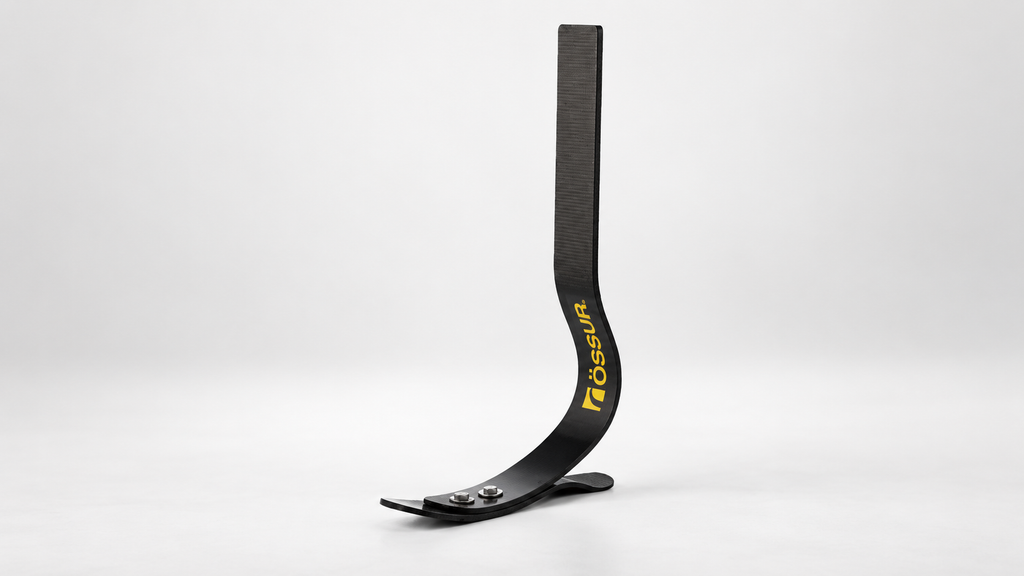
The Cheetah Xplore Junior works as both an everyday and sports-oriented paediatric foot. We list it for children who need walking and higher-activity use within one system. Its carbon-fibre construction supports energy storage and shock absorption.
A component like this still needs the right socket, alignment and activity match. For some children, play and school movement may guide the decision more than product technology.
C-TK-40C HY-STAN Child’s 4-Bar Knee for Lower-Limb Control
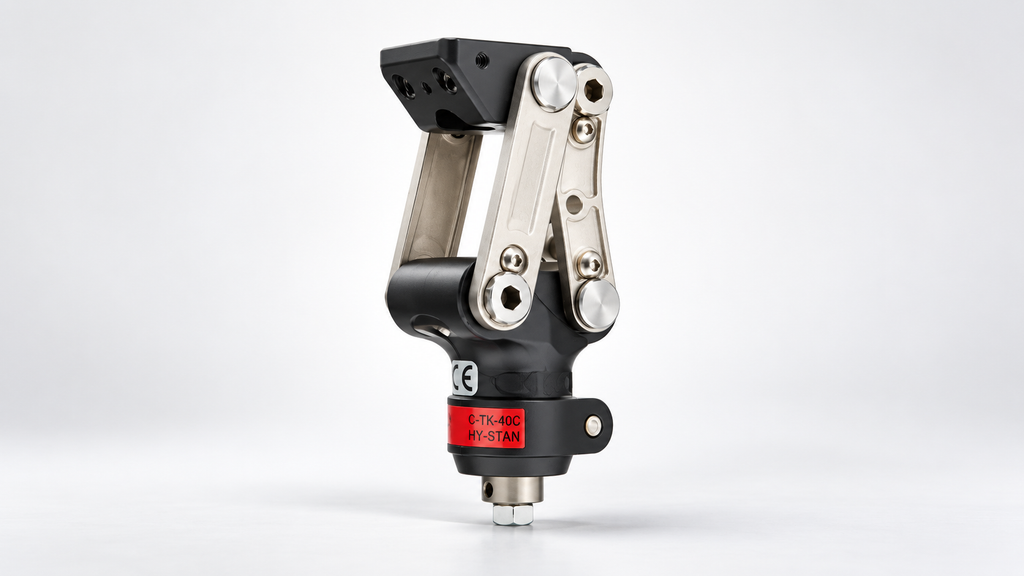
We list the C-TK-40C HY-STAN Child’s 4-Bar Knee within its paediatric knee range for children with above-knee or knee-disarticulation presentations. The design uses a four-bar mechanism and child-focused construction.
The knee choice should follow gait needs, stability, strength and training capacity. A child still needs supervised practice after fitting because component behaviour changes how standing and walking feel.
Myoelectric Paediatric Prosthesis for Upper-Limb Differences
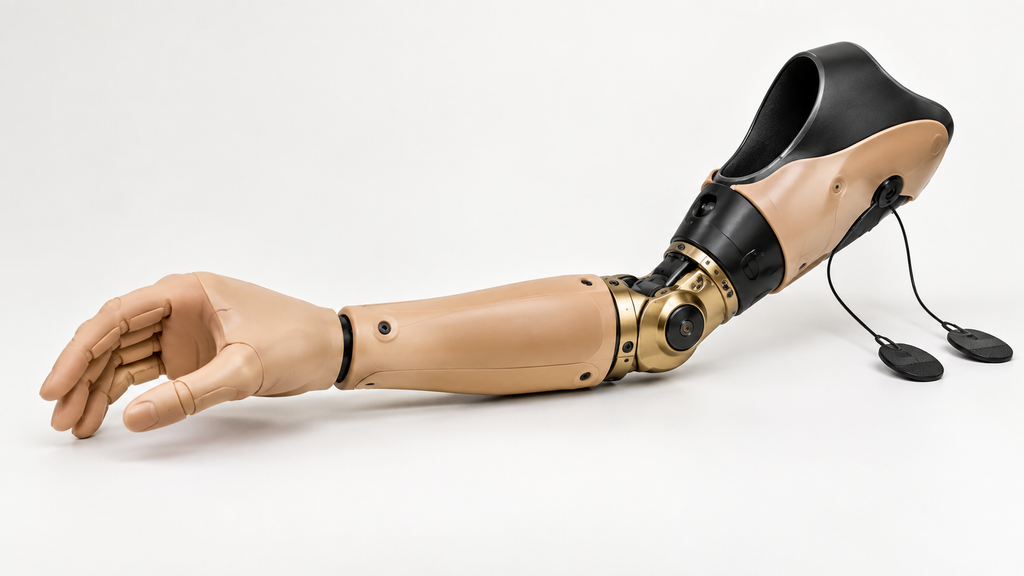
Our Myoelectric Paediatric Prosthesis uses muscle electrical activity to control hand and elbow actions. The system targets selected higher-level upper-limb presentations, and the wrist can rotate and lock in position.
Myoelectric control requires usable muscle signals, socket contact and training. Therefore, the fitting team must test whether the child can produce repeatable signals before making technology the main goal. The congenital amputation prosthesis plan should still begin with function.
How Parents Can Support Fitting, Training and Rehabilitation
Your role starts with observation. Note where the device helps, when your child removes it and what leaves skin marks. Bring those details to review visits because they guide useful changes.
For early prosthetic fitting for infants, routines need patience. Short guided use may come before longer wear. Meanwhile, therapy can work on movement, strength and task learning without turning every activity into training.
Good limb difference support in India includes family education. Ask who handles repairs and growth reviews if fit changes between visits. For persistent head turning or positioning concerns, KARE’s guide on babies who keep looking to one side explains when an examination may help.
Conclusion
Your child does not need a rushed prosthetic decision after birth. You need staged care, regular review and a device that earns its place in daily life. At KARE, we approach prosthetics for congenital limb difference through assessment, custom fitting, rehabilitation and follow-up. Speak with our team to plan the next step around your child’s growth and goals.
FAQs
1. What is a congenital limb difference?
A congenital limb difference means a baby develops with part or all of a limb formed differently before birth, affecting shape, length, movement or function.
2. At what age can a baby be fitted with a prosthesis?
There is no single fitting age. A paediatric prosthetist considers development, limb shape, skin, movement goals and readiness before recommending a device for daily use.
3. How is early prosthetic care different for infants?
Infant care follows growth and developmental milestones closely. Clinicians review fit, movement, skin and family routines as the child learns new physical skills at home.
4. Will a child need multiple prosthetic replacements while growing?
Yes, many children need socket changes or replacement components as growth alters limb size, body proportions, activity needs and the way the prosthesis fits well.
5. What support is available for parents of children with limb differences?
Parents can seek paediatric prosthetic clinics, rehabilitation teams, therapy services, peer groups and specialist follow-up for fitting, training, repairs and growth-related reviews throughout the process.