
What happens after you decide that walking, working, travelling, or using your hand independently must become possible again? The answer rarely begins with a product catalogue. It begins with your body, your amputation level, your daily routine, your skin, your strength, and the goals you want to reach.
That is why prosthetic limbs in India need a clinical plan rather than a quick purchase. A good prosthesis must connect securely, control movement, handle daily load, and stay practical through long hours. The socket needs as much attention as the knee, foot, hand, or electronic component. Then training must teach your body how to use the device safely.
This guide explains the full route, from prosthesis types and component choices to fitting, rehabilitation, cost, maintenance, and KARE’s clinical approach. You will also see where mechanical systems work well, when microprocessor technology may suit a user, and why follow-up changes the long-term result.
How to Choose the Right Prosthetic Limb for Your Daily Needs
A prosthetic prescription should answer a plain question: what do you need the limb to do each day? One person may walk from home to an office desk. Another may stand through a factory shift, climb stairs at a railway station, ride a two-wheeler, cook, type, carry bags, or manage a farm path.
Those jobs place different loads on the prosthesis. So clinicians assess mobility, joint range, muscle strength, residual-limb shape, skin condition, balance, work demands, and home surfaces before choosing components. The right plan also considers footwear, transport, climate, family support, and future changes in body weight.
What Is a Prosthetic Limb and How Does It Work?
A prosthetic limb replaces a missing body segment after amputation or congenital limb difference. Lower-limb systems may replace part of the foot, the leg below the knee, the leg above the knee, or a higher level. Upper-limb systems can replace fingers, the hand, forearm, arm, or several joints.
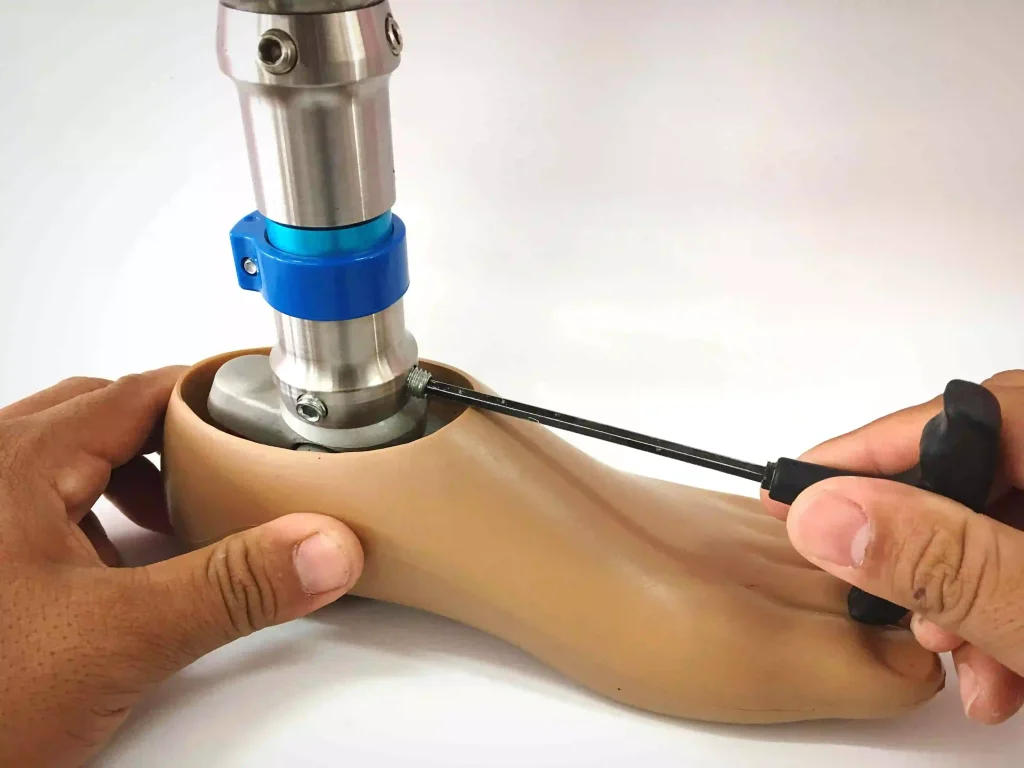
A complete prosthesis may include a socket, liner, suspension, connectors, joints, a foot or hand, and electronic controls. The socket deserves close attention because it carries pressure between your body and the device.
Prosthesis vs Orthosis: What Is the Difference?
A prosthesis replaces a missing part. An orthosis supports or aligns a body part that remains present. For example, a transtibial prosthesis replaces the lower leg. An ankle-foot orthosis supports an existing ankle and foot affected by weakness or deformity.
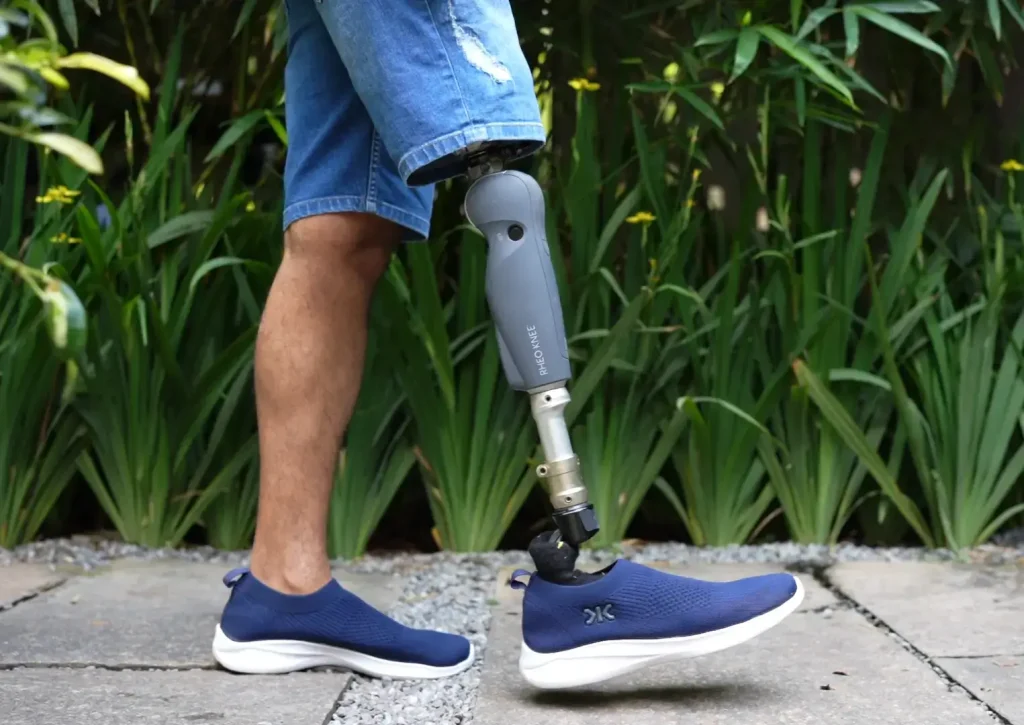
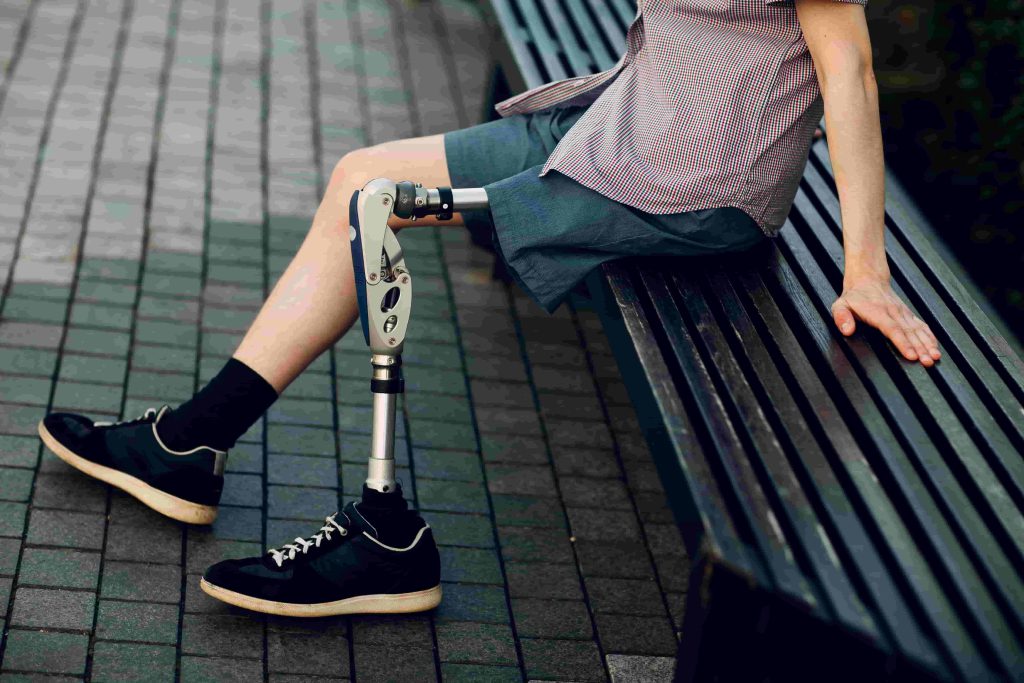
The socket receives force from the residual limb, while suspension keeps the device attached. A lower-limb foot manages ground contact and rollover. An above-knee system also needs a knee unit for stance and swing control.
Upper-limb systems use other control methods. Body-powered devices use cables and shoulder movement. Myoelectric devices read muscle signals and convert them into powered hand or wrist actions.
Different Types of Prosthetic Limbs in India
Amputation level defines the first choice. Technology comes next. A below-knee user keeps the natural knee, while an above-knee user needs a prosthetic knee. That change affects energy demand, control, alignment, and training.
Below-Knee and Above-Knee Prosthetic Legs
A transtibial prosthesis usually includes a socket, suspension, structural connector, and foot. Because the natural knee remains, many users can control the limb with fewer artificial joints.
A transfemoral prosthesis adds a knee unit. Options range from simple mechanical knees to hydraulic, pneumatic, and microprocessor systems. Clinicians match the knee to mobility, safety needs, walking speed, terrain, and the user’s ability to control it.
Partial-Foot and Higher-Level Lower-Limb Systems
Partial-foot prostheses must manage pressure, footwear space, toe lever function, and skin load. Higher-level systems, including hip disarticulation prostheses, demand more trunk and pelvic control. Training usually takes longer.
Below-Elbow and Above-Elbow Prosthetic Arms
A transradial prosthesis replaces the forearm and hand. A transhumeral system also replaces elbow function. Clinicians may choose passive, body-powered, myoelectric, or hybrid control according to muscle signals and daily tasks.
Cosmetic, Body-Powered, Myoelectric, and Bionic Options
Cosmetic systems mainly support appearance. Body-powered arms use cables. Myoelectric hands use surface electrodes, while multi-articulating hands add several powered grip patterns.
If you are planning prosthetic care for a growing child, our guide to paediatric limb prosthesis and child growth explains what may change as the child develops.
Basic vs Advanced Prosthetic Limbs: Which Option Is Right for You?
Price alone cannot separate a basic prosthesis from an advanced one. Clinicians compare control needs, wear time, walking surfaces, work tasks, maintenance, and service access.
| System | How It Works | Where It May Fit |
| Mechanical knee or foot | Uses fixed, friction, hydraulic, or structural control | Predictable daily mobility and simpler servicing |
| Body-powered arm | Uses cable and harness movement | Durable upper-limb tasks and direct feedback |
| Microprocessor knee | Uses sensors and programmed resistance | Variable speed, slopes, stairs, or changing terrain |
| Myoelectric hand | Reads muscle electrical signals | Powered grips for selected upper-limb users |
| CAD/CAM socket workflow | Uses digital shape capture and model modification | Repeatable design records and precise fabrication support |
No advanced component can rescue a painful socket. So clinicians still check tissue pressure, suspension, rotation, limb volume, and alignment before adding higher technology.
For a closer look at newer components and fitting approaches, you can also explore our guide to prosthetic innovations in 2026.
How Do Clinicians Choose the Right Prosthetic Limb?
Good selection starts before brand discussion. Clinicians review amputation level, wound status, joint movement, muscle power, sensation, skin quality, balance, body weight, and medical restrictions. Then they map those findings against your day.
A commuter who uses buses, broken pavements, and station stairs needs different features from someone who walks mainly inside a flat home. A teacher who stands for hours may need different support from a user who wears the limb for short transfers.
When clinicians prescribe prosthetic limbs in India, they should also consider heat, sweating, footwear, uneven roads, clinic distance, and access to repairs. Those details affect daily wear.
A 2026 Indian study reported poor socket fit in 73.49% of participants, perceived structural weakness in 74.70%, excessive sweating in 80.72%, skin problems in 51.81%, and limb pain in 84.34%. Socket design therefore needs the same attention as the knee or foot.
What Is the Prosthetic Limb Fitting Process?
The first prosthetic limb fitting process needs several checks because the residual limb changes after amputation. Swelling falls, tissue shape changes, muscles adapt, and activity increases. A socket that feels fine while standing may fail after twenty minutes of walking.
Assessment and Residual-Limb Evaluation
Clinicians inspect wound healing, scars, skin, tender areas, bone shape, swelling, joint movement, and muscle control. They also review transfers, balance, work, home surfaces, and earlier prosthetic problems.
Measurement, Hand Casting, or Digital Scanning
The prosthetist records limb length, circumferences, anatomical marks, and shape. Hand casting captures tissue under selected pressure. Digital scanning stores geometry for CAD modification. Clinical judgement still guides where the socket should load or relieve tissue.
Socket Design and Component Selection
The socket may use liners, pin locks, suction, sleeves, elevated vacuum, or other suspension methods. The prosthetic leg in India chosen for a farmer may therefore differ from one used mainly inside an office.
Trial Fitting and Alignment
A diagnostic socket lets the clinician inspect pressure before final fabrication. During walking, the prosthetist checks pistoning, rotation, knee stability, foot position, step length, and trunk movement. Small alignment changes can alter both comfort and gait.
Final Fitting and Later Adjustments
After the trial works well, the team produces the definitive prosthesis and teaches donning, skin checks, liner care, and device care. The prosthetic limb fitting process continues through later reviews because limb volume, footwear, work hours, or walking distance may change.
Benefits of a Well-Fitted Prosthetic Limb
A well-fitted prosthesis can support standing, walking, transfers, hand use, work, travel, and household activity. Progress should match the person’s goal. One user may aim to reach the bathroom without a walker. Another may need office stairs, shop-floor work, cooking tools, or a long commute.
A 2026 South India study followed 84 people after lower-limb amputation and prosthetic training. Researchers reported that 60.7% returned to work, and prosthesis use showed a statistical link with successful return to employment.
If you want to explore mobility and everyday activity in more detail, our guide to the benefits of prosthetic limbs explains what a well-fitted system can support after fitting.
Why Is Rehabilitation Important After Prosthetic Limb Fitting?
A prosthesis changes how forces travel through the body. Training teaches the user to control those forces and use the device during useful tasks.
Gait and Balance Training
Lower-limb training may begin with standing, weight shifting, and step control. Later sessions add turns, slopes, stairs, uneven surfaces, obstacle clearance, and speed changes.
For prosthetic limbs in India, training should reflect local daily conditions. A clinic corridor cannot copy wet floors, bus steps, market lanes, crowded stations, or broken pavements.
A 2026 St. John’s Medical College study of 76 unilateral transtibial amputees found that about 55.6% of prosthetic users returned to work, compared with 32.1% of nonusers.
Functional Training for Upper-Limb Prosthetic Users
Upper-limb therapy covers control, reach, grip, release, and two-handed tasks. Myoelectric users practise repeatable muscle signals. Body-powered users practise cable control with clothing, utensils, tools, and work objects.
Follow-Up Care and Prosthetic Adjustments
Prosthetic rehabilitation in India should include later review because body shape, strength, walking speed, and socket tolerance change. Clinicians may alter alignment, liners, padding, component settings, or the socket itself.
How Is Progress Measured During Prosthetic Rehabilitation?
Walking farther is useful, but clinicians need more than distance. They can compare balance, transfers, step control, gait quality, task performance, wear time, skin tolerance, and the amount of assistance a person needs. For upper-limb users, the review can include grip control, two-handed tasks, speed, fatigue, and work activity.
One useful lower-limb tool is the Amputee Mobility Predictor. In the 2026 St. John’s study, prosthesis users reached an average score of 26.1 at six months, compared with 17.2 among nonusers. Their health-related quality-of-life score also reached 106.3, versus 102.2.
The clinic should connect those scores with daily goals. A better test asks whether you can manage the stairs, commute, work shift, household task, or community route that caused difficulty before.
How Much Do Prosthetic Limbs Cost in India?
Cost changes with amputation level, socket work, component type, material, electronics, suspension, fabrication time, and rehabilitation. A basic below-knee system can cost far less than an above-knee system with a microprocessor knee. Upper-limb pricing also varies between cosmetic, body-powered, and myoelectric hands.
Grand View Research estimated India’s combined prosthetics and orthotics market at USD 247.9 million in 2026. That number describes the market, not the cost of one device.
Factors That Affect Prosthetic Limb Cost in India
Ask which parts of the quote cover the socket, liners, suspension, foot or knee, electronics, trials, gait work, warranty, repairs, and later reviews. Also ask whether a new socket during early volume change requires a separate payment.
If you are comparing expenses before choosing a system, our prosthetic limbs price guide explains how socket design, activity, components, repairs, and replacement can influence long-term spending.
Financial Assistance and Government Support for Prosthetic Users
Support can differ by state, disability certification, income criteria, employer coverage, insurance, charitable programmes, or government schemes. Keep the prescription, quotation, diagnosis, and component details ready when applying.
How to Care for a Prosthetic Limb in Daily Life
Daily care protects both the residual limb and the device. Check the skin after removing the prosthesis, especially near bony areas, scar lines, socket borders, and pressure zones.
Skin and Socket Care
Clean the residual limb and liner as the clinical team advises. Keep grit, soap residue, and moisture out of the socket. Persistent redness, blistering, broken skin, or swelling needs clinical review.
Cleaning and Maintenance
Inspect liners, straps, cables, visible screws, covers, charging ports, and foot shells. Report unusual noise, looseness, cracks, charging faults, or sudden movement changes.
A 2026 Indian study found that 37.35% of reported socket failures involved deformation around the socket-pylon interface, 21.69% involved cracks there, and 15.66% involved brim cracks. Around 62.65% occurred during walking.
Returning to Work, Travel, and Daily Activity
Long commutes and standing shifts can expose fit problems that never appear during a short clinic walk. When comparing a prosthetic leg in India, ask how the system handles your commute, work surface, footwear, and access to repairs.
When to Contact a Prosthetist
Call the clinic for persistent redness, wounds, repeated pain, new instability, sudden pistoning, rotation, component noise, visible cracks, or loss of electronic control. Early review can prevent a longer break from prosthetic use.
How to Choose the Best Prosthetic Clinic in India
A good clinic should show a clear process from assessment to later review. Ask who performs the fitting, how the team tests the socket, whether they use diagnostic sockets, how they handle alignment, and what rehabilitation comes with the device.
Also ask how the clinic chooses between basic and advanced components. The answer should refer to your functional level and goals, not only a brand. For artificial limbs in India, after-sales access deserves the same attention as the first fitting.
Check whether the clinic can manage socket changes, liners, repairs, electronic settings, gait review, and future component replacement. If you live far away, ask how many visits the process may need and where follow-up can happen.
How KARE Supports Advanced Prosthetic Care Across India
For prosthetic limbs in India, we begin with a one-to-one clinical assessment covering the residual limb, mobility, work, daily tasks, and goals. Our team designs custom lower-limb and upper-limb solutions, then uses hand casting, diagnostic sockets, fit checks, CAD/CAM, microprocessor systems, elevated vacuum, or specialised socket interfaces when appropriate.
Rehabilitation, gait practice, user education, later adjustments, maintenance, and repairs continue after delivery. Our team also works across lower-limb, upper-limb, paediatric, and orthotic needs. Our wider paediatric work also includes cranial remoulding.
- Custom fitting: hand casting, test sockets, alignment checks, and component trials before final fabrication.
- Qualified clinical care: American Board-certified clinicians, plus access to advanced components and socket technologies when suitable.
- Long-term support: gait training, education, follow-up changes, maintenance, and repairs after fitting.
Custom Prosthetic Fitting With Advanced Technology
KARE can combine standard clinical methods with digital tools. This can support artificial limbs in India and related orthotic care under one clinical team.
American Board-Certified Clinicians and Gait Rehabilitation
Our clinician team includes American Board-certified professionals. Gait work then links socket fit and alignment with stairs, speed changes, and daily surfaces.
Power Knee for Advanced Above-Knee Mobility

We offer the Power Knee for selected above-knee and higher-level users. The powered knee can assist extension, stance, and walking phases. Clinical assessment should decide whether powered assistance fits the user.
Breeze Foot for Lower-Limb Prosthetic Users

The Breeze Foot is part of our foot range for transtibial and transfemoral users. Foot choice should still follow activity, body weight, terrain, knee system, footwear, and rollover needs.
TASKA Hand for Advanced Upper-Limb Function
We also offer the TASKA Hand for upper-limb users. Its myoelectric design includes several grip options, powered thumb movement, and wrist flexibility for selected tasks.
Long-term review often determines continued wear. Our support includes fitting checks, gait work, education, maintenance, repairs, and later changes, which supports prosthetic rehabilitation in India.
What Should You Ask Before Finalising a Prosthetic Limb?
Choosing a prosthetic limb is easier when you know what to ask during the consultation. A device may look suitable on paper, but daily use depends on fit, comfort, repair access, training, and how well the system matches your routine. Before the final fitting, discuss the practical details that can affect long-term use.
Ask the clinical team about:
- How the socket will be adjusted if your residual limb changes
- What type of maintenance the knee, foot, hand, or liner may need
- How often follow-up visits are usually required
- Whether the prosthesis can handle your usual work, travel, stairs, or outdoor surfaces
- What happens if a component needs repair or replacement
- Whether rehabilitation and gait or functional training are included after fitting
These questions can help you look beyond the first appointment and think about how the prosthesis will work six months or a year later. At KARE, we discuss these practical points during assessment so the final plan reflects both clinical needs and everyday use.
Conclusion: Build the Prosthetic Plan Around Your Daily Life
A prosthesis should match your body, activity, work, home surfaces, transport, skin tolerance, and long-term goals. That is why prosthetic limbs in India need more than component selection. Good outcomes come from assessment, a well-made socket, careful alignment, useful training, and scheduled review.
If you are comparing the types of prosthetic limbs, planning a first fitting, or replacing an older device, start with a clinical assessment rather than a product name. At KARE, we assess your needs, explain the available options, fit the system, train its use, and support later adjustments.
Ready to explore the right prosthetic solution for your needs? Book a consultation with KARE and speak with our clinical team about your mobility goals, fitting requirements, and suitable prosthetic options.
Frequently Asked Questions
How soon after amputation can a prosthetic limb be fitted?
Clinicians usually begin fitting after the wound heals, swelling reduces, and the residual limb becomes stable. Timing varies with surgery, health, skin, recovery, and progress.
How long does a prosthetic limb last?
Most prosthetic limbs need replacement after several years, although sockets may need earlier changes. Body changes, wear, activity level, and component condition guide timing decisions.
Can people with diabetes use prosthetic legs?
Yes. People with diabetes can use prosthetic legs when wounds heal well and clinicians manage circulation, skin health, foot care, and glucose control during use.
Is walking with a prosthetic leg painful?
Walking should not cause persistent pain. Early pressure can occur, but sharp pain, skin damage, or repeated rubbing needs a prompt prosthetist review for correction.
How often does a prosthetic limb need adjustment?
Adjustment frequency changes as the residual limb changes. New users may need several early reviews, while established users need checks when fit or gait changes.
Can prosthetic users return to work and driving?
Many users return to work and driving after training, medical clearance, and suitable vehicle adaptations. Job demands, reaction time, limb control, and local rules apply.